 Breaking News & Live Updates
- Breaking News & Live Updates
- Breaking News & Live Updates
- Breaking News & Live Updates
- Breaking News & Live Updates
- Breaking News & Live Updates
- Breaking News & Live Updates
- Breaking News & Live Updates
- Breaking News & Live Updates
- Breaking News & Live Updates
Oxytocin System and Childhood Trauma in Functional Neurological Disorder
Recent investigations have delved into the oxytocin system's potential as a biological indicator for Functional Neurological Disorder (FND). The findings suggest that although direct genetic predispositions might not be the primary cause, the interplay of an individual's genetic makeup, epigenetic modifications, and circulating hormone levels could shed light on how patients interpret bodily sensations and past adverse experiences. This research, published in Comprehensive Psychoneuroendocrinology, offers new avenues for understanding FND.
Natascha Stoffel, a researcher from the University of Fribourg, Switzerland, spearheaded this inquiry. Her team aimed to uncover the biological underpinnings of FND, a condition that straddles the realms of psychiatry and neurology.
Individuals with FND exhibit genuine and often debilitating physical symptoms, such as tremors, muscle weakness, or non-epileptic seizures. Crucially, these symptoms are not attributable to conventional structural brain pathologies. A recurring theme among FND patients is a history of challenging life events, including childhood adversity or emotional neglect. Furthermore, many FND sufferers report difficulties with interoception—the brain's capacity to perceive and process internal bodily signals. This internal sensing mechanism, responsible for feelings like hunger or changes in heart rate and breathing, often becomes dysregulated in stress-related conditions.
To unravel these biological connections, Stoffel and her colleagues concentrated on the oxytocin system. Oxytocin, a pivotal hormone and neurotransmitter, plays a crucial role in regulating stress responses, emotional processing, and social behaviors. The researchers hypothesized that alterations in oxytocin processing might influence an individual's stress reactivity and their awareness of internal bodily states.
The research team examined three distinct aspects of the oxytocin system. Firstly, they investigated genetic variations within the oxytocin receptor gene. Secondly, they analyzed epigenetic markers, which are chemical tags on DNA that modify gene function without altering the genetic sequence itself. These epigenetic changes are known to be influenced by environmental factors and life experiences. Specifically, the team measured methylation, a type of epigenetic tag that typically reduces gene activity. Finally, the researchers quantified the levels of oxytocin circulating in the participants' bodies.
For the initial phase of their investigation, data from 89 adults were analyzed, with three participants excluded due to missing genetic information. This group comprised 41 individuals diagnosed with FND and 48 healthy control participants. Blood samples were collected from all participants to extract and analyze their DNA. The study then proceeded to identify each participant's genetic variants for the oxytocin receptor gene and measure epigenetic methylation at two specific regions of this gene. Additionally, saliva samples were collected at four different times throughout the day to assess circulating oxytocin levels.
A comparison of genetic and epigenetic data between the two groups revealed no significant differences in the distribution of gene variations or the average epigenetic methylation rates when analyzed in isolation. However, when salivary oxytocin levels were incorporated into the analysis, an interesting interaction emerged. FND patients possessing a particular variant of the oxytocin receptor gene (the GG genotype) exhibited elevated oxytocin levels in their saliva compared to healthy controls with the identical genetic variant. In healthy individuals, oxytocin levels typically surge in specific contexts, such as social bonding or physical activity. In this study's FND patients, these elevated oxytocin levels appeared irrespective of such triggers. This observation led researchers to speculate that a specific genetic variant might serve as a vulnerability factor, precipitating an atypical release of oxytocin in response to everyday stressors.
The second phase of the study explored whether combining genetic and epigenetic data could elucidate participants' interoceptive abilities. Participants undertook a breathing task to assess their physical sensitivity to respiratory resistance and completed a questionnaire gauging their perceived accuracy in detecting bodily sensations. Statistical models were employed to determine if integrating oxytocin receptor genetics, methylation data, and salivary oxytocin levels could predict interoceptive test scores. The inclusion of these biological markers did not enhance the predictive power of the models, indicating that genetic and epigenetic variables did not fully explain the interoceptive dysfunction observed in the patient group.
Subsequently, the researchers applied the same statistical methodology to investigate childhood trauma. Participants completed a standardized questionnaire to self-report their history of childhood trauma and emotional neglect. A model was constructed to ascertain if the biological markers correlated with variations in these trauma scores. In this instance, the addition of biological markers significantly improved the statistical model. Incorporating epigenetic methylation data and salivary oxytocin levels helped account for the variance in self-reported childhood trauma scores. Notably, higher methylation levels at a specific region of the oxytocin receptor gene were linked to lower reported trauma scores.
The study's authors acknowledged several limitations, primarily the modest sample size of 89 adults, which limited the statistical power for making definitive genetic claims. Simulations indicated that approximately 400 participants would be required to confidently detect the observed genetic effects. Furthermore, epigenetic markers were measured from blood samples, which might not precisely mirror methylation levels in brain tissue. Similarly, salivary oxytocin concentrations may not perfectly reflect hormone levels within the central nervous system. The statistical models establishing links between the oxytocin system and childhood trauma do not definitively prove a causal mechanism. It remains unclear whether traumatic experiences induce changes in the oxytocin system or if an altered oxytocin system influences how individuals process and recall traumatic memories. Future longitudinal studies with larger cohorts are needed to fully understand the intricate interactions among stress, genetics, and hormones in the onset of FND.
This study, entitled 'The Oxytocinergic System in Functional Neurological Disorder: Preliminary Testing of Associations with Interoception and Childhood Trauma,' contributes valuable preliminary insights into the complex biological and experiential factors involved in FND. It highlights the potential role of the oxytocin system in mediating the impact of early life adversity on symptom presentation, paving the way for further detailed research in this challenging field. The findings suggest that a multi-faceted approach, considering both genetic vulnerabilities and environmental influences, will be crucial for developing a comprehensive understanding and effective treatments for Functional Neurological Disorder.
Other Articles

Salsa Dancing: A Rhythmic Remedy for Depression in Young Adults
A recent study published in "Psychological Medicine" reveals that an eight-week salsa dancing program significantly reduces depressive symptoms and social anxiety in young adults. This randomized trial, comparing a dance group to a waitlist control, highlights the potential of social movement activities as an accessible and engaging mental health intervention, especially for a demographic often underserved by traditional therapies. The findings suggest that the combination of physical activity and social interaction inherent in salsa can offer substantial benefits, including improved mood and preserved social enjoyment.

Inner Dialogue During Psilocybin Therapy Linked to Alcohol Abstinence
A new study suggests that how individuals engage with a psilocybin experience may predict their success in maintaining alcohol abstinence. Participants who focused on inner dialogue, self-reflection, and commitment to change during their psychedelic session were more likely to remain abstinent three months later, compared to those who focused on sensory and emotional experiences. This highlights the potential importance of active cognitive processing during psychedelic-assisted therapy for alcohol use disorder.

Childhood Loneliness and Social Isolation: Enduring Impacts on Young Adults
A new study reveals that loneliness experienced during childhood does not necessarily lead socially isolated youth to reconnect with others later in life. Instead, both childhood loneliness and social isolation independently predict a range of mental health and socioeconomic challenges in young adulthood. These findings challenge previous evolutionary theories suggesting that loneliness acts as an adaptive alarm, motivating individuals to improve their social connections. The research highlights the critical need for direct interventions to address loneliness and isolation in children.
AI Reveals Asymmetric Brain Aging and Alzheimer's Markers
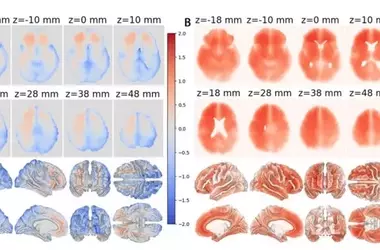
A new study utilizing artificial intelligence and MRI scans has revealed that the human brain ages unevenly, with the right hemisphere generally showing more advanced biological aging than the left. This research, published in PNAS, introduces a novel AI approach to map localized brain aging at a fine-grained level, identifying specific regions that exhibit accelerated aging in individuals with Alzheimer's disease and mild cognitive impairment. The findings underscore the importance of regional brain age assessment over a single global score for detecting early signs of neurodegeneration.

Visceral Fat Loss Linked to Slower Brain Aging and Improved Cognition
New research suggests that reducing deep belly fat, specifically visceral fat, may slow brain aging and enhance cognitive function. Unlike overall body weight or subcutaneous fat, visceral fat's metabolic activity and release of inflammatory molecules appear to be a distinct risk factor for neurodegeneration, with improvements in blood sugar regulation potentially playing a key role in protecting brain health.

Sleep Disruption Boosts Preference for AI in Evaluations
New research indicates that when individuals experience social jetlag, a mismatch between their biological clock and daily schedule, they tend to favor artificial intelligence over human evaluators. This preference stems from increased social anxiety caused by fatigue, leading them to seek the perceived objectivity of AI to avoid human judgment. The findings, published in 'Computers in Human Behavior', highlight how sleep disruption impacts our interaction with technology.