 Breaking News & Live Updates
- Breaking News & Live Updates
- Breaking News & Live Updates
- Breaking News & Live Updates
- Breaking News & Live Updates
- Breaking News & Live Updates
- Breaking News & Live Updates
- Breaking News & Live Updates
- Breaking News & Live Updates
- Breaking News & Live Updates
Sleep Disruption Boosts Preference for AI in Evaluations
A recent study highlights a compelling link between disrupted sleep patterns and an increased inclination towards artificial intelligence for evaluative tasks. When individuals’ internal biological clocks fall out of sync with their daily routines, the resulting weariness can amplify feelings of social apprehension. In such states, people frequently opt for algorithmic assessments, perceiving them as less judgmental than human evaluations. This intriguing discovery was featured in the journal Computers in Human Behavior.
The Impact of Social Jetlag on AI Preference
The human body operates on an inherent circadian rhythm that governs periods of rest and wakefulness. However, modern life often imposes schedules that conflict with this natural cycle, leading to what researchers term 'social jetlag.' This phenomenon, akin to the fatigue of cross-time-zone travel, can impair emotional regulation and heighten sensitivity to how one is perceived by others.
A team of researchers from Sun Yat-Sen University, including Xiaoyu Zhou, Yuxuan Chu, Liwei Zhang, and Jianping Liang, investigated how this specific form of tiredness influences behavior in an increasingly digitized world. They hypothesized that social jetlag fosters social anxiety, characterized by an intense fear of negative judgment from others. With artificial intelligence increasingly integrated into various evaluation processes, from hiring to dating apps, the researchers explored whether those experiencing social jetlag would gravitate towards AI systems.
Their premise was that AI, often viewed as consistent and impartial, might offer a less threatening alternative to human assessment. The research involved four distinct experiments. The initial study enrolled 250 participants, categorizing them by their natural chronotype (morning or evening preference). Participants were then assigned to complete a second survey at either 8:00 a.m. or 8:00 p.m. A discrepancy between a participant's chronotype and the survey time induced social jetlag. In this survey, participants were presented with a dating app scenario requiring an attractiveness evaluation. They had to choose between a human staff member or an AI system. The results revealed that participants experiencing social jetlag overwhelmingly favored AI evaluations, while those whose schedules aligned with their chronotype showed no significant preference.
The second study, involving 226 participants, delved deeper into the psychological mechanisms by measuring social anxiety. Researchers calculated participants’ real-world social jetlag based on their sleep cycles during weekdays versus weekends. Participants then imagined a job interview scenario and chose between a human recruiter or an AI system. Subsequently, they completed a social anxiety questionnaire. Consistent with the first experiment, greater social jetlag correlated with a higher likelihood of choosing the AI interviewer. Statistical analysis confirmed that social anxiety served as a crucial mediating factor, linking social jetlag to the preference for AI.
In the third experiment, the team aimed to confirm that the preference for AI was driven by a desire to avoid human judgment, rather than mere laziness or general social aversion. Recruiting 240 participants on a Monday morning—a time when social jetlag is often pronounced due to weekend schedule shifts—they presented a dating app scenario similar to the first study. This time, no descriptive information about the evaluators was provided, prompting an intuitive choice. Alongside social anxiety, researchers also measured participants' desire to avoid interpersonal contact and their motivation for efficiency. Again, social jetlag strongly predicted a preference for the AI evaluator, with 80% of participants choosing the algorithm. Social anxiety was identified as the sole psychological driver of this choice, with neither a general desire to avoid people nor a need for efficiency explaining the preference.
The final study investigated whether this preference was contingent on perceptions of AI's objectivity. With 218 participants, researchers presented a scenario involving an AI-powered virtual app for evaluating clothing choices. Participants were divided into two groups, receiving different descriptions of the technology. One group was told the AI was objective, based on standardized data, while the other was informed it had learned subjective aesthetic biases. When the AI was portrayed as objective, participants with higher social jetlag showed a stronger intention to adopt its evaluations. However, when the AI was described as subjective and prone to emotional bias, this effect disappeared. This suggests that individuals experiencing social jetlag specifically seek an escape from subjective judgment.
Despite the consistent findings, the researchers acknowledged certain limitations. The studies relied on self-reported sleep schedules and hypothetical scenarios, which might not fully reflect real-world, high-stakes situations. Actual evaluations often involve power dynamics that were not replicated. Future research could track real user behavior on digital platforms and explore how factors like technical literacy or distrust of algorithms interact with social anxiety. The current findings also focus on short-term sleep disruptions, leaving room to investigate the long-term effects of chronic social jetlag on decision-making.
This pioneering research underscores how even subtle physiological shifts, like those caused by sleep disruption, can profoundly influence our psychological states and, consequently, our interactions with emerging technologies like artificial intelligence. It reveals a nuanced aspect of human-AI interaction, where the perceived neutrality of machines becomes a refuge from the complexities of human judgment, especially when we are at our most vulnerable due to fatigue.
Other Articles
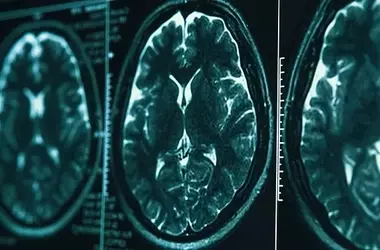
Brain Structure Predicts Antidepressant Response
A small-scale study investigated whether the brain's cortical structure could predict how well individuals with major depressive disorder respond to the antidepressant vortioxetine. Researchers used high-resolution MRI and surface-based morphometry to examine the cortex. Findings suggest that specific features of brain regions involved in emotion regulation, planning, and visual processing, as measured before treatment, are associated with improvements in depressive and anxiety symptoms. This exploratory research points towards potential biomarkers for personalized depression treatment, though larger studies are needed to confirm these preliminary results.

Diverse Perspectives on 'Love on the Spectrum': A Reality TV Analysis
This analysis delves into critical discussions surrounding the Netflix reality series 'Love on the Spectrum,' which explores dating among autistic adults. Drawing insights from autistic individuals, journalists, and clinical professionals, the article highlights the show's departure from conventional reality TV drama, its portrayal of kindness and acceptance, and its role in challenging misconceptions about autistic people's romantic lives. It also examines debates over LGBTQ+ representation, family dynamics, the show's realism, and, most notably, the divergent views on dating coaching methods.
Understanding the Perceived Rise in Autism Diagnoses
The increasing rates of autism diagnoses over recent decades have led to public and scientific debates. This article delves into various research studies to differentiate between actual biological increases in autism incidence, improved diagnostic methods, broadened diagnostic criteria, and socio-economic factors influencing reported prevalence. It explores how these elements contribute to the observed rise, examines shifts in demographic profiles of diagnosed individuals, and discusses ongoing debates among experts regarding interpretation of these trends.

The Power of Personal Disclosure: Boosting Likability in Socially Anxious Individuals
New research suggests that sharing personal stories can significantly increase how much others like and want to interact with individuals, especially benefiting those with social anxiety. The study highlights that the listener's personality traits, such as their own social anxiety levels and need for affiliation, also play a crucial role in shaping these positive evaluations, challenging the common perception that only the speaker's behavior dictates social acceptance.

Autistic Traits and Relationship Maintenance
A recent study explores how autistic-like traits impact romantic relationship maintenance. It suggests individuals with higher autistic-like traits tend to avoid positive, affectionate behaviors, often mediated by their attachment styles rather than broad evolutionary reproductive strategies. The research, published in Evolutionary Psychology, highlights the complex interplay between personality, attachment, and relationship dynamics, offering insights into challenges faced in romantic relationships.

Indoor Hydroponics: A Mental Health Boost for Cancer Patients
A recent study indicates that cancer patients engaging in indoor hydroponic gardening experienced significant improvements in their mental well-being and overall quality of life. This innovative approach offers a convenient and accessible way for patients to reap the therapeutic benefits of gardening, even when outdoor options are limited, highlighting a promising non-clinical intervention for addressing the psychological challenges associated with cancer.