 Breaking News & Live Updates
- Breaking News & Live Updates
- Breaking News & Live Updates
- Breaking News & Live Updates
- Breaking News & Live Updates
- Breaking News & Live Updates
- Breaking News & Live Updates
- Breaking News & Live Updates
- Breaking News & Live Updates
- Breaking News & Live Updates
Understanding the Perceived Rise in Autism Diagnoses
The rising prevalence of autism spectrum disorder (ASD) diagnoses has prompted considerable discussion among the public, medical community, and researchers. ASD, characterized by differences in communication, social interaction, and sensory processing, along with restricted interests and repetitive actions, has seen a dramatic increase in reported cases. This surge often appears to the general population as a rapidly spreading condition.
Healthcare providers, educational institutions, and families are encountering a greater number of children and adults receiving an ASD diagnosis than ever before. This rapid upward trend has initiated a complex dialogue concerning its underlying causes. To fully grasp this discussion, it is crucial to meticulously examine the metrics researchers utilize.
When experts refer to an increase in autism figures, they are typically citing 'diagnosed cases,' meaning individuals formally labeled with the condition. This differs from 'prevalence under consistent methodologies,' which reflects the number of people meeting diagnostic criteria when screened uniformly across a population. Furthermore, 'underlying incidence' refers to the actual biological rate at which the condition manifests.
Current research primarily relies on counting diagnosed cases, as there is no biological test to measure the true underlying incidence of autism. Only a single study in the reviewed literature utilized consistent methods to track prevalence over time. This analysis synthesizes findings from fourteen studies published between 2011 and 2026, offering insights into whether the actual occurrence of autism is increasing or if societal changes are simply leading to more frequent identification.
The significant growth in new diagnoses is a well-established phenomenon globally. For instance, in the United States, a study by Yan et al. (2024) utilizing national health survey data revealed a consistent increase in diagnoses among children and adolescents from 2013 to 2022. By the end of this period, nearly four percent of children in the surveyed group had an autism label. It is noteworthy that this study relied on parent-reported diagnoses and had a response rate of approximately fifty percent. A global systematic review by Zeidan et al. (2022) found a median estimated prevalence of about one percent, but highlighted a wide variation in study estimates, ranging from 1.09 to 436 per 10,000 individuals. This vast disparity was attributed to differences in study design, ascertainment methods, and sociodemographic contexts, rather than biological variability. Another extensive review by Talantseva et al. (2023) observed a similar pooled prevalence but identified a clear upward trend over time, with study methodology significantly influencing the reported numbers. For example, studies using active record-review surveillance reported rates of 1.22 percent, while health insurance databases showed only 0.35 percent. When examining specific primary care systems, the growth is striking. Russell et al. (2022) reported a 787 percent increase in recorded autism diagnoses in England and Northern Ireland between 1998 and 2018. Surprisingly, the average age of diagnosis also rose during this period, suggesting that the increase is not solely due to earlier detection.
There's an ongoing debate among researchers regarding the interpretation of these demographic shifts. Some, like Fyfe et al. (2026), propose a 'catch-up' effect, particularly for female diagnoses, suggesting historical underdiagnosis is now being corrected. Conversely, studies like Ranjan and Breunig's (2026) analysis of the Australian National Disability Insurance Scheme link increased diagnoses to financial incentives, indicating a lowered recognition threshold rather than a pure catch-up effect. Their findings showed a substantial increase in reported prevalence due to the funding scheme, with a larger effect in males and in urban areas, and no earlier age of diagnosis. This suggests that the availability of support systems can significantly influence diagnosis rates. The evolution of diagnostic criteria also plays a role. Matson and Kozlowski (2011) noted the broadening of autism definitions in diagnostic manuals, with the inclusion of conditions like Asperger's Disorder contributing to earlier increases. While some predicted a decrease with the merging of subcategories in later editions, studies indicate minimal change or even decreases, suggesting that the earlier expansions were more impactful. Diagnostic substitution, where conditions previously labeled as intellectual disability are now categorized as autism, also contributes to the observed rise, although recent Australian data suggests this effect might be less prominent in the modern surge. Furthermore, direct population screening studies, such as Kim et al.'s (2026) research in South Korea, which maintained consistent measurement across birth cohorts, found a stable underlying prevalence of autism, but identified a significant proportion of cases that had not been clinically identified. This suggests that improved case-finding methods significantly contribute to the rise in diagnosed cases.
Ultimately, the increase in autism diagnoses is a multifaceted issue driven by a combination of factors. While enhanced diagnostic awareness, expanded criteria, and financial incentives play a significant role in the observed rise in reported cases, a true biological increase cannot be entirely dismissed. Factors such as advanced parental age, maternal obesity, and systemic inflammation, which have become more common in recent decades, may contribute to a modest rise in underlying risk through their impact on fetal brain development. As scientific understanding and measurement tools advance, the interplay between evolving medical classifications and biological changes will become clearer. This ongoing research underscores the importance of refining diagnostic practices and support systems to accurately identify and assist individuals on the autism spectrum, ensuring that care is appropriate and addresses genuine needs rather than misinterpretations of complex neurological conditions.
Other Articles

The Power of Personal Disclosure: Boosting Likability in Socially Anxious Individuals
New research suggests that sharing personal stories can significantly increase how much others like and want to interact with individuals, especially benefiting those with social anxiety. The study highlights that the listener's personality traits, such as their own social anxiety levels and need for affiliation, also play a crucial role in shaping these positive evaluations, challenging the common perception that only the speaker's behavior dictates social acceptance.

Autistic Traits and Relationship Maintenance
A recent study explores how autistic-like traits impact romantic relationship maintenance. It suggests individuals with higher autistic-like traits tend to avoid positive, affectionate behaviors, often mediated by their attachment styles rather than broad evolutionary reproductive strategies. The research, published in Evolutionary Psychology, highlights the complex interplay between personality, attachment, and relationship dynamics, offering insights into challenges faced in romantic relationships.

Indoor Hydroponics: A Mental Health Boost for Cancer Patients
A recent study indicates that cancer patients engaging in indoor hydroponic gardening experienced significant improvements in their mental well-being and overall quality of life. This innovative approach offers a convenient and accessible way for patients to reap the therapeutic benefits of gardening, even when outdoor options are limited, highlighting a promising non-clinical intervention for addressing the psychological challenges associated with cancer.

Scientific Discovery: Nasal Breathing Pathway Linked to Anxiety Regulation
New research reveals how nasal breathing directly influences anxiety levels by activating specific brain circuits. Slow nasal breathing reduces anxiety, while rapid breathing heightens it. This study, primarily conducted on mice, identifies a precise nose-to-brain pathway involving olfactory sensory neurons, the perirhinal cortex, and the amygdala. The findings provide a neuroscientific basis for calming breathing practices and suggest potential therapeutic applications for anxiety disorders.

Understanding Neural Responses to Social Exclusion in Excessive Smartphone Users
A study published in 'Computers in Human Behavior' reveals that individuals who excessively use smartphones display distinct brain activity patterns when experiencing social exclusion. This heightened neural sensitivity, particularly in the right middle cingulate cortex and right superior frontal cortex, may contribute to the persistence of screen-related behavioral addictions. The research emphasizes emotional and cognitive vulnerabilities linked to heavy smartphone reliance, highlighting the need for further investigation into causality and development over time.
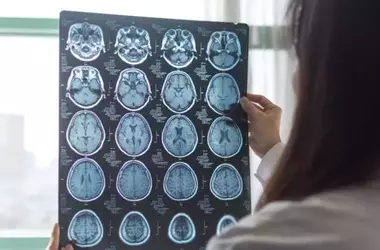
Early Brain Changes in Alzheimer's Disease: A Precursor to Amyloid Plaques
New research indicates that structural alterations in the brain's outer layer can be detected several years before the onset of high amyloid-beta protein levels, suggesting that these physical brain changes may be an earlier indicator of Alzheimer's disease than previously understood. This challenges the traditional view that amyloid plaques are the initial event, highlighting a potentially new timeline for disease progression.