 Breaking News & Live Updates
- Breaking News & Live Updates
- Breaking News & Live Updates
- Breaking News & Live Updates
- Breaking News & Live Updates
- Breaking News & Live Updates
- Breaking News & Live Updates
- Breaking News & Live Updates
- Breaking News & Live Updates
- Breaking News & Live Updates
Scientific Discovery: Nasal Breathing Pathway Linked to Anxiety Regulation
Unlocking Calm: The Direct Link Between Nasal Breathing and Brain Function
The Intricate Connection Between Respiration and Emotion
Slow, deliberate nasal breathing, a cornerstone of practices like yoga and meditation, has long been associated with mental tranquility. Scientists are now uncovering the precise neural pathways through which this physiological act impacts our emotional state. While the brainstem manages the automatic rhythm of breathing, the physical sensation of air entering the nasal cavity also transmits crucial signals to higher brain regions. Olfactory sensory neurons, located in the nose, are specialized not only in detecting scents but also in registering the mechanical pressure of airflow during inhalation.
Exploring the Impact of Nasal Signals on Mood
Previous research has hinted at the influence of nasal signals on human emotions. A 2016 study, for instance, indicated that the manner and pace of breathing directly modulate brain activity, with nasal inhalation potentially accelerating the recognition of fearful expressions. However, the exact mechanism by which these nasal signals affect emotional states, particularly anxiety, and which specific brain circuits translate breathing rhythms into feelings of calm or panic, remained largely undefined.
Deciphering the Causal Link: Airflow as a Signal
Ruiqi Wu, a lead investigator at Fudan University's Institutes of Brain Science, emphasized the goal of establishing a causal link. The research aimed to determine whether breathing influences emotions through top-down brain processes, brainstem respiratory centers, or the physical airflow itself. Their conclusion points to airflow frequency as the direct signal, independently influencing anxiety levels regardless of conscious control or effort.
Experimental Design: Manipulating Nasal Signals in Mice
To investigate this, a research team led by Xinsong Guo and supervised by Wu conducted a series of experiments using mice. They established baseline breathing rates for mice, categorizing them into slow (two breaths per second), moderate (four breaths per second), and fast (seven breaths per second) frequencies. Utilizing optogenetics, a technique where light-sensitive proteins are genetically introduced into specific neurons, they could precisely control the firing rate of olfactory sensory neurons in the mice's nasal cavities using blue laser light, without altering their actual breathing.
Behavioral Observations: Anxiety Levels and Breathing Frequencies
During light stimulation, the mice underwent behavioral assessments to gauge their anxiety. In the Elevated Plus Maze and Open Field Test, common measures of anxiety in rodents, the mice's exploratory behavior varied significantly with the stimulation frequency. Slow nasal stimulation led to increased exploration of open, less secure areas, indicating reduced anxiety. Conversely, fast stimulation resulted in avoidance of open spaces, suggesting heightened anxiety. Moderate stimulation showed no significant behavioral changes.
Neural Correlates: High-Gamma Waves in the Perirhinal Cortex
To understand the brain's response, the team monitored electrical activity in the perirhinal cortex, a region linked to memory but also receiving direct input from the olfactory system. They observed that slow nasal stimulation increased high-gamma waves, fast electrical rhythms associated with active neural processing. Conversely, fast stimulation decreased these waves. A higher level of high-gamma activity directly correlated with reduced anxiety in the mice.
Tracing the Neural Circuitry: A Precise Pathway to Emotion
The scientists meticulously mapped the neural pathway: from olfactory sensory neurons to mitral cells in the olfactory bulb, then to parvalbumin-positive interneurons in the perirhinal cortex, which act as brain wave synchronizers, and finally to the basolateral amygdala, a key area for fear and anxiety processing. This precise and bidirectional mechanism was particularly striking: slow input calms, fast input aggravates, effectively acting as a "frequency dial for emotion."
Confirming the Pathway: Chemogenetic Validation
To further validate this pathway's role in anxiety regulation, the researchers employed chemogenetics. By activating parvalbumin-positive cells in the perirhinal cortex with a specialized drug, they observed a decrease in anxiety and an increase in high-gamma brain waves in mice. Conversely, deactivating these cells heightened anxiety, confirming the critical role of this specific neural chain in translating nasal signals into emotional states.
Long-Term Therapeutic Potential: Sustained Anxiety Reduction
In the final phase, the team explored the therapeutic potential of slow breathing. Mice with induced chronic anxiety, exhibiting reduced high-gamma waves and increased avoidance behavior, received daily two-hour sessions of slow nasal stimulation (both light-based and mechanical air puffs) for two weeks. Both methods completely restored normal behavior and brain wave activity, with the calming effects lasting at least a week after treatment cessation.
Future Directions: Human Translation and Clinical Applications
While acknowledging that the study was conducted on male mice and requires further investigation into female subjects and human translation, the findings underscore a fundamental principle: frequency-tuned nasal input can effectively modulate the anxiety system. This opens promising avenues for clinical anxiety research, particularly in developing non-invasive mechanical breathing devices or guided breathing exercises to target this pathway. The nose, researchers suggest, may be an underappreciated and accessible gateway for regulating brain states, bypassing the thalamus and directly influencing limbic circuits.
Other Articles

Understanding Neural Responses to Social Exclusion in Excessive Smartphone Users
A study published in 'Computers in Human Behavior' reveals that individuals who excessively use smartphones display distinct brain activity patterns when experiencing social exclusion. This heightened neural sensitivity, particularly in the right middle cingulate cortex and right superior frontal cortex, may contribute to the persistence of screen-related behavioral addictions. The research emphasizes emotional and cognitive vulnerabilities linked to heavy smartphone reliance, highlighting the need for further investigation into causality and development over time.
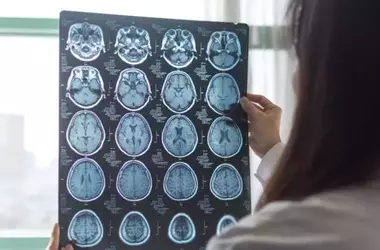
Early Brain Changes in Alzheimer's Disease: A Precursor to Amyloid Plaques
New research indicates that structural alterations in the brain's outer layer can be detected several years before the onset of high amyloid-beta protein levels, suggesting that these physical brain changes may be an earlier indicator of Alzheimer's disease than previously understood. This challenges the traditional view that amyloid plaques are the initial event, highlighting a potentially new timeline for disease progression.

Humor's Role in Depression: A Nuanced Approach
A comprehensive review of clinical psychology and neuroimaging research highlights that while humor can bolster resilience and guard against depressive recurrence, it often proves counterproductive during severe depressive episodes. The efficacy of humor is highly dependent on the disease stage, situational context, and its presentation, with forced jocularity or somber internet memes potentially intensifying anxiety and solidifying negative thought patterns.
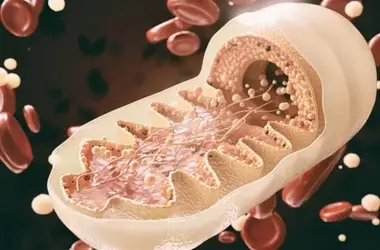
Discovery of 'Mitochondrial Plaques' Offers New Insights into Alzheimer's Disease
Researchers have identified novel "mitochondrial plaques" in Alzheimer's disease brains, consisting of damaged mitochondria within nerve fibers. This discovery, published in Nature Neuroscience, suggests a breakdown in the brain's waste disposal system. These plaques form early in the disease and may offer new therapeutic targets beyond traditional amyloid-focused treatments to combat cognitive decline.

Narcissistic Traits and Attitudes Towards Mental Health Treatment
A recent study published in "Personality and Individual Differences" explores how different forms of narcissism influence individuals' attitudes towards seeking psychological help. Researchers found that antagonistic narcissism, characterized by rivalry and hostility, leads to negative perceptions of mental health professionals and a reluctance to seek therapy. Conversely, narcissistic admiration, a self-promotional trait, is associated with more favorable views of psychological treatment. The study, conducted across American and Polish adult populations, highlights the complex interplay between personality traits and mental healthcare-seeking behaviors.

Mental Health Conditions Becoming More Enduring: A Decade-Long Trend
New research reveals that prevalent mental health conditions such as anxiety and depression are persisting for longer durations today compared to a decade ago. This trend suggests increased challenges in treatment and long-term care, with a significant rise in the proportion of individuals experiencing mental disorders for over three years. The study highlights the need for a deeper understanding of underlying societal, environmental, and healthcare-related factors contributing to this growing persistence.