 Breaking News & Live Updates
- Breaking News & Live Updates
- Breaking News & Live Updates
- Breaking News & Live Updates
- Breaking News & Live Updates
- Breaking News & Live Updates
- Breaking News & Live Updates
- Breaking News & Live Updates
- Breaking News & Live Updates
- Breaking News & Live Updates
The Power of Personal Disclosure: Boosting Likability in Socially Anxious Individuals
Individuals grappling with social anxiety frequently harbor concerns about being judged critically by others, leading them to often refrain from revealing personal details. However, a recent investigation reveals that opening up about one's experiences enhances how favorably others perceive an individual and their desire for interaction, irrespective of the speaker's anxiety levels. This study, featured in The Journal of Psychology, further underscores that the unique characteristics of the person evaluating the interaction are significant in influencing these positive judgments.
Social anxiety is characterized by an intense apprehension of negative judgment in social or public performance contexts. Those affected often worry about failing to meet social norms or facing rejection from their peers. To mitigate these perceived risks, they frequently resort to safety behaviors, such as avoiding direct eye contact, maintaining silence, or physically distancing themselves from groups.
While these strategies may offer a sense of protection, they often inadvertently perpetuate a cycle of misunderstanding. Peers might interpret such withdrawal as a lack of interest, unfriendliness, or detachment. When others respond coolly, the anxious individual views this as confirmation of their deepest fears, reinforcing their avoidance and preventing potentially positive social experiences that could challenge their anxious beliefs.
A specific behavior that anxious individuals tend to limit is self-disclosure, which involves sharing personal thoughts, emotions, past events, and future aspirations with another person. In healthy human relationships, interactions typically evolve from superficial exchanges to more profound and intimate conversations. Disclosing personal information is a common method for building trust and expressing warmth. When this is avoided, individuals may struggle to forge meaningful connections. Researchers Gabriela Lavinia Niță and Violeta Ștefania Rotărescu from the University of Bucharest aimed to investigate how varying degrees of self-disclosure impact the perceptions of socially anxious individuals.
They also sought to broaden the scope of their inquiry beyond just the speaker to include the listener. Given the subjective nature of human perception, the researchers hypothesized that a listener's own personality traits might influence their assessment of another's likability. To explore these ideas, the study engaged 136 online evaluators who served as 'raters'. Additionally, four university students were chosen to be the 'speakers'; two had a diagnosed social anxiety disorder, and two did not, with each pair comprising one male and one female.
The evaluators assessed each speaker at four distinct points. Initially, they reviewed a basic photograph. Next, they watched a brief video where the speaker shared general information like their name, age, and hobbies. The third stage involved a video of the speaker recounting a positive school memory. Finally, they viewed a video in which the speaker disclosed a negative or sad school experience. After each stage, evaluators completed questionnaires to rate the speaker's likability and their desire for future interactions, which indicated their willingness to engage with the speaker, such as sitting next to them on a bus or seeking advice.
The findings indicated that sharing personal narratives enhanced the speakers' appeal. Evaluators expressed greater liking for speakers after hearing positive personal stories, compared to their initial impressions from just a photograph. This increase in likability was observed for both socially anxious and non-anxious speakers. Moreover, disclosing a negative experience also boosted evaluators' desire for future interactions. As speakers revealed more vulnerable aspects of themselves, evaluators generally perceived them as more approachable, suggesting that the simple act of opening up could overcome initial reservations.
Following the video evaluations, a secondary analysis focused on the 136 evaluators, who completed comprehensive surveys measuring their personality traits, including extraversion, agreeableness, and their own levels of social anxiety. The researchers also assessed the evaluators' need for affiliation, defined as the innate human desire for acceptance, inclusion, and connection within social groups. Individuals with a high need for affiliation prioritize maintaining positive social relationships.
Contrary to expectations, the evaluators' extraversion and agreeableness did not significantly influence their likability ratings. These broader personality traits did not make them more or less generous in their judgments. Instead, an evaluator's own social anxiety proved to be a decisive factor in how they perceived the speakers. Evaluators with higher social anxiety scores tended to give more favorable likability ratings to all speakers, regardless of the speakers' anxiety status. These anxious raters appeared to be a more forgiving audience.
A similar pattern emerged among evaluators with a strong need for affiliation. Those who deeply desired social connection provided more generous likability ratings across the board. The researchers posit that individuals who seek acceptance are highly attuned to social inclusion cues, leading them to view others more positively. When people desire to belong, they might evaluate others leniently to avoid conflict and foster connections. This finding reframes the understanding of social rejection; if a socially anxious person feels disliked, it might not solely be due to their own actions, but potentially also to the listener's lack of affiliative need.
Despite providing new insights into social dynamics, the study has several limitations. The researchers acknowledged the halo effect, a cognitive bias where physical attractiveness can inflate perceived likability, potentially influencing ratings independently of self-disclosure. The reliance on self-reported questionnaires for evaluators' anxiety and personality traits also presents a limitation, as these are dependent on self-awareness and honesty, potentially skewing data. The survey's considerable length, nearly an hour, could have led to participant fatigue and rushed responses.
Furthermore, evaluating pre-recorded videos in an online setting differs significantly from real-life interactions. The videos lacked the immediate feedback and nuanced body language inherent in face-to-face conversations. In a live setting, a socially anxious individual might react poorly to unexpected pauses or a listener's facial expressions. Future research could incorporate live, in-person interactions to more accurately capture the dynamic nature of social exchanges. Observing how socially anxious individuals manage self-disclosure in real time would offer a more authentic portrayal of how likability is formed. For now, the study suggests that sharing aspects of oneself is an effective strategy for building rapport with others.
Other Articles

Autistic Traits and Relationship Maintenance
A recent study explores how autistic-like traits impact romantic relationship maintenance. It suggests individuals with higher autistic-like traits tend to avoid positive, affectionate behaviors, often mediated by their attachment styles rather than broad evolutionary reproductive strategies. The research, published in Evolutionary Psychology, highlights the complex interplay between personality, attachment, and relationship dynamics, offering insights into challenges faced in romantic relationships.

Indoor Hydroponics: A Mental Health Boost for Cancer Patients
A recent study indicates that cancer patients engaging in indoor hydroponic gardening experienced significant improvements in their mental well-being and overall quality of life. This innovative approach offers a convenient and accessible way for patients to reap the therapeutic benefits of gardening, even when outdoor options are limited, highlighting a promising non-clinical intervention for addressing the psychological challenges associated with cancer.

Scientific Discovery: Nasal Breathing Pathway Linked to Anxiety Regulation
New research reveals how nasal breathing directly influences anxiety levels by activating specific brain circuits. Slow nasal breathing reduces anxiety, while rapid breathing heightens it. This study, primarily conducted on mice, identifies a precise nose-to-brain pathway involving olfactory sensory neurons, the perirhinal cortex, and the amygdala. The findings provide a neuroscientific basis for calming breathing practices and suggest potential therapeutic applications for anxiety disorders.

Understanding Neural Responses to Social Exclusion in Excessive Smartphone Users
A study published in 'Computers in Human Behavior' reveals that individuals who excessively use smartphones display distinct brain activity patterns when experiencing social exclusion. This heightened neural sensitivity, particularly in the right middle cingulate cortex and right superior frontal cortex, may contribute to the persistence of screen-related behavioral addictions. The research emphasizes emotional and cognitive vulnerabilities linked to heavy smartphone reliance, highlighting the need for further investigation into causality and development over time.
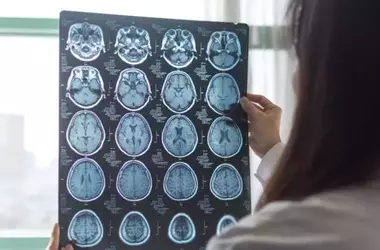
Early Brain Changes in Alzheimer's Disease: A Precursor to Amyloid Plaques
New research indicates that structural alterations in the brain's outer layer can be detected several years before the onset of high amyloid-beta protein levels, suggesting that these physical brain changes may be an earlier indicator of Alzheimer's disease than previously understood. This challenges the traditional view that amyloid plaques are the initial event, highlighting a potentially new timeline for disease progression.
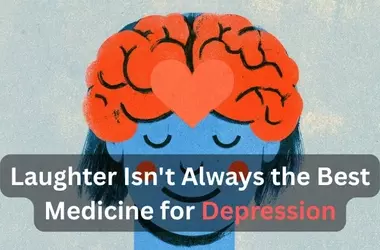
Humor's Role in Depression: A Nuanced Approach
A comprehensive review of clinical psychology and neuroimaging research highlights that while humor can bolster resilience and guard against depressive recurrence, it often proves counterproductive during severe depressive episodes. The efficacy of humor is highly dependent on the disease stage, situational context, and its presentation, with forced jocularity or somber internet memes potentially intensifying anxiety and solidifying negative thought patterns.