 Breaking News & Live Updates
- Breaking News & Live Updates
- Breaking News & Live Updates
- Breaking News & Live Updates
- Breaking News & Live Updates
- Breaking News & Live Updates
- Breaking News & Live Updates
- Breaking News & Live Updates
- Breaking News & Live Updates
- Breaking News & Live Updates
Salsa Dancing: A Rhythmic Remedy for Depression in Young Adults
Emerging research indicates that engaging in social dance, specifically salsa, offers a promising non-pharmacological approach to alleviate depressive symptoms among young adults. This innovative study underscores the therapeutic value of integrating enjoyable social activities into mental health support systems, particularly for a demographic that often faces barriers to traditional care.
Salsa's Impact on Youth Mental Health: A Detailed Insight
In a compelling randomized controlled trial, Dr. Brennan Delattre and her research team at the University of Oxford investigated the effects of an eight-week salsa dancing curriculum on the mental well-being of young adults. The study involved 121 participants, aged 18 to 24, all of whom exhibited mild to moderately severe depressive symptoms. Participants were divided into two groups: an experimental group that attended regular salsa classes and a control group on a waiting list.
The experimental sessions, held at local university dance societies in Oxford, integrated participants with regular attendees, fostering a natural social environment. This design aimed to assess whether the blend of physical activity and sustained social interaction inherent in partner dancing could provide a unique therapeutic benefit. Throughout the 12-week tracking period, participants completed various mental health questionnaires, measuring depressive symptoms, generalized anxiety, social anxiety, loneliness, and social anhedonia (the inability to experience pleasure from social activities).
The findings, published in Psychological Medicine, revealed a notable reduction in depressive symptoms within the salsa dancing group compared to the waitlist control. Specifically, the dance participants showed an average decrease of approximately three points on the Patient Health Questionnaire (PHQ-9), a standard depression assessment tool, a change considered clinically significant. Moreover, the salsa group experienced a steady decline in social anxiety, contrasting with the control group's minimal change.
Intriguingly, the study also observed that individuals in the salsa group maintained their capacity for social enjoyment, while the waitlist group experienced a gradual decrease in this area. Although the statistical significance of this finding requires further exploration, it suggests that social dance might serve as a protective factor against social anhedonia, enhancing resilience in the face of emotional distress. Daily text message ratings further corroborated these results, indicating a steeper increase in happiness levels among those who participated in salsa.
While acknowledging the study's limitations, such as potential selection bias and the use of a waitlist control, the researchers emphasize that the positive outcomes are robust enough to warrant larger-scale investigations. Dr. Delattre plans to pursue further trials, aiming to evaluate social dance and other creative interventions within public healthcare systems, ultimately exploring their applicability across diverse populations globally.
This study illuminates a path toward more accessible and enjoyable mental health interventions for young adults. It challenges the conventional approach by highlighting how engaging, culturally rich activities like salsa dancing can serve as powerful tools for psychological well-being. From a broader perspective, it inspires a reevaluation of how communities can support mental health, suggesting that fostering social connections and physical activity through appealing group activities could be as vital as, or complementary to, traditional therapies. The research prompts us to consider the profound impact of joy, movement, and community on healing and resilience, encouraging us to explore diverse, holistic approaches to mental wellness that resonate with individuals' lived experiences and preferences.
Other Articles

Inner Dialogue During Psilocybin Therapy Linked to Alcohol Abstinence
A new study suggests that how individuals engage with a psilocybin experience may predict their success in maintaining alcohol abstinence. Participants who focused on inner dialogue, self-reflection, and commitment to change during their psychedelic session were more likely to remain abstinent three months later, compared to those who focused on sensory and emotional experiences. This highlights the potential importance of active cognitive processing during psychedelic-assisted therapy for alcohol use disorder.

Childhood Loneliness and Social Isolation: Enduring Impacts on Young Adults
A new study reveals that loneliness experienced during childhood does not necessarily lead socially isolated youth to reconnect with others later in life. Instead, both childhood loneliness and social isolation independently predict a range of mental health and socioeconomic challenges in young adulthood. These findings challenge previous evolutionary theories suggesting that loneliness acts as an adaptive alarm, motivating individuals to improve their social connections. The research highlights the critical need for direct interventions to address loneliness and isolation in children.
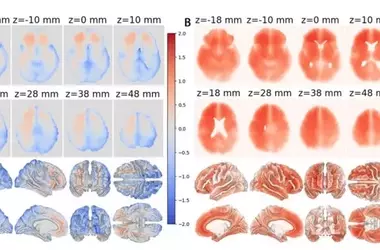
AI Reveals Asymmetric Brain Aging and Alzheimer's Markers
A new study utilizing artificial intelligence and MRI scans has revealed that the human brain ages unevenly, with the right hemisphere generally showing more advanced biological aging than the left. This research, published in PNAS, introduces a novel AI approach to map localized brain aging at a fine-grained level, identifying specific regions that exhibit accelerated aging in individuals with Alzheimer's disease and mild cognitive impairment. The findings underscore the importance of regional brain age assessment over a single global score for detecting early signs of neurodegeneration.

Visceral Fat Loss Linked to Slower Brain Aging and Improved Cognition
New research suggests that reducing deep belly fat, specifically visceral fat, may slow brain aging and enhance cognitive function. Unlike overall body weight or subcutaneous fat, visceral fat's metabolic activity and release of inflammatory molecules appear to be a distinct risk factor for neurodegeneration, with improvements in blood sugar regulation potentially playing a key role in protecting brain health.

Sleep Disruption Boosts Preference for AI in Evaluations
New research indicates that when individuals experience social jetlag, a mismatch between their biological clock and daily schedule, they tend to favor artificial intelligence over human evaluators. This preference stems from increased social anxiety caused by fatigue, leading them to seek the perceived objectivity of AI to avoid human judgment. The findings, published in 'Computers in Human Behavior', highlight how sleep disruption impacts our interaction with technology.
Brain Structure Predicts Antidepressant Response
A small-scale study investigated whether the brain's cortical structure could predict how well individuals with major depressive disorder respond to the antidepressant vortioxetine. Researchers used high-resolution MRI and surface-based morphometry to examine the cortex. Findings suggest that specific features of brain regions involved in emotion regulation, planning, and visual processing, as measured before treatment, are associated with improvements in depressive and anxiety symptoms. This exploratory research points towards potential biomarkers for personalized depression treatment, though larger studies are needed to confirm these preliminary results.