 Breaking News & Live Updates
- Breaking News & Live Updates
- Breaking News & Live Updates
- Breaking News & Live Updates
- Breaking News & Live Updates
- Breaking News & Live Updates
- Breaking News & Live Updates
- Breaking News & Live Updates
- Breaking News & Live Updates
- Breaking News & Live Updates
Childhood Loneliness and Social Isolation: Enduring Impacts on Young Adults
New research indicates that experiencing loneliness during childhood does not inherently encourage socially isolated young individuals to re-establish social ties in their later years. Instead, both early-life loneliness and social disconnection independently forecast a variety of mental health and financial difficulties as these individuals reach young adulthood. This discovery refutes the notion that feelings of loneliness serve as a beneficial biological signal, prompting young people to mend their social bonds.
The researchers defined social isolation as the objective lack of positive social interactions and support networks, often manifesting in childhood as social withdrawal or peer rejection. Loneliness, in contrast, was understood as the subjective, internal dissatisfaction with the quantity or quality of one's relationships. The study analyzed data from the Environmental Risk Longitudinal Twin Study, tracking 2,232 twins from England and Wales born in 1994 and 1995. Information on social isolation, as reported by mothers and teachers, and self-reported loneliness was collected at age 12. At age 18, participants again reported their levels of loneliness and social isolation, alongside various life outcomes including mental health, overall well-being, health behaviors, and socioeconomic achievements. The findings revealed that early loneliness predicted increased social isolation in young adulthood, an effect twice as strong as the reverse. This indicates that the distress of loneliness did not motivate these young individuals to build or rebuild social connections. Both childhood loneliness and social isolation independently predicted poorer mental health, reduced well-being, and lower socioeconomic status at age 18. Notably, childhood social isolation was a significant predictor of all future socioeconomic outcomes, particularly increasing the risk of being Not in Education, Employment, or Training (NEET) by 2.4 times.
The study also found no evidence of a compounded penalty for those experiencing both high loneliness and high isolation, suggesting a potential ceiling effect where the damage from one factor was already substantial. The unexpected strength of the link between social isolation and poor educational and employment outcomes, surpassing other established risk factors like childhood depression or anxiety, underscored the critical nature of this issue. Future research aims to investigate the specific mechanisms preventing isolated youth from forming social networks and to explore how loneliness and isolation interact across various life stages. Ultimately, the study suggests that societal approaches to addressing youth employment and well-being should more directly target social isolation.
This study underscores the crucial importance of addressing childhood loneliness and social isolation early on. Recognizing that these issues are not self-correcting, but rather contribute to long-term challenges in mental health and socioeconomic stability, highlights the need for proactive and targeted interventions. By fostering environments that promote social connection and support for young people, society can empower them to build resilient futures, cultivate meaningful relationships, and achieve their full potential.
Other Articles
AI Reveals Asymmetric Brain Aging and Alzheimer's Markers
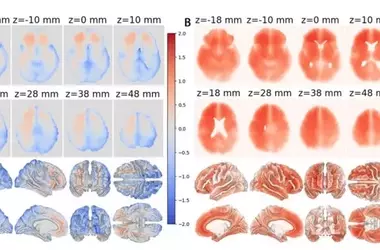
A new study utilizing artificial intelligence and MRI scans has revealed that the human brain ages unevenly, with the right hemisphere generally showing more advanced biological aging than the left. This research, published in PNAS, introduces a novel AI approach to map localized brain aging at a fine-grained level, identifying specific regions that exhibit accelerated aging in individuals with Alzheimer's disease and mild cognitive impairment. The findings underscore the importance of regional brain age assessment over a single global score for detecting early signs of neurodegeneration.

Visceral Fat Loss Linked to Slower Brain Aging and Improved Cognition
New research suggests that reducing deep belly fat, specifically visceral fat, may slow brain aging and enhance cognitive function. Unlike overall body weight or subcutaneous fat, visceral fat's metabolic activity and release of inflammatory molecules appear to be a distinct risk factor for neurodegeneration, with improvements in blood sugar regulation potentially playing a key role in protecting brain health.

Sleep Disruption Boosts Preference for AI in Evaluations
New research indicates that when individuals experience social jetlag, a mismatch between their biological clock and daily schedule, they tend to favor artificial intelligence over human evaluators. This preference stems from increased social anxiety caused by fatigue, leading them to seek the perceived objectivity of AI to avoid human judgment. The findings, published in 'Computers in Human Behavior', highlight how sleep disruption impacts our interaction with technology.
Brain Structure Predicts Antidepressant Response
A small-scale study investigated whether the brain's cortical structure could predict how well individuals with major depressive disorder respond to the antidepressant vortioxetine. Researchers used high-resolution MRI and surface-based morphometry to examine the cortex. Findings suggest that specific features of brain regions involved in emotion regulation, planning, and visual processing, as measured before treatment, are associated with improvements in depressive and anxiety symptoms. This exploratory research points towards potential biomarkers for personalized depression treatment, though larger studies are needed to confirm these preliminary results.

Diverse Perspectives on 'Love on the Spectrum': A Reality TV Analysis
This analysis delves into critical discussions surrounding the Netflix reality series 'Love on the Spectrum,' which explores dating among autistic adults. Drawing insights from autistic individuals, journalists, and clinical professionals, the article highlights the show's departure from conventional reality TV drama, its portrayal of kindness and acceptance, and its role in challenging misconceptions about autistic people's romantic lives. It also examines debates over LGBTQ+ representation, family dynamics, the show's realism, and, most notably, the divergent views on dating coaching methods.

Understanding the Perceived Rise in Autism Diagnoses
The increasing rates of autism diagnoses over recent decades have led to public and scientific debates. This article delves into various research studies to differentiate between actual biological increases in autism incidence, improved diagnostic methods, broadened diagnostic criteria, and socio-economic factors influencing reported prevalence. It explores how these elements contribute to the observed rise, examines shifts in demographic profiles of diagnosed individuals, and discusses ongoing debates among experts regarding interpretation of these trends.