 Breaking News & Live Updates
- Breaking News & Live Updates
- Breaking News & Live Updates
- Breaking News & Live Updates
- Breaking News & Live Updates
- Breaking News & Live Updates
- Breaking News & Live Updates
- Breaking News & Live Updates
- Breaking News & Live Updates
- Breaking News & Live Updates
The Complex Relationship Between Parenthood and Happiness
A widely held conviction posits that raising children inherently brings joy and contentment. Historically, numerous large-scale social surveys appeared to substantiate this idea, suggesting a positive correlation between having children and an elevated sense of happiness and fulfillment. This perspective aligns with evolutionary biology, where reproductive success, or passing on one's genetic material, is a fundamental driver. From this viewpoint, feelings of happiness could serve as an evolutionary mechanism, rewarding individuals for procreating and nurturing the next generation.
However, recent psychological investigations suggest that this perceived link between parenthood and happiness might be more nuanced than previously understood. A key factor that many earlier studies failed to adequately consider is the impact of an individual's relationship status. People with romantic partners tend to report higher levels of emotional wellbeing and life satisfaction, irrespective of whether they have children. Consequently, the apparent happiness associated with parenthood could, in many cases, be a byproduct of being in a stable relationship, rather than solely a result of having offspring. This critical distinction necessitates a reevaluation of how we interpret the emotional outcomes of becoming parents.
Re-evaluating Parenthood's Impact on Personal Happiness
The conventional wisdom that parenting automatically equates to a happier life is being re-examined by contemporary psychological studies. While anecdotal evidence and earlier surveys often highlighted the immense joy and purpose children bring, a deeper dive into the data reveals a more complex picture. Researchers are now meticulously controlling for variables like partnership status, which significantly influences overall life satisfaction. By doing so, they aim to isolate the direct impact of parenthood itself, rather than conflating it with the positive effects of a stable romantic relationship. This analytical rigor is crucial for understanding the true emotional landscape of parenting.
A comprehensive international study involving over 5,500 participants from 12 countries provided compelling insights into this issue. Psychologists, including Menelaos Apostelou and Mads Larsen, meticulously analyzed data on happiness, life satisfaction, emotions, parenthood, and relationship status. After statistically accounting for the influence of romantic relationships, the findings indicated that parents and non-parents reported similar levels across most happiness measures. Although parents did note a slightly higher sense of meaning in life, this effect was minimal. These results challenge the long-held evolutionary hypothesis that a sustained boost in happiness is a reward for procreation, suggesting instead that the joy derived from parenting might be more transient, akin to peak emotional experiences rather than a constant state of elevated contentment.
Transient Joys Versus Sustained Fulfillment in Parenting
The notion that parenting brings sustained happiness is largely a myth, according to recent psychological research. Instead, the joy associated with raising children appears to be more episodic, characterized by intense, fleeting moments of delight rather than a continuous state of elevated wellbeing. This perspective offers a potential resolution to the paradox where, despite the significant emotional and biological investment in procreation, parents do not consistently report higher happiness levels than non-parents. It implies that the emotional rewards of parenting are powerful but not necessarily enduring, serving perhaps as motivational spikes that encourage individuals through the demanding aspects of child-rearing.
This reinterpretation of parental happiness suggests that society's expectations regarding the long-term emotional benefits of having children may need adjustment. While parents undeniably cherish milestones like a child's first words or steps, these moments, though profoundly joyful, are often interspersed with considerable challenges, including sleepless nights, financial strain, and constant demands. From an evolutionary standpoint, these transient moments of intense positive emotion might serve to re-energize parents, providing the motivation to overcome difficulties and continue investing in their offspring's development. Therefore, while parenthood brings unparalleled meaningful experiences, prospective parents should temper expectations of a perpetual state of bliss, understanding that the emotional journey is rich with both profound joys and significant exertions.
Other Articles

Comforting Others: A Cultural Trait, Not a Universal Instinct
A groundbreaking international study challenges the long-held belief that comforting others in distress is a universal human instinct. The research involving over 6,900 participants across 17 countries reveals that while individuals globally aim to regulate their own emotions towards happiness, their approach to comforting others is profoundly shaped by cultural values. Individualistic societies tend to actively alleviate negative emotions, whereas collectivistic societies often view unpleasant emotions as valuable for self-improvement and relationship building, suggesting that emotional support is not a one-size-fits-all concept.

Social Attunement and Alcohol Consumption: Age-Related Differences
A recent study explores how social alignment influences alcohol consumption across different age groups. It reveals that younger individuals with higher social attunement tend to consume more alcohol in non-drinking social settings, while older adults with similar attunement consume less. Conversely, in entirely alcohol-free environments, the patterns reverse: younger people drink less, and older people drink more. This highlights the complex interplay between social factors, age, and drinking habits.

Global Study Unveils the Intricacies of Self-Control Across Cultures
A monumental international study, spanning 77 countries and involving 15,000 participants, is delving into the complexities of intertemporal choice – the psychological balancing act between immediate gratification and long-term rewards. This collaborative effort, led by the University of Bonn, seeks to understand how environmental stability, cultural norms, and individual mood influence decision-making regarding future monetary rewards, offering insights that could shape global policies.

Unraveling the Genetic Blueprint of Mental Health: A Conversation with Andrew Grotzinger
This article features an interview with Andrew Grotzinger, a distinguished researcher and recipient of the 2026 Janet Taylor Spence Award. He discusses his groundbreaking work at the P-Badger Lab, University of Colorado Boulder, focusing on the genetic interplay between psychiatric and neurodegenerative conditions. Grotzinger shares his journey into this specialized field, highlights from his research on genetic overlap in mental disorders, and his future aspirations for more inclusive and nuanced genetic studies. He also offers invaluable career advice to aspiring researchers.
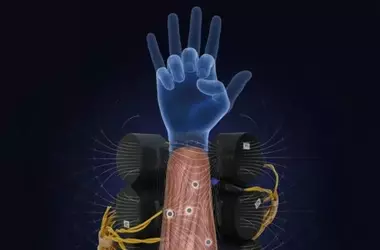
Magnetic Implants Restore Prosthetic Hand Sensation
A novel study reveals that tiny magnets implanted in amputees' residual limb muscles can generate natural, coordinated sensations of prosthetic hand movement. This breakthrough suggests the brain perceives movement as integrated actions, not isolated twitches. The research paves the way for advanced prosthetic limbs that offer users a more intuitive and tactile experience, reducing reliance on visual feedback.

The Digital Age Paradox: Chatbots, Loneliness, and the Erosion of Human Connection
In an era dominated by digital communication, a troubling decline in face-to-face verbal interaction is emerging, fueling a loneliness epidemic. Research indicates that while chatbots offer temporary companionship, their long-term use may intensify feelings of isolation. This shift necessitates new frameworks for understanding social anhedonia and calls for a reevaluation of how technology shapes our mental well-being and genuine human connection.