 Breaking News & Live Updates
- Breaking News & Live Updates
- Breaking News & Live Updates
- Breaking News & Live Updates
- Breaking News & Live Updates
- Breaking News & Live Updates
- Breaking News & Live Updates
- Breaking News & Live Updates
- Breaking News & Live Updates
- Breaking News & Live Updates
Magnetic Implants Restore Prosthetic Hand Sensation
A new research initiative details an innovative approach to restoring sensory feedback for individuals with prosthetic limbs. By implanting small, vibrating magnets into the remaining forearm muscles, researchers have successfully enabled amputees to experience a natural sense of synchronized hand motion. This significant discovery suggests that the brain interprets movement not as individual finger actions but as holistic, coordinated hand gestures. This progress offers a promising path towards creating sophisticated prosthetic devices that grant users an intuitive sense of touch and movement, lessening their dependence on visual cues.
For those who have undergone limb loss, operating a prosthetic often feels disconnected due to the severing of muscles from joints, which interrupts the body's natural communication pathways. Proprioception, the body's unconscious awareness of its position in space, and kinesthesia, the real-time sensation of movement, are crucial for natural motor control but are lost after amputation. Existing prosthetic hands typically rely on electrical signals from residual muscles, but without physical connection to bones and tendons, users lack the inherent feeling of the prosthetic's movement. Previous attempts to restore this sensation often involved complex surgical nerve rerouting, which, while effective, required extensive anatomical alteration. The novel approach presented in this study, however, utilizes a less invasive method, focusing on direct muscle stimulation to mimic natural kinesthetic feedback.
The international research team introduced a unique bidirectional interface for prosthetic hands, known as the myokinetic kinesthetic interface. This system employs vibrations from miniature magnets embedded in the forearm muscles to rekindle natural movement sensations. This interface was seamlessly integrated with the Mia Hand, an advanced robotic hand developed by Prensilia. In a groundbreaking experiment, a 34-year-old male amputee received surgically implanted biocompatible magnets in three key muscles responsible for wrist and finger movements. The objective was to determine if vibrating these magnets could trick the brain into perceiving movement in the missing hand. During the study, electromagnetic coils remotely activated the implanted magnets at varying frequencies, causing the participant to consistently report sensations of coordinated phantom hand movements, such as opening and closing, rather than isolated finger twitches. This natural perception suggests the brain retains a structural map of the hand, even after its physical absence. While this study's primary limitation was its single participant, extensive future research with a larger group is planned to validate these findings and explore permanent implant solutions, potentially revolutionizing prosthetic technology and benefiting fields like stroke rehabilitation.
The findings from this pioneering research mark a significant stride towards creating prosthetics that are not merely functional but also offer an integrated, intuitive, and truly human-like experience. This innovative approach fosters a deeper understanding of how the brain organizes movement, paving the way for future medical interventions that seamlessly blend technology with the body's inherent wisdom.
Other Articles
The Digital Age Paradox: Chatbots, Loneliness, and the Erosion of Human Connection
In an era dominated by digital communication, a troubling decline in face-to-face verbal interaction is emerging, fueling a loneliness epidemic. Research indicates that while chatbots offer temporary companionship, their long-term use may intensify feelings of isolation. This shift necessitates new frameworks for understanding social anhedonia and calls for a reevaluation of how technology shapes our mental well-being and genuine human connection.
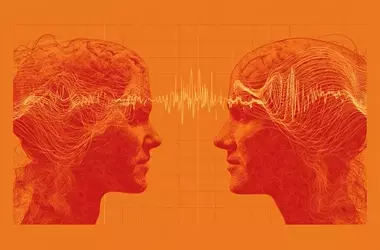
Exploring Brainwave Synchronization to Enhance Human Connection
A decade of groundbreaking research demonstrates that the common expression 'being on the same wavelength' has a tangible neurobiological basis. During face-to-face interactions, human brain rhythms align. This phenomenon, termed social synchrony, has been mapped by neuroscientists in diverse settings, from high schools to music studios, using portable EEG technology. The research indicates that synchronized brainwaves predict social rapport and engagement. Future studies, backed by a significant federal grant, aim to leverage this neural alignment for therapeutic interventions, combating loneliness, and strengthening community bonds.
Brainwave Patterns Precede Deception: Unveiling the Neural Signatures of Impending Lies
A recent study published in NeuroImage demonstrates that distinctive brain signals emerge before an individual utters a falsehood, indicating a preparatory cognitive effort. Researchers utilized EEG to monitor electrical activity in participants' brains as they prepared to tell truths or lies about personal information. The findings suggest that detecting these neural markers could pave the way for novel lie detection methodologies by focusing on the pre-deception phase.
Psilocybin's Impact on Advanced Alzheimer's Disease: A Case Study
A recent case study published in Frontiers in Neuroscience suggests that a high dose of psilocybin mushrooms temporarily restored speech and mobility in an 80-year-old woman with advanced Alzheimer's disease. This discovery indicates that certain brain networks might retain dormant capacities even in the late stages of neurodegeneration, opening new avenues for symptom management and future clinical trials for psychedelic compounds.
Navigating the AI Era in Psychological Science Publishing
As artificial intelligence increasingly shapes scholarly discourse, journal editors at the Association for Psychological Science (APS) are deliberating on its integration into editorial practices. This article compiles insights from several APS journal editors, addressing critical questions regarding AI disclosure in manuscripts, its role in peer review, its utility in editorial workflows, its impact on student learning, and the considerations for AI-assisted translation. The diverse perspectives highlight both the opportunities and challenges AI presents to the integrity and future of psychological science publishing.
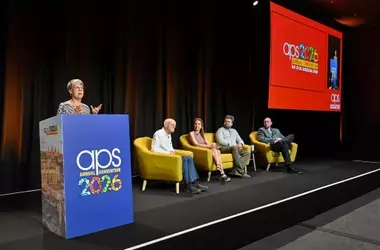
Enhancing APS Conventions: A Vision for Future Engagement
The APS President reflects on the recent Barcelona convention and outlines plans for the upcoming Seattle event in 2027. Key initiatives include expanding integrative science discussions, fostering debates on controversial topics, introducing new workshop formats, enhancing professional development, and exploring the creation of consensus scientific reports. The aim is to create more valuable and engaging conventions that better serve the diverse needs of APS members.