 Breaking News & Live Updates
- Breaking News & Live Updates
- Breaking News & Live Updates
- Breaking News & Live Updates
- Breaking News & Live Updates
- Breaking News & Live Updates
- Breaking News & Live Updates
- Breaking News & Live Updates
- Breaking News & Live Updates
- Breaking News & Live Updates
Exploring Brainwave Synchronization to Enhance Human Connection
For ten years, pioneering research has revealed that the common saying, "being on the same wavelength," is not merely a figure of speech but a verifiable neurobiological phenomenon. This extensive study, encompassing thousands of participants in various real-world scenarios, from educational environments to artistic collaborations, has demonstrated that individuals' brain rhythms naturally synchronize during direct, in-person interactions. This collective neural alignment, known as social synchrony, can be precisely measured and visually represented, offering novel opportunities to combat feelings of isolation and foster stronger community ties. The findings pave the way for leveraging this understanding in clinical applications, with the potential to enhance psychological therapies and rebuild social cohesion.
Breakthroughs in Social Synchrony: From Classrooms to Clinical Trials
The journey into understanding social synchrony began with sophisticated experiments that continuously monitored the brain activity of participants through portable, non-invasive electroencephalogram (EEG) devices. Researchers consistently observed that when individuals were deeply engaged with one another, their brainwave patterns became synchronized. This alignment was evident in diverse groups, including high school students engrossed in lessons and world-renowned musicians like Bad Bunny and Residente collaborating in a studio. The data unequivocally illustrated that this shared brain state was a quantifiable aspect of human interaction.
A significant finding from longitudinal studies in high school classrooms highlighted the predictive power of brainwave synchronization. The degree to which students' brainwaves aligned directly correlated with their mutual liking and their level of engagement with the course material. Conversely, the research unveiled a striking neurobiological signature in individuals experiencing loneliness: their brain activity tended to be highly idiosyncratic and struggled to synchronize with others during typical social interactions, pointing to a potential neurological underpinning of social isolation.
The research team also ventured into the realm of artistic creation. In a notable project in 2019, they equipped artists Bad Bunny and Residente with portable EEGs during their collaboration on the single "Bellacoso." Real-time displays of their shifting brain synchrony allowed the artists to experiment with different "syncing strategies," providing a unique insight into how neural alignment facilitates creative partnership. This experiment underscored that profound creative collaboration serves as a potent catalyst for social synchrony, merging two distinct minds into a unified rhythmic frequency.
Emphasizing the importance of everyday human interaction, the researchers pointed out that spontaneous face-to-face encounters, such as engaging in casual conversations, playing games, or attending live music events, are neurobiologically crucial for maintaining fundamental social cohesion within communities. These seemingly simple activities contribute significantly to our collective well-being.
Building on these foundational discoveries, the research team, led by Suzanne Dikker from New York University and Ghent University, along with collaborators Greg Appelbaum and Eric Garland from the University of California, San Diego, has secured a substantial $4-million federal health grant from the Department of Health and Human Services’ Advanced Research Projects Agency for Health (ARPA-H). This funding marks a pivotal transition, enabling investigators to move these insights from observational settings to clinical trials. The aim is to design interventions that harness neural alignment to significantly accelerate therapeutic outcomes, particularly in psychological healing. The clinical trials will explore whether engineering a high state of brainwave synchronization between therapists and patients can reduce the time needed to build rapport, potentially offering powerful, rapid treatment pathways for conditions like treatment-resistant depression, severe PTSD, and the chronic mental health burden of lifelong loneliness.
This ambitious endeavor seeks to transform social synchrony from an observed phenomenon into a targeted clinical tool, with the potential to revolutionize how we approach mental health and social well-being.
The revelations from this decade-long research into social synchrony offer a profound insight into the biological underpinnings of human connection. As a reporter, I am struck by how this scientific validation of a common idiom—"being on the same wavelength"—can reshape our understanding of social interactions. It moves beyond abstract concepts of empathy and rapport, offering a measurable and, crucially, an actionable mechanism for fostering deeper human bonds. The potential to engineer this neural alignment in clinical settings holds immense promise for addressing the growing global challenges of loneliness and mental health. This research inspires us to value and cultivate our face-to-face interactions, recognizing them not just as social pleasantries but as fundamental neurobiological necessities for individual and collective well-being. It underscores the power of shared experiences, from classroom learning to artistic creation, in weaving the intricate tapestry of human connection.
Other Articles
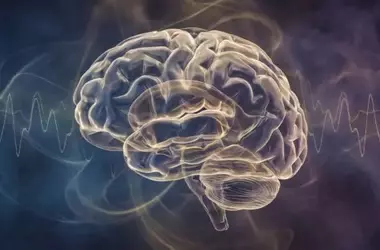
Brainwave Patterns Precede Deception: Unveiling the Neural Signatures of Impending Lies
A recent study published in NeuroImage demonstrates that distinctive brain signals emerge before an individual utters a falsehood, indicating a preparatory cognitive effort. Researchers utilized EEG to monitor electrical activity in participants' brains as they prepared to tell truths or lies about personal information. The findings suggest that detecting these neural markers could pave the way for novel lie detection methodologies by focusing on the pre-deception phase.
Psilocybin's Impact on Advanced Alzheimer's Disease: A Case Study
A recent case study published in Frontiers in Neuroscience suggests that a high dose of psilocybin mushrooms temporarily restored speech and mobility in an 80-year-old woman with advanced Alzheimer's disease. This discovery indicates that certain brain networks might retain dormant capacities even in the late stages of neurodegeneration, opening new avenues for symptom management and future clinical trials for psychedelic compounds.

Navigating the AI Era in Psychological Science Publishing
As artificial intelligence increasingly shapes scholarly discourse, journal editors at the Association for Psychological Science (APS) are deliberating on its integration into editorial practices. This article compiles insights from several APS journal editors, addressing critical questions regarding AI disclosure in manuscripts, its role in peer review, its utility in editorial workflows, its impact on student learning, and the considerations for AI-assisted translation. The diverse perspectives highlight both the opportunities and challenges AI presents to the integrity and future of psychological science publishing.
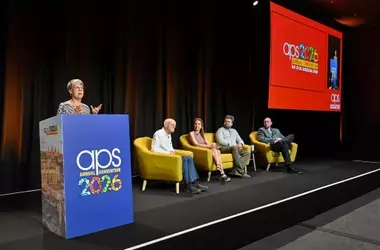
Enhancing APS Conventions: A Vision for Future Engagement
The APS President reflects on the recent Barcelona convention and outlines plans for the upcoming Seattle event in 2027. Key initiatives include expanding integrative science discussions, fostering debates on controversial topics, introducing new workshop formats, enhancing professional development, and exploring the creation of consensus scientific reports. The aim is to create more valuable and engaging conventions that better serve the diverse needs of APS members.
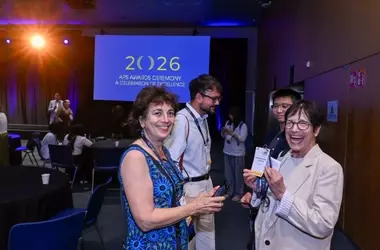
Highlights from the 2026 APS Annual Convention in Barcelona
The 2026 APS Annual Convention in Barcelona, Spain, brought together nearly 2,500 attendees from 73 countries to explore the latest advancements in psychological science. This event featured engaging sessions, insightful presentations on AI and large language models, a dedicated Industry Day, and numerous poster sessions, fostering collaboration and knowledge exchange among global experts. The next convention is scheduled for May 27–30, 2027, in Seattle, Washington.

Pop Music Reflects Shifting Cultural Values Towards Vices
A study by Queen Mary University of London analyzed over 380,000 song lyrics from 1960 to 2023, revealing a decline in moral virtues and a rise in themes of harm, cheating, and degradation. This shift in popular music acts as a cultural barometer, mirroring societal changes in values and emotional expression. The research highlights a growing culture of vices, with implications for understanding collective identity and psychological well-being.