 Breaking News & Live Updates
- Breaking News & Live Updates
- Breaking News & Live Updates
- Breaking News & Live Updates
- Breaking News & Live Updates
- Breaking News & Live Updates
- Breaking News & Live Updates
- Breaking News & Live Updates
- Breaking News & Live Updates
- Breaking News & Live Updates
Navigating the AI Era in Psychological Science Publishing
As artificial intelligence profoundly influences academic discourse, journal editors face the complex task of integrating these advanced tools into their publishing procedures. Across the seven academic journals of the Association for Psychological Science (APS), there are varied perspectives and approaches to this integration.
The managing editor of Observer, Hannah O. Brown, engaged with several APS journal editors, posing key questions on the subject. Their edited responses offer valuable insights. These experts include Jamie Cummins (Statistics, Transparency, and Rigor Editor, Psychological Science), Nicholas Eaton (Editor-in-Chief, Clinical Psychological Science), June Gruber (Editor-in-Chief, Current Directions in Psychological Science), Arturo Hernandez (Editor-in-Chief, Perspectives on Psychological Science), Rachael Jack (Editor-in-Chief, Advances in Psychological Science Open), Ulf-Dietrich Reips (Editor-in-Chief, Psychological Science in the Public Interest), and Felix Thoemmes (Editor-in-Chief, Advances in Methods and Practices in Psychological Science).
Regarding the transparency of AI use in manuscript preparation, editors expressed diverse opinions. Arturo Hernandez believes AI, while not entirely new, introduces automated text generation that can benefit non-native English speakers but risks producing generic or meaningless content. He argues that human judgment remains crucial for identifying novel contributions. Rachael Jack emphasizes author accountability, stating that AI tools, like any other, do not fundamentally change the need for authors to stand by their work's accuracy and integrity. She suggests focusing on responsible AI use and education. Nicholas Eaton critiques current disclosure policies as often incoherent and counterproductive, advocating for an 'artifact-centered' model where AI outputs are archived, promoting auditability over mere admission of AI involvement. June Gruber, however, stresses the importance of clear disclosure for all AI uses to better understand its impact on research. For peer review, Felix Thoemmes allows AI for summarizing but not for evaluation or writing reviews, underscoring the necessity of human judgment. June Gruber reiterates the need for reviewers to disclose AI use. Jamie Cummins highlights AI's potential in tasks like checking preregistrations but emphasizes that ultimate responsibility lies with human reviewers. Arturo Hernandez supports reviewers using LLMs for summarization and text analysis, provided human editors oversee the process to prevent over-reliance on tools that prioritize form over substance. In terms of editorial workflows, Rachael Jack finds AI useful for refining communication with authors, ensuring clarity and tone, which improves efficiency and trust. Arturo Hernandez, however, does not use AI in his workflow, relying on his extensive experience, but acknowledges its potential necessity with increasing submission volumes. Nicholas Eaton leverages AI for tasks like identifying thematic trends in past publications to aid in forming editorial boards, especially for broad-coverage journals. The discussion extends to AI's role in student learning, where Felix Thoemmes notes AI's ability to simplify coding, potentially at the cost of deeper learning, while acknowledging its inevitability. June Gruber warns against over-reliance on AI potentially diminishing critical thinking. Nicholas Eaton encourages strategic AI use for students after mastering fundamentals, viewing it as a tool for efficiency rather than a substitute for core skills. Jamie Cummins suggests students critically analyze AI outputs to understand its limitations, promoting a didactic approach over outright bans. Finally, concerning AI for translation, Jamie Cummins cautions about generative LLMs' stochastic nature and potential for mistranslation, advocating for expert human checks. Ulf-Dietrich Reips recommends human native speakers review translations, using methods like back-translation for quality assurance. Rachael Jack acknowledges AI's role in breaking language barriers but warns of risks like shifting meaning or false fluency, reinforcing author accountability for accuracy and careful oversight.
The integration of artificial intelligence into scholarly publishing represents a pivotal moment, demanding careful consideration from all stakeholders. Editors generally agree that while AI offers immense potential for efficiency, accessibility, and improving certain aspects of the publishing process, it also introduces significant challenges, particularly concerning accountability, transparency, and the preservation of human judgment. Moving forward, the scientific community must collaboratively establish robust frameworks, ethical guidelines, and educational initiatives that foster the responsible and effective use of AI, ensuring it enhances rather than compromises the integrity and quality of psychological science.
Other Articles
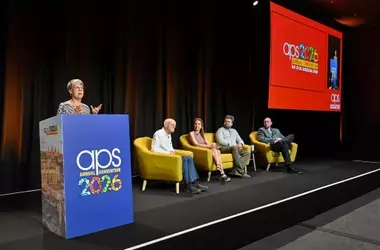
Enhancing APS Conventions: A Vision for Future Engagement
The APS President reflects on the recent Barcelona convention and outlines plans for the upcoming Seattle event in 2027. Key initiatives include expanding integrative science discussions, fostering debates on controversial topics, introducing new workshop formats, enhancing professional development, and exploring the creation of consensus scientific reports. The aim is to create more valuable and engaging conventions that better serve the diverse needs of APS members.
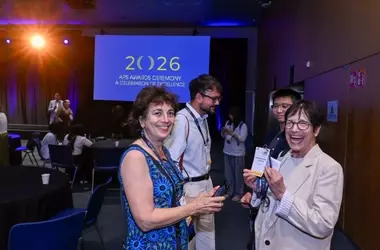
Highlights from the 2026 APS Annual Convention in Barcelona
The 2026 APS Annual Convention in Barcelona, Spain, brought together nearly 2,500 attendees from 73 countries to explore the latest advancements in psychological science. This event featured engaging sessions, insightful presentations on AI and large language models, a dedicated Industry Day, and numerous poster sessions, fostering collaboration and knowledge exchange among global experts. The next convention is scheduled for May 27–30, 2027, in Seattle, Washington.

Pop Music Reflects Shifting Cultural Values Towards Vices
A study by Queen Mary University of London analyzed over 380,000 song lyrics from 1960 to 2023, revealing a decline in moral virtues and a rise in themes of harm, cheating, and degradation. This shift in popular music acts as a cultural barometer, mirroring societal changes in values and emotional expression. The research highlights a growing culture of vices, with implications for understanding collective identity and psychological well-being.
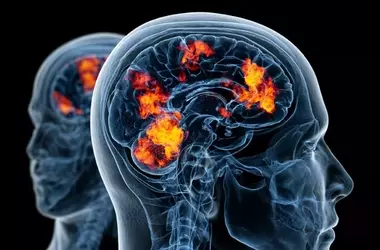
Precision Brain Imaging Boosts Depression Treatment Efficacy
A novel clinical study indicates that utilizing individualized functional magnetic resonance imaging (fMRI) to direct transcranial magnetic stimulation (TMS) significantly improves outcomes for individuals suffering from treatment-resistant depression. Researchers found that targeting brain stimulation based on a patient's unique fMRI scan leads to more substantial antidepressant effects compared to conventional, scalp-based measurements. This accelerated TMS approach condenses multi-week treatment into a single week, offering a quicker and more effective path to symptom reduction.

The Networked Nature of Achievement: Beyond Individual Brilliance
This article challenges the conventional view of individual success, arguing that achievement is not solely a product of personal intelligence, effort, or talent. Instead, it emphasizes the profound, often invisible, influence of social networks, collaborations, and systemic structures. It highlights how factors like mentorship, visibility, and accumulated advantage—described by the Matthew Effect—play crucial roles in shaping an individual's trajectory. The piece advocates for a more holistic understanding of success that acknowledges both personal agency and the scaffolding provided by one's professional and social environment, urging a shift from attributing success purely to individual merit to recognizing the dynamic interplay within systems.
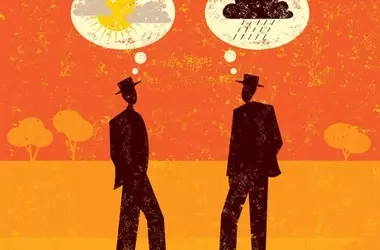
Understanding Individual Differences in Interpreting Uncertainty
This article explores how individuals interpret ambiguous situations, highlighting the concept of valence bias. It discusses research by Neta (2026) showing consistent individual tendencies towards positive or negative interpretations of uncertainty. The article also touches upon developmental changes in valence bias, the evolutionary advantages of initial negativity, and interventions like mindfulness that can shift this bias, impacting mental health.