 Breaking News & Live Updates
- Breaking News & Live Updates
- Breaking News & Live Updates
- Breaking News & Live Updates
- Breaking News & Live Updates
- Breaking News & Live Updates
- Breaking News & Live Updates
- Breaking News & Live Updates
- Breaking News & Live Updates
- Breaking News & Live Updates
Enhancing APS Conventions: A Vision for Future Engagement
The recent APS convention in Barcelona has sparked a comprehensive re-evaluation and strategic planning process for future gatherings, with a strong focus on enhancing member engagement and scientific discourse. The APS President, drawing from feedback received, is committed to transforming upcoming conventions into more dynamic and valuable experiences. The blueprint for the 2027 Seattle convention includes fostering broader research discussions through innovative symposium formats, addressing controversial scientific topics head-on, expanding professional development opportunities, and exploring collaborative scientific report generation. This forward-looking approach aims to solidify the conventions as essential platforms for advancing psychological science and fostering a vibrant professional community.
APS President Unveils Strategic Enhancements for Future Conventions, Starting with Seattle 2027
Following the successful international convention in Barcelona in 2026, the President of the Association for Psychological Science (APS) has articulated a vision for revitalizing future annual gatherings. This initiative, inspired by direct feedback from members, aims to make the APS conventions indispensable events for the global psychological community, with the next annual convention scheduled for May 27–29, 2027, in Seattle.
A cornerstone of this renewed vision is the expansion of research conversations. Building on the success of the Integrative Science Symposia (ISS) introduced in Barcelona, these multidisciplinary sessions will continue to be a prominent feature in Seattle. The ISS format encourages diverse psychological domains and behavioral sciences to converge on complex scientific questions, fostering a holistic understanding and exposing attendees to varied methodological approaches and interpretations of findings. The President hopes these discussions will bridge existing disciplinary gaps and address shared challenges, such as the reliance on non-diverse convenience samples.
Furthermore, the APS intends to embrace open discussion of controversial topics and present findings from major replication efforts or team science studies. This initiative, epitomized by the President's upcoming symposium, “Beyond the Panic: What the Evidence Says About Social Media and Well-Being,” seeks to push scientific boundaries and identify actionable next steps. The goal is to evolve these discussions into more enduring outcomes for the membership, such as published summaries, working groups, or ongoing initiatives that extend beyond the convention dates.
The enduring popularity of methodological workshops will see their continuation and potential expansion in 2027. Recognizing the evolving career paths of many members, the success of Barcelona's inaugural Industry Day will pave the way for an enhanced focus on non-academic and academic-adjacent careers at the Seattle convention, leveraging the city's robust industry and tech landscape. Future workshops may explore topics like research center leadership, offering practical skills and networking opportunities for a broader professional spectrum.
Professional development is another key area of enhancement. Plans include introducing activities akin to “Lunch With the Leaders,” providing intimate, informal settings for scholars at different career stages—students, early-career, and mid-to-late-career professionals—to engage directly with leaders in the field, fostering mentorship and knowledge exchange.
Finally, discussions are underway within the APS Board and with journal editors to explore using conventions as a platform to collectively address a single, significant topic in psychological science. This would involve dedicated symposium programming, followed by collaborative efforts to outline a consensus scientific report. Such a report would summarize current knowledge, identify gaps, and propose future research directions, ultimately contributing a valuable document to both the scientific community and the general public through existing APS journals.
The APS leadership invites all members to actively participate in shaping these initiatives, encouraging feedback through comments or direct communication, to ensure the 2027 Seattle convention truly reflects the aspirations and needs of its diverse membership.
The strategic enhancements outlined for future APS conventions signify a pivotal shift towards more interactive, relevant, and impactful gatherings. By prioritizing integrative discussions, fostering open scientific debate, diversifying career development support, and promoting collaborative knowledge creation, the APS is poised to cultivate a more dynamic and engaging environment for its members. These initiatives promise to not only advance psychological science but also to strengthen the professional community, ensuring that each convention offers tangible value and inspires continued participation.
Other Articles
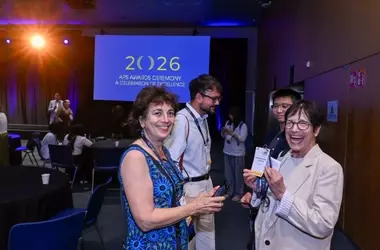
Highlights from the 2026 APS Annual Convention in Barcelona
The 2026 APS Annual Convention in Barcelona, Spain, brought together nearly 2,500 attendees from 73 countries to explore the latest advancements in psychological science. This event featured engaging sessions, insightful presentations on AI and large language models, a dedicated Industry Day, and numerous poster sessions, fostering collaboration and knowledge exchange among global experts. The next convention is scheduled for May 27–30, 2027, in Seattle, Washington.

Pop Music Reflects Shifting Cultural Values Towards Vices
A study by Queen Mary University of London analyzed over 380,000 song lyrics from 1960 to 2023, revealing a decline in moral virtues and a rise in themes of harm, cheating, and degradation. This shift in popular music acts as a cultural barometer, mirroring societal changes in values and emotional expression. The research highlights a growing culture of vices, with implications for understanding collective identity and psychological well-being.
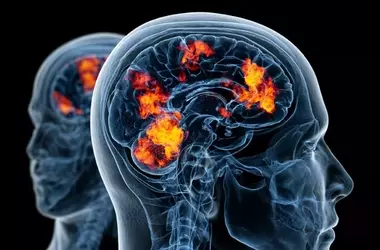
Precision Brain Imaging Boosts Depression Treatment Efficacy
A novel clinical study indicates that utilizing individualized functional magnetic resonance imaging (fMRI) to direct transcranial magnetic stimulation (TMS) significantly improves outcomes for individuals suffering from treatment-resistant depression. Researchers found that targeting brain stimulation based on a patient's unique fMRI scan leads to more substantial antidepressant effects compared to conventional, scalp-based measurements. This accelerated TMS approach condenses multi-week treatment into a single week, offering a quicker and more effective path to symptom reduction.

The Networked Nature of Achievement: Beyond Individual Brilliance
This article challenges the conventional view of individual success, arguing that achievement is not solely a product of personal intelligence, effort, or talent. Instead, it emphasizes the profound, often invisible, influence of social networks, collaborations, and systemic structures. It highlights how factors like mentorship, visibility, and accumulated advantage—described by the Matthew Effect—play crucial roles in shaping an individual's trajectory. The piece advocates for a more holistic understanding of success that acknowledges both personal agency and the scaffolding provided by one's professional and social environment, urging a shift from attributing success purely to individual merit to recognizing the dynamic interplay within systems.

Understanding Individual Differences in Interpreting Uncertainty
This article explores how individuals interpret ambiguous situations, highlighting the concept of valence bias. It discusses research by Neta (2026) showing consistent individual tendencies towards positive or negative interpretations of uncertainty. The article also touches upon developmental changes in valence bias, the evolutionary advantages of initial negativity, and interventions like mindfulness that can shift this bias, impacting mental health.

The Neurobiological Link Between Comfort Food and Stress Relief Unveiled
New research has illuminated the intricate neural circuitry responsible for how comfort eating can mitigate chronic stress. Scientists have pinpointed a specific pathway where dopamine surges, triggered by palatable food, effectively 'switch off' the overactive stress neurons in the hypothalamus. This breakthrough offers a neurobiological explanation for a common human behavior and paves the way for novel interventions targeting anxiety and eating disorders, moving beyond traditional understandings of willpower.