 Breaking News & Live Updates
- Breaking News & Live Updates
- Breaking News & Live Updates
- Breaking News & Live Updates
- Breaking News & Live Updates
- Breaking News & Live Updates
- Breaking News & Live Updates
- Breaking News & Live Updates
- Breaking News & Live Updates
- Breaking News & Live Updates
The Neurobiological Link Between Comfort Food and Stress Relief Unveiled
When individuals face prolonged psychological or environmental pressures, they often instinctively turn to comfort-seeking behaviors to alleviate emotional distress. Among the most widespread and immediate of these strategies is the consumption of highly palatable foods, which are typically rich in calories or sugar. While the transient anxiety-reducing effects of 'comfort eating' are well-known, the precise neural connections between the brain's reward mechanisms and its core stress-response systems have, until now, remained largely unexplored.
Unraveling the Brain's Stress-Busting Circuitry Through Comfort Eating
A recent groundbreaking investigation has successfully mapped a previously unknown neural circuit, providing a definitive anatomical link between the brain's reward and stress systems. Conducted by Dr. TU Jie's team at the Shenzhen Institute of Advanced Technology (SIAT) of the Chinese Academy of Sciences, this study, published in Advanced Science, utilized cutting-edge three-dimensional (3D) behavioral mapping alongside real-time neural recordings. The researchers meticulously traced a pathway originating from dopamine 1 receptor (D1R) neurons in the prefrontal cortex (PFC), extending to corticotropin-releasing factor (CRF) neurons within the paraventricular nucleus (PVN) of the hypothalamus, specifically denoted as PFCD1R→peri-PVNCRFR1→PVNCRF. This intricate circuit reveals how a reward-driven surge of dopamine in the prefrontal cortex employs an intermediary inhibitory relay to directly suppress the hyperactive stress responses found in the hypothalamus.
The research demonstrated that chronic stress leads to significant overactivity in PVNCRF neurons, resulting in anxiety-like behaviors in mouse models. Crucially, the consumption of palatable food was shown to reverse these neural and behavioral anomalies. The study pinpointed that ingesting rewarding food rapidly elevates dopamine levels in the PFC, activating excitatory D1R neurons. These PFCD1R neurons, in turn, reduce the stress-induced hyperactivity of PVNCRF neurons. Given the excitatory nature of PFCD1R neurons, the scientists hypothesized the existence of an inhibitory intermediary. They subsequently identified CRFR1-expressing neurons located in the region immediately surrounding the PVN (peri-PVN) as this critical relay node. These peri-PVN neurons receive excitatory signals from the PFC, then transmit inhibitory signals to the overactive stress neurons in the PVN, effectively acting as a neural 'brake'.
This discovery profoundly shifts the understanding of stress eating, repositioning it from a matter of self-control to a fundamental biological survival mechanism. By deciphering the precise molecular shorthand the brain employs to allow rewarding experiences to counteract anxiety, this research opens new avenues for therapeutic development. Future treatments could potentially target D1R receptors in the prefrontal cortex or manipulate the CRFR1 relay in the peri-PVN to alleviate chronic anxiety without the metabolic drawbacks associated with relying on calorie-dense comfort foods.
From a societal perspective, this research offers a compelling reinterpretation of a common human coping mechanism. It moves beyond simply labeling comfort eating as a 'bad habit' and instead provides a scientific basis for its efficacy in managing psychological distress. As a journalist, I find this study particularly insightful because it not only explains a widespread behavior but also empowers us to think differently about mental health interventions. Imagine a future where anxiety can be managed by targeting specific neural pathways, reducing the need for less healthy coping mechanisms. This finding could inspire entirely new approaches to treating anxiety disorders and fostering emotional resilience, prompting us to consider the profound connections between our daily choices and our brain's intricate workings.
Other Articles

Advanced Network Mapping Reveals Hundreds of New Schizophrenia Risk Genes
Pioneering research has uncovered 641 previously unidentified genes linked to schizophrenia, moving beyond traditional gene-mapping techniques. By analyzing extensive genetic data from over 102,000 individuals and postmortem brain tissues across six cortical regions, scientists utilized advanced computational models to map long-range genetic interactions. This breakthrough highlights the critical role of networked gene communication in schizophrenia development and opens new avenues for precision psychiatry.

Distinguished Psychologists Share Career Insights
At the 38th APS Annual Convention in Barcelona, several Lifetime Achievement Award honorees shared profound reflections on their career trajectories and offered invaluable guidance. Their insights spanned topics from pursuing unconventional research interests and confronting societal biases to navigating academic challenges, fostering student growth, and addressing mental health concerns through psychological science. This compilation captures the essence of their wisdom, highlighting diverse paths and common threads in their pursuit of knowledge and mentorship within the field.

The Politics of Climate Action: Fostering Belief in Solvable Problems
This article explores how public belief in the effectiveness of collective action and government initiatives is crucial for driving climate engagement. It highlights that visible policy successes, when properly attributed to governmental efforts, can overcome political opposition and fatalism, encouraging citizens to participate in climate solutions. The research underscores that confidence in institutional capability is a strong predictor of climate action, even across political divides, offering a pathway for broader mobilization.

Trauma-Focused Therapy Benefits Psychosis Patients with PTSD
A significant study, the STAR trial, has demonstrated that an integrated trauma-focused therapy combined with Cognitive Behavioral Therapy for psychosis (CBTp) is both safe and highly effective for individuals suffering from co-occurring psychosis and Post-Traumatic Stress Disorder (PTSD). This nine-month intervention helped 50% of participants meet PTSD remission criteria, challenging previous clinical hesitations about directly addressing trauma in psychosis patients. The research, conducted across five UK sites with 305 participants, highlights notable improvements in PTSD severity, depression, anxiety, suicidal ideation, paranoia, and hallucinations.
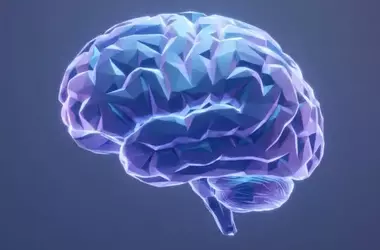
The Brain's Unconscious Filter: How Distraction Impacts the Perception of Negative Words
A recent study in 'Psychological Science' reveals that when people are engrossed in a visual task, their brains are more likely to consciously register neutral spoken words over negative ones. This phenomenon suggests that the human brain might possess an unconscious filtering mechanism that actively screens out emotionally charged auditory input before it reaches conscious awareness, especially during periods of cognitive load. These findings provide critical insights into how our minds manage the continuous deluge of sensory information, ensuring efficient processing by prioritizing certain stimuli.
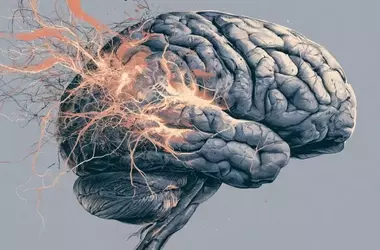
Cerebral Inflammation's Profound Impact on Mood Disorders
A comprehensive global meta-analysis involving over 4,700 encephalitis survivors highlights a significant prevalence of psychiatric and behavioral issues, including chronic depression and anxiety. Approximately 27% of individuals experience clinical depression, while 20% suffer from persistent anxiety or personality alterations long after the initial recovery. These mental health challenges are as common as neurological deficits like memory loss, emphasizing the urgent need for integrated neuropsychiatric screenings in post-encephalitis care.