 Breaking News & Live Updates
- Breaking News & Live Updates
- Breaking News & Live Updates
- Breaking News & Live Updates
- Breaking News & Live Updates
- Breaking News & Live Updates
- Breaking News & Live Updates
- Breaking News & Live Updates
- Breaking News & Live Updates
- Breaking News & Live Updates
The Brain's Unconscious Filter: How Distraction Impacts the Perception of Negative Words
Unmasking the Mind's Hidden Gatekeeper: Why Your Brain Might Be Protecting You from Negativity
The Brain's Selective Attention: Navigating a World of Sensory Input
Our daily existence is a constant immersion in a symphony of sights and sounds. Amidst this sensory deluge, the brain, with its inherently limited attentional capacity, must meticulously select which pieces of information ascend to conscious awareness. This conscious processing refers to the specific details we actively perceive and can articulate having experienced.
Unconscious Processes: The Silent Architects of Perception
A significant portion of the sensory information we encounter is masterfully handled by nonconscious mechanisms, operating silently in the background. Previous investigations into how the brain prioritizes information for conscious processing have predominantly focused on visual stimuli. These studies often involve presenting fleeting images that participants are unable to report seeing consciously.
The Unique Challenge of Auditory Processing: Why Sounds are Different
Hearing presents a distinct challenge, as humans cannot simply 'close their ears' or avert their gaze from unwanted sounds. Spoken language, in particular, is complex to study because, unlike static images, words unfold sequentially. Given the continuous flow of auditory input into the brain, the cognitive system requires an exceptionally efficient method to distinguish important sounds from irrelevant background noise.
The Emotional Resonance of Words: Unveiling a New Dimension of Auditory Processing
The current study's authors aimed to unravel how the emotional quality of spoken words influences their likelihood of being consciously perceived. Emotional valence, in this context, refers to whether a stimulus is categorized as positive, negative, or neutral. Understanding this intricate process could shed light on how nonconscious information subtly shapes an individual's thoughts, feelings, and behaviors.
Challenging Conventional Wisdom: Prioritizing Neutrality Over Negativity
Traditional psychological frameworks often posit that detecting negative emotional information is crucial for survival, enabling rapid responses to dangerous situations. This perspective might lead one to assume that the brain would prioritize negative words for easier conscious detection. However, this research offers a compelling counter-narrative, suggesting that our conscious intuitions about what we notice aren't always aligned with our unconscious processing.
The Mechanism of Inattentional Deafness: A Window into Unconscious Filtering
To investigate this phenomenon, researchers devised a method mirroring inattentional deafness, where individuals fail to perceive an audible sound due to intense focus on a visual task. This experimental setup allowed observation of which types of words penetrated the distraction and reached conscious awareness. The experiments involved Hebrew speakers engaging in a demanding visual memory task, while a mix of meaningless pseudowords and real words (neutral or negative) were played audibly. Despite the clear audibility of the words, participants frequently missed them, confirming the effectiveness of the distraction. Analysis revealed a consistent pattern: neutral words were significantly more likely to be consciously detected than negative ones, even when accounting for linguistic factors.
Consistency Across Cognitive Loads: An Enduring Unconscious Bias
Further experiments explored the impact of cognitive load on this filtering process. Even when the visual task was made significantly easier, allowing for faster and more accurate responses, the preference for detecting neutral words over negative ones persisted. This suggests that the unconscious filtering of negative speech is a robust mechanism, operating consistently regardless of the intensity of a person's focus on other tasks. This implies a default unconscious bias to suppress potentially harmful or distracting information, acting as a gatekeeper to maintain cognitive efficiency.
Acknowledging Limitations and Charting Future Directions: The Path Forward for Auditory Research
While these findings offer profound insights into auditory processing, the researchers acknowledge certain limitations. The timing of awareness assessments, for instance, raises questions about whether the observed effect pertains to initial awareness or rapid forgetting. Future research will need to explore how highly positive or socially taboo words are processed, and whether these patterns generalize across different age groups and languages. Additionally, these findings open new avenues for studying mental health conditions, such as anxiety disorders, where this unconscious filtering process might operate differently, potentially offering new insights into therapeutic interventions. The ongoing exploration of these sensory gating mechanisms promises a deeper understanding of their impact on daily life.
Other Articles
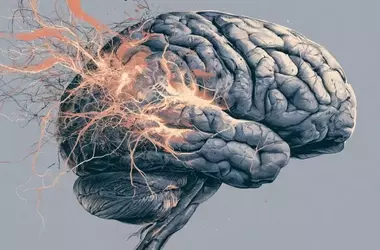
Cerebral Inflammation's Profound Impact on Mood Disorders
A comprehensive global meta-analysis involving over 4,700 encephalitis survivors highlights a significant prevalence of psychiatric and behavioral issues, including chronic depression and anxiety. Approximately 27% of individuals experience clinical depression, while 20% suffer from persistent anxiety or personality alterations long after the initial recovery. These mental health challenges are as common as neurological deficits like memory loss, emphasizing the urgent need for integrated neuropsychiatric screenings in post-encephalitis care.

Probiotics as an Adjuvant Therapy for Depression
A recent study indicates that incorporating probiotic supplements alongside conventional treatment can offer considerable benefits for older adults experiencing moderate depression. This pilot trial, involving 58 participants, monitored changes in fecal microbiota and brain-derived neurotrophic factor (BDNF) over 24 weeks. Although standard care led to significant recovery in both groups, the probiotic group demonstrated distinct improvements in depressive and anxiety symptoms, suggesting probiotics as a safe and affordable complementary therapy.

Social Hardships and Brain Changes in Schizophrenia
A recent comprehensive review highlights the profound impact of adverse social determinants of health, such as childhood trauma, economic hardship, and social isolation, on the structural and functional biology of the brain. These environmental stressors are intricately linked to observable changes in brain structure, functional connectivity, and neurochemistry, all of which are associated with schizophrenia-spectrum disorders. The research underscores the critical opportunity for early intervention, as approximately 30% of high-risk individuals can achieve complete remission, suggesting that timely and targeted support can prevent the full onset of symptoms and foster resilience.
Neuroscientists Uncover How the Brain Organizes Autobiographical Memories Across Time
A recent neuroimaging study has revealed that the human brain organizes autobiographical memories along a cortical-hippocampal timeline. Memories that occurred closer together in a person's life exhibit more similar neural representations than those further apart in time. The study highlights the right hippocampus's role in encoding both event identity and temporal distance, while frontopolar and retrosplenial cortices process the temporal structure of memory. This research offers valuable insights into the neural mechanisms underlying our ability to recall and contextualize personal experiences.

Child's Gaze Reveals Early Depression Indicators
A recent study from Binghamton University has found a crucial connection between how children's eyes react to emotional faces and their risk of developing depression. The research, which tracked 242 children over two years, reveals that visual attention patterns can predict and intensify depressive symptoms, especially in children with a family history of the disorder. This groundbreaking work highlights the potential of eye-tracking technology in identifying early vulnerabilities and guiding prevention efforts for childhood depression.

General AI Models Outperform Specialized Medical AI
A recent study published in Nature Medicine challenges the long-held belief that specialized AI models are superior in the medical field. The research indicates that general-purpose AI, such as GPT-5.2 and Gemini 3.1 Pro, consistently outperform their specialized counterparts, like OpenEvidence and UpToDate Expert AI, across various medical tasks. This surprising finding suggests that the vast training data of frontier models provides a broader and deeper understanding, making incremental specialized training less impactful than previously assumed.