 Breaking News & Live Updates
- Breaking News & Live Updates
- Breaking News & Live Updates
- Breaking News & Live Updates
- Breaking News & Live Updates
- Breaking News & Live Updates
- Breaking News & Live Updates
- Breaking News & Live Updates
- Breaking News & Live Updates
- Breaking News & Live Updates
Neuroscientists Uncover How the Brain Organizes Autobiographical Memories Across Time
A groundbreaking neuroimaging investigation conducted in Italy has illuminated how personal life recollections are systematically arranged within the brain's hippocampal and cortical regions. This arrangement demonstrates that past events occurring in closer proximity within an individual's life span share more analogous neural representations compared to those more distant in time. The research indicates that the right hippocampus plays a crucial role in encoding both the unique identity of an event and its temporal distance, while the frontopolar and retrosplenial cortices are responsible for processing the overall temporal framework of these recollections.
Autobiographical memories encompass an individual's personal life events and experiences, ranging from vivid, singular occurrences (episodic memories) to broader, semantic knowledge about oneself. These memories are vital for maintaining a coherent sense of self, informing present decisions, and envisioning future possibilities. A complex network of brain areas, including the hippocampus, medial temporal lobes, prefrontal regions, posterior cingulate, retrosplenial cortices, and parts of the parietal and visual cortices, supports the intricate process of autobiographical recall. Researchers hypothesized that these memories are organized in the brain based on their temporal separation, with the hippocampus and cerebral cortex facilitating this temporal structuring.
The study involved 20 healthy adults who participated in an Autobiographical Fluency Task, recalling and listing significant life events from different periods. Subsequently, their brain activity was monitored using functional magnetic resonance imaging while they viewed prompts related to these personal events and unrelated ones. The findings confirmed that autobiographical memories are indeed structured along a cortical-hippocampal timeline, where neural patterns reflect the temporal proximity of events. Different brain regions exhibited coordinated processing, suggesting a unified mechanism for organizing memories. Although the study provides significant advancements in understanding memory organization, its focus on a small, young, and healthy participant group suggests that further research is needed to understand how these processes might differ in older populations or those with neurological conditions.
This research substantially enhances our scientific comprehension of the neurological foundations of personal memories. The findings underscore the presence of a temporally organized mnemonic schema within the brain, akin to a neural 'timeline,' which is fundamental to our capacity to accurately place and distinguish individual memories throughout our existence. This deeper insight into how our brains chronologically catalog our life stories offers a hopeful pathway for future investigations into memory-related disorders and potential interventions to preserve cognitive function.
Other Articles

Child's Gaze Reveals Early Depression Indicators
A recent study from Binghamton University has found a crucial connection between how children's eyes react to emotional faces and their risk of developing depression. The research, which tracked 242 children over two years, reveals that visual attention patterns can predict and intensify depressive symptoms, especially in children with a family history of the disorder. This groundbreaking work highlights the potential of eye-tracking technology in identifying early vulnerabilities and guiding prevention efforts for childhood depression.

General AI Models Outperform Specialized Medical AI
A recent study published in Nature Medicine challenges the long-held belief that specialized AI models are superior in the medical field. The research indicates that general-purpose AI, such as GPT-5.2 and Gemini 3.1 Pro, consistently outperform their specialized counterparts, like OpenEvidence and UpToDate Expert AI, across various medical tasks. This surprising finding suggests that the vast training data of frontier models provides a broader and deeper understanding, making incremental specialized training less impactful than previously assumed.
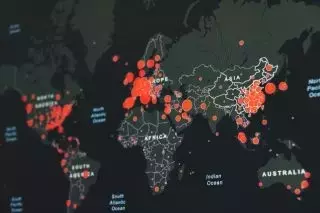
Global Escalation of Mental Health Conditions and Inadequate Treatment
A recent Lancet study reveals a significant increase in mental disorders worldwide, nearly doubling since 1990. Mental illnesses now rank as the fifth leading cause of disability-adjusted life-years globally, with anxiety and depression being prominent. The study highlights persistent, large treatment gaps, particularly in lower-income regions, underscoring an urgent need for enhanced surveillance, early intervention, and inclusive policies tailored to diverse populations.

The Dual Impact of the World Cup: Unpacking Fan Psychology and Societal Effects
The FIFA World Cup, a global spectacle, profoundly influences individuals and societies. While losses can elevate cardiovascular risks for passionate fans, wins offer fleeting boosts in well-being. Beyond individual responses, the tournament shapes collective memory and national pride. However, this unity can be shadowed by heightened biases against certain out-groups, revealing a complex interplay of positive and negative psychological and social outcomes.

The Enduring Debate: Trauma, Memory, and the Body's Score
The phrase "the body keeps the score" has become widely popular, reflecting the widespread belief that trauma significantly impacts physical well-being. However, the underlying concept that traumatic memories are repressed within the body, unconsciously influencing current symptoms, is a contentious idea with a long and debated history in psychological science. This article examines the resurgence of this theory, particularly in popular culture, and scrutinizes the scientific validity of repressed memories and alternative therapies.
School Systems' Influence on Genetic and Environmental Factors in Academic Success
A new study reveals that the impact of genetics on academic achievement is profoundly shaped by family background, gender, and the national school system. Early educational tracking, common in some European countries, tends to amplify the role of family socioeconomic status while diminishing genetic influences. Conversely, systems with later tracking allow genetic predispositions to play a more significant role in educational outcomes. This research, published in 'Social Science Research,' underscores the complex interplay between inherited traits and environmental factors in shaping a student's educational journey.