 Breaking News & Live Updates
- Breaking News & Live Updates
- Breaking News & Live Updates
- Breaking News & Live Updates
- Breaking News & Live Updates
- Breaking News & Live Updates
- Breaking News & Live Updates
- Breaking News & Live Updates
- Breaking News & Live Updates
- Breaking News & Live Updates
Distinguished Psychologists Share Career Insights
During the 38th Annual APS Convention in Barcelona, Spain, esteemed recipients of the Lifetime Achievement Award convened to impart wisdom gleaned from their extensive professional journeys. These distinguished psychologists offered candid reflections on the pivotal moments and overarching philosophies that shaped their work, sharing not only their successes but also the challenges they encountered. Their collective narratives underscored the importance of intellectual curiosity, resilience in the face of academic hurdles, and a deep commitment to mentorship. The insights shared by these luminaries covered a spectrum of crucial themes, from the courage to explore uncharted research territories despite initial skepticism, to the profound impact of personal experiences on academic pursuits, and the ongoing dedication required to support the next generation of scholars.
This gathering served as a unique platform for intergenerational dialogue, allowing the awardees to articulate their perspectives on the evolving landscape of psychological science. They emphasized the enduring relevance of their field in addressing complex societal issues, from systemic inequalities to mental health crises. The discussions illuminated the vital role of psychological inquiry in fostering understanding and positive change. Moreover, the honorees provided practical advice for junior scholars, stressing the importance of identifying and nurturing individual talents, pursuing meaningful research questions, and advocating for institutional support to enhance academic training and career development. Their collective message resonated with a spirit of perseverance, intellectual integrity, and a profound belief in the transformative power of psychological science.
Pioneering Research and Societal Impact
Distinguished psychologists, including Toni C. Antonucci and Jennifer L. Eberhardt, emphasized the critical importance of following one's intellectual curiosity and addressing societal issues head-on. Antonucci advocated for exploring research questions that truly captivate one's interest, even when facing skepticism about their measurability or significance. This philosophy encourages researchers to find innovative methodologies to study complex human experiences, asserting that if a topic is compelling enough to engage people, it merits rigorous scientific investigation. Eberhardt shared how her personal journey, moving between contrasting neighborhoods, ignited her lifelong dedication to understanding bias and inequality. Her work underscores how lived experiences can profoundly influence academic pursuits, leading to research that not only deepens scientific knowledge but also addresses pressing social disparities.
These awardees showcased how psychological science can be a potent tool for societal progress. Eberhardt's dedication to understanding the mechanisms of bias and inequality exemplifies the field's potential to illuminate and challenge systemic issues. Her research, born from a transformative personal experience, illustrates the power of combining intellectual rigor with a commitment to social justice. Similarly, Antonucci's insistence on pursuing personally meaningful research, regardless of initial challenges, highlights the entrepreneurial spirit necessary for scientific advancement. Together, their stories inspire a research paradigm where curiosity drives discovery, and discovery, in turn, informs efforts to create a more equitable and understanding world. Their contributions serve as a powerful reminder that impactful psychological research often originates from a deep personal connection to the phenomena being studied and a fearless approach to methodology.
Navigating Academic Challenges and Fostering Growth
The APS Convention also brought forth poignant discussions on the resilience required to thrive in academia and the profound responsibility of mentorship. Diane L. Hughes acknowledged the challenging environment for early-career scholars, citing difficulties in securing funding and limited job opportunities. Despite these hurdles, she delivered a powerful message of encouragement, urging young researchers to persevere. Deanna M. Barch reflected on her own journey as a first-generation college student, illustrating how an initial interest in school psychology evolved into a deep fascination with the human mind and its vulnerabilities, particularly concerning mental health. Her story highlights the often unexpected paths that lead to significant scientific contributions and the enduring motivation derived from wanting to alleviate suffering. Dacher Keltner expressed gratitude for the field, especially in times of "moral ugliness," asserting psychological science's crucial role in countering issues like racism and authoritarianism, thereby emphasizing its ongoing relevance and potential for positive social influence.
Mentorship emerged as a central theme, with Kathy Hirsch-Pasek, Paul A.M. van Lange, and John R. Weisz sharing their perspectives. Hirsch-Pasek underscored that the goal of mentorship is not to create "mini-me's" but to empower students to discover their unique voices, questions, and contributions to the field. This philosophy emphasizes nurturing individual growth and intellectual independence. Van Lange added that mentorship is a reciprocal process, noting that his students and junior faculty have significantly sharpened his own listening skills and research acumen, highlighting the mutual benefits of collaborative learning. Weisz further elaborated on the mentor's role in helping mentees identify their most important questions, thereby shaping their professional identities. Marci Lobel concluded with a call to action, stressing that mentorship should not be viewed as a personal virtue but as an institutional responsibility that requires more training, support, and recognition. Their collective insights painted a comprehensive picture of mentorship as a dynamic, mutually enriching endeavor crucial for the sustained growth and vitality of psychological science, advocating for a systemic approach to support both mentors and mentees in navigating the complexities of academic life and research.
Other Articles

The Politics of Climate Action: Fostering Belief in Solvable Problems
This article explores how public belief in the effectiveness of collective action and government initiatives is crucial for driving climate engagement. It highlights that visible policy successes, when properly attributed to governmental efforts, can overcome political opposition and fatalism, encouraging citizens to participate in climate solutions. The research underscores that confidence in institutional capability is a strong predictor of climate action, even across political divides, offering a pathway for broader mobilization.

Trauma-Focused Therapy Benefits Psychosis Patients with PTSD
A significant study, the STAR trial, has demonstrated that an integrated trauma-focused therapy combined with Cognitive Behavioral Therapy for psychosis (CBTp) is both safe and highly effective for individuals suffering from co-occurring psychosis and Post-Traumatic Stress Disorder (PTSD). This nine-month intervention helped 50% of participants meet PTSD remission criteria, challenging previous clinical hesitations about directly addressing trauma in psychosis patients. The research, conducted across five UK sites with 305 participants, highlights notable improvements in PTSD severity, depression, anxiety, suicidal ideation, paranoia, and hallucinations.
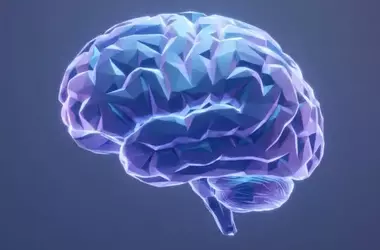
The Brain's Unconscious Filter: How Distraction Impacts the Perception of Negative Words
A recent study in 'Psychological Science' reveals that when people are engrossed in a visual task, their brains are more likely to consciously register neutral spoken words over negative ones. This phenomenon suggests that the human brain might possess an unconscious filtering mechanism that actively screens out emotionally charged auditory input before it reaches conscious awareness, especially during periods of cognitive load. These findings provide critical insights into how our minds manage the continuous deluge of sensory information, ensuring efficient processing by prioritizing certain stimuli.
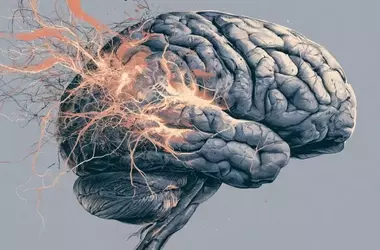
Cerebral Inflammation's Profound Impact on Mood Disorders
A comprehensive global meta-analysis involving over 4,700 encephalitis survivors highlights a significant prevalence of psychiatric and behavioral issues, including chronic depression and anxiety. Approximately 27% of individuals experience clinical depression, while 20% suffer from persistent anxiety or personality alterations long after the initial recovery. These mental health challenges are as common as neurological deficits like memory loss, emphasizing the urgent need for integrated neuropsychiatric screenings in post-encephalitis care.

Probiotics as an Adjuvant Therapy for Depression
A recent study indicates that incorporating probiotic supplements alongside conventional treatment can offer considerable benefits for older adults experiencing moderate depression. This pilot trial, involving 58 participants, monitored changes in fecal microbiota and brain-derived neurotrophic factor (BDNF) over 24 weeks. Although standard care led to significant recovery in both groups, the probiotic group demonstrated distinct improvements in depressive and anxiety symptoms, suggesting probiotics as a safe and affordable complementary therapy.

Social Hardships and Brain Changes in Schizophrenia
A recent comprehensive review highlights the profound impact of adverse social determinants of health, such as childhood trauma, economic hardship, and social isolation, on the structural and functional biology of the brain. These environmental stressors are intricately linked to observable changes in brain structure, functional connectivity, and neurochemistry, all of which are associated with schizophrenia-spectrum disorders. The research underscores the critical opportunity for early intervention, as approximately 30% of high-risk individuals can achieve complete remission, suggesting that timely and targeted support can prevent the full onset of symptoms and foster resilience.