 Breaking News & Live Updates
- Breaking News & Live Updates
- Breaking News & Live Updates
- Breaking News & Live Updates
- Breaking News & Live Updates
- Breaking News & Live Updates
- Breaking News & Live Updates
- Breaking News & Live Updates
- Breaking News & Live Updates
- Breaking News & Live Updates
Highlights from the 2026 APS Annual Convention in Barcelona
Uniting Minds: A Global Nexus for Psychological Science Innovation
A Global Gathering of Psychological Science Enthusiasts
The 2026 APS Annual Convention, held in the vibrant city of Barcelona, Spain, attracted approximately 2,500 participants representing 73 different nations. This significant international turnout underscored the event's stature as a premier platform for exchanging ideas and fostering global collaborations within the field of psychological science.
Looking Ahead: The Next Chapter in Psychological Science
Following the successful Barcelona convention, anticipation builds for the 2027 Annual Convention. This upcoming event is set to take place in Seattle, Washington, from May 27 to May 30, 2027, promising another dynamic forum for scientific discourse and networking.
Recognizing Excellence: Lifetime Achievement Honors
During the awards ceremony, distinguished recipients of the APS Lifetime Achievement Award, Marci Lobel from Stony Brook University and Kathy Hirsch-Pasek from Temple University, were celebrated. Their presence highlighted the convention's commitment to acknowledging significant contributions to psychological science.
Industry Engagement: A New Era of Collaboration
The convention introduced its inaugural Industry Day, a pioneering initiative that facilitated engaging dialogues between attendees and presenters across four dedicated sessions. This new feature aimed to bridge the gap between academic research and practical applications in various industries.
Exploring Frontier Topics: AI and Language Models
A key highlight was the "Psychological Science and Society Presidential Plenary Panel Session: New Directions in AI and Large Language Models." Esteemed presenters, including Nuria Oliver, David Garcia, and Ryan Boyd, shared their perspectives and answered questions, showcasing the evolving intersection of psychology and cutting-edge technology.
Showcasing Research: The Poster Sessions
The convention featured 14 extensive poster sessions, exhibiting 1,580 posters from a diverse array of researchers. These sessions provided invaluable opportunities for scholars to present their work, discuss findings, and receive feedback from peers.
Leadership and Mentorship: Shaping the Future of the Field
Discussions also revolved around "Global Perspectives on Mentorship: Fostering International Growth in Psychological Science," with panelists like Bria Gresham, Paul A.M. van Lange, Nainika Hira, and Cristina Lopez Rojas. This session emphasized the importance of guidance and collaboration in nurturing the next generation of psychological scientists.
Awarding Outstanding Contributions: The William James Fellow Award
Deanna M. Barch from Washington University at St. Louis was honored with the APS William James Fellow Award. APS President James W. Pennebaker presented the accolade during the annual award ceremony, recognizing Barch's exceptional contributions to the field.
Insights from Leaders: Perspectives on Industry Day
Marianne Fallon, Executive Director of Psi Chi, delivered a compelling address to a capacity audience during the first Industry Day, sharing valuable insights on professional development and career paths within psychological science. Additionally, APS President James W. Pennebaker engaged in discussions with Industry Day speaker Cindy Chung of Travelers Insurance, further cementing the convention's focus on linking research with real-world impac
Other Articles

Pop Music Reflects Shifting Cultural Values Towards Vices
A study by Queen Mary University of London analyzed over 380,000 song lyrics from 1960 to 2023, revealing a decline in moral virtues and a rise in themes of harm, cheating, and degradation. This shift in popular music acts as a cultural barometer, mirroring societal changes in values and emotional expression. The research highlights a growing culture of vices, with implications for understanding collective identity and psychological well-being.
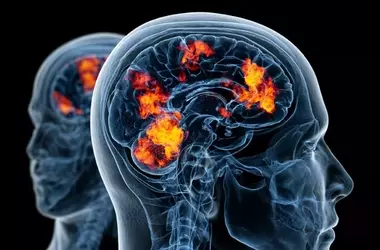
Precision Brain Imaging Boosts Depression Treatment Efficacy
A novel clinical study indicates that utilizing individualized functional magnetic resonance imaging (fMRI) to direct transcranial magnetic stimulation (TMS) significantly improves outcomes for individuals suffering from treatment-resistant depression. Researchers found that targeting brain stimulation based on a patient's unique fMRI scan leads to more substantial antidepressant effects compared to conventional, scalp-based measurements. This accelerated TMS approach condenses multi-week treatment into a single week, offering a quicker and more effective path to symptom reduction.

The Networked Nature of Achievement: Beyond Individual Brilliance
This article challenges the conventional view of individual success, arguing that achievement is not solely a product of personal intelligence, effort, or talent. Instead, it emphasizes the profound, often invisible, influence of social networks, collaborations, and systemic structures. It highlights how factors like mentorship, visibility, and accumulated advantage—described by the Matthew Effect—play crucial roles in shaping an individual's trajectory. The piece advocates for a more holistic understanding of success that acknowledges both personal agency and the scaffolding provided by one's professional and social environment, urging a shift from attributing success purely to individual merit to recognizing the dynamic interplay within systems.

Understanding Individual Differences in Interpreting Uncertainty
This article explores how individuals interpret ambiguous situations, highlighting the concept of valence bias. It discusses research by Neta (2026) showing consistent individual tendencies towards positive or negative interpretations of uncertainty. The article also touches upon developmental changes in valence bias, the evolutionary advantages of initial negativity, and interventions like mindfulness that can shift this bias, impacting mental health.

The Neurobiological Link Between Comfort Food and Stress Relief Unveiled
New research has illuminated the intricate neural circuitry responsible for how comfort eating can mitigate chronic stress. Scientists have pinpointed a specific pathway where dopamine surges, triggered by palatable food, effectively 'switch off' the overactive stress neurons in the hypothalamus. This breakthrough offers a neurobiological explanation for a common human behavior and paves the way for novel interventions targeting anxiety and eating disorders, moving beyond traditional understandings of willpower.
Advanced Network Mapping Reveals Hundreds of New Schizophrenia Risk Genes
Pioneering research has uncovered 641 previously unidentified genes linked to schizophrenia, moving beyond traditional gene-mapping techniques. By analyzing extensive genetic data from over 102,000 individuals and postmortem brain tissues across six cortical regions, scientists utilized advanced computational models to map long-range genetic interactions. This breakthrough highlights the critical role of networked gene communication in schizophrenia development and opens new avenues for precision psychiatry.