 Breaking News & Live Updates
- Breaking News & Live Updates
- Breaking News & Live Updates
- Breaking News & Live Updates
- Breaking News & Live Updates
- Breaking News & Live Updates
- Breaking News & Live Updates
- Breaking News & Live Updates
- Breaking News & Live Updates
- Breaking News & Live Updates
Psilocybin's Impact on Advanced Alzheimer's Disease: A Case Study
A recently published case report in Frontiers in Neuroscience outlines how a substantial dosage of psilocybin-containing fungi appeared to temporarily restore certain daily functions and communication abilities in a patient suffering from advanced Alzheimer's disease. These findings imply that particular neural circuits may retain latent capabilities even in the latter phases of neurodegeneration.
This groundbreaking observation paves the way for novel approaches to symptom management and establishes a basis for forthcoming clinical investigations. The report's publication coincides with increasing scientific interest in the therapeutic promise of psychedelic substances.
Psilocybin and Neuroplasticity: A Glimmer of Hope for Advanced Dementia
The case report details the remarkable, albeit temporary, improvements observed in an 80-year-old woman with advanced Alzheimer's after receiving a high dose of psilocybin. The patient, who had suffered from severe cognitive and functional decline for a decade, regained abilities such as urinary continence, independent walking, self-dressing, and increased emotional responsiveness. These improvements, spanning multiple domains including speech, mobility, and social interaction, suggest that even in late-stage neurodegeneration, certain brain networks might retain dormant capacities that could be reactivated under specific conditions. This phenomenon offers a new perspective on managing profound symptoms in Alzheimer's patients, highlighting the potential of psychedelics to stimulate neuroplasticity and alter brain network dynamics.
Alzheimer's disease is characterized by a progressive decline in cognitive functions, leading to severe loss of autonomy and communication difficulties. Current treatments primarily offer supportive care, with significant functional recovery being rare. However, the transient gains observed in this patient following psilocybin administration present a compelling area for further research. Psilocybin, through its active metabolite psilocin, interacts with 5-HT2A serotonin receptors, potentially promoting neuroplasticity by stimulating new dendritic spine growth, activating brain-derived neurotrophic factor, and reducing neuroinflammation. While acknowledging the limitations of a single case study, including the lack of a control group and standardized measurements, the authors emphasize that these observations generate a crucial hypothesis: that severe dementia may not signify an irreversible loss of all previously acquired capacities, and that systematic clinical trials are warranted to explore the safety, efficacy, and mechanisms of psilocybin in advanced dementia.
Implications and Future Directions: Cautious Optimism in Psychedelic Research
The multifaceted improvements in the patient's condition, including spontaneous autobiographical conversation and enhanced social interaction, were particularly striking due to their convergence across several functional domains. This observation challenges conventional assumptions about the irreversibility of late-stage Alzheimer's and underscores the potential for brain networks to be temporarily reorganized. However, the researchers caution against interpreting these findings as a definitive cure or a reversal of the underlying pathology. The case report's primary value lies in its hypothesis-generating nature, suggesting that latent functional capacities might become accessible through interventions that modify brain dynamics, thereby encouraging rigorous, controlled clinical investigations into psychedelic compounds for neurodegenerative diseases.
While the improvements were temporary, persisting for approximately a month after the initial high dose, they spurred a second, lower-dose intervention. The patient's positive response during this second session, including verbal expressiveness, positive emotional imagery, and improved agility, further supports the notion that psilocybin could modulate neurobehavioral states. Experts outside the study, such as Dustin Hines, acknowledge that the temporary reorganization of brain network activity by a powerful serotonergic psychedelic is plausible. Nonetheless, the authors and other medical professionals strongly advise against unsupervised use of psilocybin, particularly for vulnerable populations like older adults with neurodegenerative diseases, due to unknown safety profiles and potential risks. The PLASTICITY study at UC Berkeley is a crucial step towards understanding how psychedelics affect the aging brain, aiming to evaluate synthetic psilocybin's ability to enhance neuroplasticity in healthy older adults through controlled trials and advanced neuroimaging.
Other Articles

Navigating the AI Era in Psychological Science Publishing
As artificial intelligence increasingly shapes scholarly discourse, journal editors at the Association for Psychological Science (APS) are deliberating on its integration into editorial practices. This article compiles insights from several APS journal editors, addressing critical questions regarding AI disclosure in manuscripts, its role in peer review, its utility in editorial workflows, its impact on student learning, and the considerations for AI-assisted translation. The diverse perspectives highlight both the opportunities and challenges AI presents to the integrity and future of psychological science publishing.

Enhancing APS Conventions: A Vision for Future Engagement
The APS President reflects on the recent Barcelona convention and outlines plans for the upcoming Seattle event in 2027. Key initiatives include expanding integrative science discussions, fostering debates on controversial topics, introducing new workshop formats, enhancing professional development, and exploring the creation of consensus scientific reports. The aim is to create more valuable and engaging conventions that better serve the diverse needs of APS members.
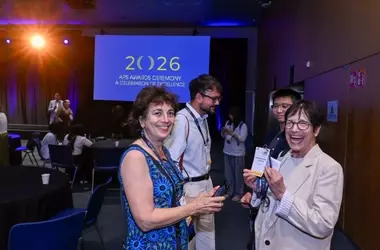
Highlights from the 2026 APS Annual Convention in Barcelona
The 2026 APS Annual Convention in Barcelona, Spain, brought together nearly 2,500 attendees from 73 countries to explore the latest advancements in psychological science. This event featured engaging sessions, insightful presentations on AI and large language models, a dedicated Industry Day, and numerous poster sessions, fostering collaboration and knowledge exchange among global experts. The next convention is scheduled for May 27–30, 2027, in Seattle, Washington.

Pop Music Reflects Shifting Cultural Values Towards Vices
A study by Queen Mary University of London analyzed over 380,000 song lyrics from 1960 to 2023, revealing a decline in moral virtues and a rise in themes of harm, cheating, and degradation. This shift in popular music acts as a cultural barometer, mirroring societal changes in values and emotional expression. The research highlights a growing culture of vices, with implications for understanding collective identity and psychological well-being.
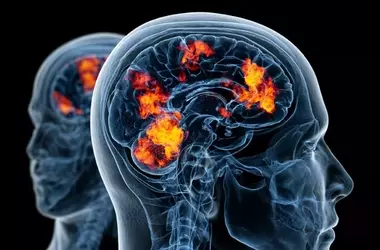
Precision Brain Imaging Boosts Depression Treatment Efficacy
A novel clinical study indicates that utilizing individualized functional magnetic resonance imaging (fMRI) to direct transcranial magnetic stimulation (TMS) significantly improves outcomes for individuals suffering from treatment-resistant depression. Researchers found that targeting brain stimulation based on a patient's unique fMRI scan leads to more substantial antidepressant effects compared to conventional, scalp-based measurements. This accelerated TMS approach condenses multi-week treatment into a single week, offering a quicker and more effective path to symptom reduction.

The Networked Nature of Achievement: Beyond Individual Brilliance
This article challenges the conventional view of individual success, arguing that achievement is not solely a product of personal intelligence, effort, or talent. Instead, it emphasizes the profound, often invisible, influence of social networks, collaborations, and systemic structures. It highlights how factors like mentorship, visibility, and accumulated advantage—described by the Matthew Effect—play crucial roles in shaping an individual's trajectory. The piece advocates for a more holistic understanding of success that acknowledges both personal agency and the scaffolding provided by one's professional and social environment, urging a shift from attributing success purely to individual merit to recognizing the dynamic interplay within systems.