 Breaking News & Live Updates
- Breaking News & Live Updates
- Breaking News & Live Updates
- Breaking News & Live Updates
- Breaking News & Live Updates
- Breaking News & Live Updates
- Breaking News & Live Updates
- Breaking News & Live Updates
- Breaking News & Live Updates
- Breaking News & Live Updates
The Digital Age Paradox: Chatbots, Loneliness, and the Erosion of Human Connection
The digital age, characterized by pervasive smartphones and advanced AI, is profoundly reshaping human interaction, leading to a significant decrease in verbal communication and a rise in loneliness. While digital tools offer convenience, they may inadvertently erode the quality of social connections. Researchers are now exploring how this transformation affects mental health, particularly the paradox where individuals seeking solace in chatbots might find their feelings of isolation exacerbated over time. This evolving landscape demands a critical re-evaluation of social behaviors and the development of new psychological frameworks to address the complex interplay between technology, human connection, and well-being.
Valeria Pfeifer, a professor at the University of Missouri-Kansas City, uncovered a striking trend in verbal communication. Her research revealed a substantial reduction in the average number of words spoken daily by individuals compared to 15 years prior. Initially doubting her findings, Pfeifer's rigorous analysis confirmed that this decline was indeed accurate. Concurrently, the U.S. Surgeon General issued a warning in 2023 about a burgeoning loneliness epidemic, attributing it to a growing disconnection among people that negatively impacts overall health. This stark reality underscores a societal shift where human conversations are diminishing, with potential implications for mental well-being as more individuals turn to artificial intelligence for companionship.
Pfeifer's investigation into talkativeness began with an effort to replicate an earlier study, but she quickly observed a significant drop in daily spoken words. Her analysis of 22 studies, involving over 2,000 participants from 2005 to 2019, showed an average annual decrease of 338 words per person. This cumulative reduction means individuals are speaking approximately 120,000 fewer words each year, representing a 28% decline in spoken conversations. Pfeifer speculates that the rise of technology, such as texting replacing phone calls and messaging apps supplanting face-to-face work discussions, is a primary driver of this trend. She highlights that typed interactions lack the rich emotional and psychological benefits of spoken dialogue, which includes non-verbal cues like tone, gestures, and facial expressions essential for building trust and rapport. This absence, she argues, contributes to a broader mental health crisis and exacerbates feelings of loneliness.
Further exploring the impact of technology, Elizabeth Dunn, a psychology professor at the University of British Columbia, and her colleague Dunnigan Folk, examined the long-term effects of chatbot interactions. Their 2026 study, surveying 2,000 adults across several countries, found that increased chatbot use correlated with heightened feelings of loneliness, particularly emotional isolation. While people often turn to AI for companionship when feeling lonely, this reliance can paradoxically intensify isolation over time. Dunn emphasizes that although chatbots might offer immediate positive feelings and rapport, these short-term benefits do not translate into long-term improvements in social connection, which is a more stable personal trait. Interestingly, another study by Dunn showed that chatbots could be beneficial in helping individuals prepare for difficult conversations with real people, suggesting a nuanced role for AI in facilitating human interaction rather than replacing it.
The evolving nature of social interactions in the digital era necessitates a reconceptualization of psychological phenomena like social anhedonia. Raymond Chan and his coauthors, in a 2026 article in Current Directions in Psychological Science, advocate for new frameworks that integrate online and offline interactions. They highlight that some individuals may struggle with in-person socializing but thrive in online human-to-human or human-to-AI contexts. This raises crucial questions about how social anhedonia manifests across different interaction types and the implications for assessment and intervention. The proposed framework aims to address the complexities of online-versus-offline differentiation and contextual aspects of social reward processing. Moreover, the authors suggest that virtual reality technology could play a dual role in both assessing and treating social anhedonia by simulating diverse social scenarios and gradually exposing individuals to augmented virtual environments that promote pleasure from face-to-face interactions.
In the face of these profound changes, experts like Pfeifer and Dunn underscore the importance of conscious effort to foster genuine human connection. Pfeifer encourages individuals to reclaim lost words by actively engaging in more conversations with neighbors, colleagues, and even strangers. Dunn likens chatbots to 'potato chips' – a temporary, albeit unfulfilling, substitute for genuine social 'nourishment.' While acknowledging that chatbots can offer momentary support, both researchers caution against allowing these digital interactions to replace more meaningful forms of human connection. The consensus is clear: understanding and mitigating the long-term impacts of digital reliance on our social fabric and mental well-being requires urgent attention and thoughtful integration of technology with authentic human engagement.
Other Articles
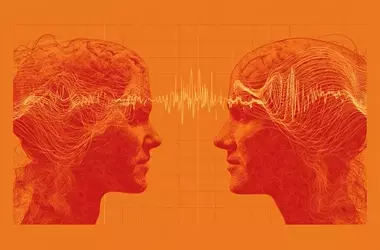
Exploring Brainwave Synchronization to Enhance Human Connection
A decade of groundbreaking research demonstrates that the common expression 'being on the same wavelength' has a tangible neurobiological basis. During face-to-face interactions, human brain rhythms align. This phenomenon, termed social synchrony, has been mapped by neuroscientists in diverse settings, from high schools to music studios, using portable EEG technology. The research indicates that synchronized brainwaves predict social rapport and engagement. Future studies, backed by a significant federal grant, aim to leverage this neural alignment for therapeutic interventions, combating loneliness, and strengthening community bonds.
Brainwave Patterns Precede Deception: Unveiling the Neural Signatures of Impending Lies
A recent study published in NeuroImage demonstrates that distinctive brain signals emerge before an individual utters a falsehood, indicating a preparatory cognitive effort. Researchers utilized EEG to monitor electrical activity in participants' brains as they prepared to tell truths or lies about personal information. The findings suggest that detecting these neural markers could pave the way for novel lie detection methodologies by focusing on the pre-deception phase.
Psilocybin's Impact on Advanced Alzheimer's Disease: A Case Study
A recent case study published in Frontiers in Neuroscience suggests that a high dose of psilocybin mushrooms temporarily restored speech and mobility in an 80-year-old woman with advanced Alzheimer's disease. This discovery indicates that certain brain networks might retain dormant capacities even in the late stages of neurodegeneration, opening new avenues for symptom management and future clinical trials for psychedelic compounds.

Navigating the AI Era in Psychological Science Publishing
As artificial intelligence increasingly shapes scholarly discourse, journal editors at the Association for Psychological Science (APS) are deliberating on its integration into editorial practices. This article compiles insights from several APS journal editors, addressing critical questions regarding AI disclosure in manuscripts, its role in peer review, its utility in editorial workflows, its impact on student learning, and the considerations for AI-assisted translation. The diverse perspectives highlight both the opportunities and challenges AI presents to the integrity and future of psychological science publishing.
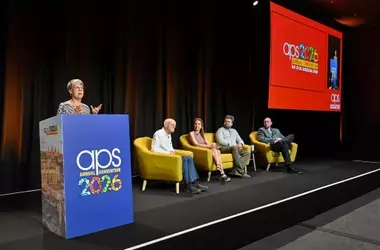
Enhancing APS Conventions: A Vision for Future Engagement
The APS President reflects on the recent Barcelona convention and outlines plans for the upcoming Seattle event in 2027. Key initiatives include expanding integrative science discussions, fostering debates on controversial topics, introducing new workshop formats, enhancing professional development, and exploring the creation of consensus scientific reports. The aim is to create more valuable and engaging conventions that better serve the diverse needs of APS members.
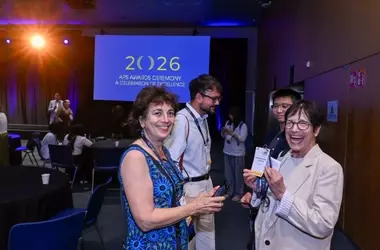
Highlights from the 2026 APS Annual Convention in Barcelona
The 2026 APS Annual Convention in Barcelona, Spain, brought together nearly 2,500 attendees from 73 countries to explore the latest advancements in psychological science. This event featured engaging sessions, insightful presentations on AI and large language models, a dedicated Industry Day, and numerous poster sessions, fostering collaboration and knowledge exchange among global experts. The next convention is scheduled for May 27–30, 2027, in Seattle, Washington.