 Breaking News & Live Updates
- Breaking News & Live Updates
- Breaking News & Live Updates
- Breaking News & Live Updates
- Breaking News & Live Updates
- Breaking News & Live Updates
- Breaking News & Live Updates
- Breaking News & Live Updates
- Breaking News & Live Updates
- Breaking News & Live Updates
Comforting Others: A Cultural Trait, Not a Universal Instinct
A recent global investigation has unveiled a compelling insight into human empathy, suggesting that the act of comforting someone in distress is more of a learned cultural behavior than an innate, universal human response. This extensive research, spanning various countries and involving thousands of participants, highlights a significant divergence in how different societies approach the emotional well-being of others. While the personal drive to achieve happiness appears consistent across cultures, the methods and motivations for assisting others in overcoming negative emotions are deeply rooted in societal norms and values.
This study, spearheaded by Dr. Maya Tamir and PhD student Shir Ginosar Yaari from the Hebrew University of Jerusalem, questions a fundamental premise in psychology: that the impulse to uplift those who are suffering is inherent to all humanity. Published in the Proceedings of the National Academy of Sciences (PNAS), their findings indicate that cultural background heavily influences the strategies people employ when attempting to regulate the emotions of others. This stands in contrast to intrapersonal emotion regulation, where individuals generally share a similar desire to manage their own feelings.
The research encompassed data from over 6,900 individuals across 17 nations, spanning multiple continents, making it one of the most comprehensive studies on interpersonal emotion regulation to date. The study also incorporated daily life observations of romantic partners in Germany and South Korea to better understand natural responses to a partner's emotional states. The results demonstrated that people from more individualistic societies, such as the United States, Germany, and the United Kingdom, were more inclined to actively reduce the distress of others. They tended to offer comfort through validation, active listening, and encouraging positive reframing of difficult experiences.
Conversely, participants from more collectivistic nations, including South Korea, Japan, India, and China, were less likely to perceive unpleasant emotions as problems requiring immediate eradication. In these cultures, negative emotions are often seen as possessing functional value, serving as catalysts for self-reflection, personal growth, strengthening social ties, or discovering deeper meaning. As Dr. Maya Tamir noted, the assumption that alleviating suffering is always the kindest act is more reflective of cultural values than a universal human trait.
A particularly striking revelation from the study was the greater impact of culture on how individuals influence the emotions of others, compared to its influence on their own emotional regulation. Globally, people exhibited a similar motivation to improve their own emotional state when feeling low. However, the cultural lens significantly altered their approach when seeking to change someone else's emotions. This underscores that emotional support is far from a universally standardized practice; rather, its form and perceived effectiveness are intrinsically tied to cultural context.
These cultural distinctions carry significant implications for interpersonal relationships. In Germany, a culture leaning towards individualism, a strong motivation to lessen a partner's distress correlated with deeper feelings of relational closeness. Interestingly, this link was absent in South Korea, suggesting that the motivation to make a partner feel better did not necessarily translate to increased intimacy. This indicates that what constitutes supportive behavior is inherently defined by the prevailing cultural framework.
The collaborative project brought together academics from various universities worldwide, utilizing a combination of large-scale international surveys and daily diary entries from couples. This extensive methodology highlights the intricate relationship between culture and emotional interaction. The findings challenge universal models of care in diverse fields such as international business, therapy, and healthcare, advocating for a shift from a universal approach to one that respects and aligns with individual cultural perspectives on emotional support. It suggests a more nuanced question: instead of asking, "How can I make you feel better?" perhaps we should inquire, "What kind of support is appropriate for you within your cultural context?"
Other Articles

Social Attunement and Alcohol Consumption: Age-Related Differences
A recent study explores how social alignment influences alcohol consumption across different age groups. It reveals that younger individuals with higher social attunement tend to consume more alcohol in non-drinking social settings, while older adults with similar attunement consume less. Conversely, in entirely alcohol-free environments, the patterns reverse: younger people drink less, and older people drink more. This highlights the complex interplay between social factors, age, and drinking habits.
Global Study Unveils the Intricacies of Self-Control Across Cultures
A monumental international study, spanning 77 countries and involving 15,000 participants, is delving into the complexities of intertemporal choice – the psychological balancing act between immediate gratification and long-term rewards. This collaborative effort, led by the University of Bonn, seeks to understand how environmental stability, cultural norms, and individual mood influence decision-making regarding future monetary rewards, offering insights that could shape global policies.
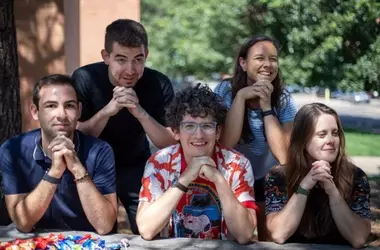
Unraveling the Genetic Blueprint of Mental Health: A Conversation with Andrew Grotzinger
This article features an interview with Andrew Grotzinger, a distinguished researcher and recipient of the 2026 Janet Taylor Spence Award. He discusses his groundbreaking work at the P-Badger Lab, University of Colorado Boulder, focusing on the genetic interplay between psychiatric and neurodegenerative conditions. Grotzinger shares his journey into this specialized field, highlights from his research on genetic overlap in mental disorders, and his future aspirations for more inclusive and nuanced genetic studies. He also offers invaluable career advice to aspiring researchers.
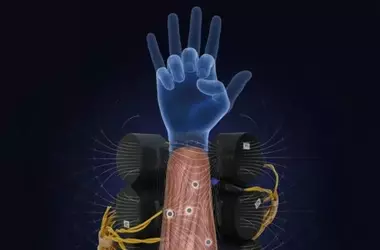
Magnetic Implants Restore Prosthetic Hand Sensation
A novel study reveals that tiny magnets implanted in amputees' residual limb muscles can generate natural, coordinated sensations of prosthetic hand movement. This breakthrough suggests the brain perceives movement as integrated actions, not isolated twitches. The research paves the way for advanced prosthetic limbs that offer users a more intuitive and tactile experience, reducing reliance on visual feedback.

The Digital Age Paradox: Chatbots, Loneliness, and the Erosion of Human Connection
In an era dominated by digital communication, a troubling decline in face-to-face verbal interaction is emerging, fueling a loneliness epidemic. Research indicates that while chatbots offer temporary companionship, their long-term use may intensify feelings of isolation. This shift necessitates new frameworks for understanding social anhedonia and calls for a reevaluation of how technology shapes our mental well-being and genuine human connection.
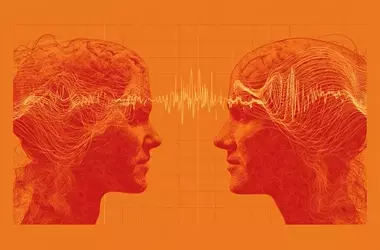
Exploring Brainwave Synchronization to Enhance Human Connection
A decade of groundbreaking research demonstrates that the common expression 'being on the same wavelength' has a tangible neurobiological basis. During face-to-face interactions, human brain rhythms align. This phenomenon, termed social synchrony, has been mapped by neuroscientists in diverse settings, from high schools to music studios, using portable EEG technology. The research indicates that synchronized brainwaves predict social rapport and engagement. Future studies, backed by a significant federal grant, aim to leverage this neural alignment for therapeutic interventions, combating loneliness, and strengthening community bonds.