 Breaking News & Live Updates
- Breaking News & Live Updates
- Breaking News & Live Updates
- Breaking News & Live Updates
- Breaking News & Live Updates
- Breaking News & Live Updates
- Breaking News & Live Updates
- Breaking News & Live Updates
- Breaking News & Live Updates
- Breaking News & Live Updates
Social Attunement and Alcohol Consumption: Age-Related Differences
New research indicates that the way individuals align their behavior with social environments, known as social attunement, impacts alcohol consumption differently across various age demographics. Specifically, in social contexts where alcohol is not the primary focus but is present, younger participants demonstrating strong social attunement reported increased alcohol intake. In contrast, older adults exhibiting similar social alignment in these scenarios tended to decrease their drinking. This study sheds light on the nuanced relationship between social dynamics and drinking behaviors, suggesting that social cues can either promote or deter alcohol use depending on a person's age and the specific social setting.
Social attunement refers to an individual's innate ability to perceive, interpret, and adjust their actions to harmonize with prevailing social norms and the expectations of their peers, often without overt pressure. This trait plays a crucial role in facilitating social coordination and fostering group acceptance. It can manifest consciously, where individuals deliberately modify their conduct in response to peer reactions, or unconsciously, through automatic behavioral adjustments.
Prior investigations have established connections between social attunement and patterns of alcohol use, including associated problems. In situations where alcohol is consumed, individuals might modify their drinking volume based on their friends' consumption levels or perceived approval. A highly socially attuned person might drink more when peers encourage alcohol use or normalize heavy drinking. Conversely, this same tendency could lead to reduced alcohol consumption if friends express disapproval or advocate for moderation.
Adolescents and young adults are particularly susceptible to such social influences, given the heightened importance of social acceptance and belonging during these developmental stages. Perceptions of drinking norms also significantly contribute, as people may increase their consumption if they mistakenly believe that heavy drinking is commonplace among their peers. Christophe Romein from Erasmus University Rotterdam and his team embarked on a study to investigate the link between high social attunement to peer alcohol use in late adolescence and early adulthood, and its potential impact on increased alcohol consumption and related issues. The study also explored the influence of gender in conjunction with age and social attunement. The researchers gauged social attunement by observing changes in participants' willingness to drink alcohol in various social settings after they were presented with information about the hypothetical drinking intentions of their peers in those identical situations.
The study involved 811 participants over two phases, primarily targeting alcohol users. After excluding non-drinkers, those who did not complete the main task, and non-binary individuals due to insufficient sample size for statistical analysis, the final group comprised 683 individuals. Recruitment efforts spanned social media, a university participant pool in the Netherlands, in-person flyer distribution, and an online research platform, specifically seeking cannabis and alcohol users aged 15 and above.
Participants engaged in an implicit social attunement task, where they viewed 45 images depicting three types of social scenarios: alcohol-present drinking situations, non-alcohol drinking situations with other beverages, and entirely alcohol-free social gatherings. Following each image, participants rated their inclination to consume alcohol. Subsequently, they received simulated peer feedback regarding peer groups' alcohol consumption intentions in those situations. This feedback either aligned with their initial willingness (six instances) or indicated higher or lower willingness (39 instances). After a brief memory task, participants re-evaluated their alcohol consumption willingness for the same images. Two social attunement scores were derived from these changes: one reflecting willingness to drink when peer feedback suggested higher consumption, and another when it suggested lower consumption. These scores were calculated for each of the three social setting types. Participants also provided self-reported data on alcohol use disorder symptoms, recent consumption of alcohol, cannabis, and cigarettes, and binge drinking habits.
The research revealed no overall interaction between social attunement and age in predicting alcohol use when considering specific positive or negative peer feedback independently. However, significant interactions emerged when aggregating responses for each social context. In social settings where alcohol was not the focal point but was consumed, younger individuals exhibiting higher overall social attunement reported greater alcohol consumption. Conversely, older adults with similar levels of social attunement in these same environments tended to report reduced alcohol use. Conversely, in social environments completely devoid of alcohol, younger participants with greater social attunement indicated less alcohol use, while older participants in these settings, also highly attuned, showed an inclination towards increased alcohol consumption. The investigators noted that gender did not yield statistically significant results, suggesting that social attunement influences drinking behaviors similarly across genders in these contexts.
The findings suggest that social attunement can act as either a contributing factor to or a protective barrier against alcohol use, depending on an individual's age and the surrounding social environment. This study significantly enhances the scientific understanding of the complex elements influencing alcohol consumption. However, it is crucial to acknowledge the limitations inherent in this research. The study relied on participants' self-reported data, which may not always precisely reflect actual real-world drinking behaviors. Additionally, the cross-sectional design restricts the ability to determine if these behavioral patterns genuinely evolve within individuals as they age. The research, titled "Social attunement and alcohol use: The role of age and gender," was co-authored by Christophe Romein, Karis Colyer-Patel, Emese Kroon, Helle Larsen, Hanan El Marroun, and Janna Cousijn.
Other Articles
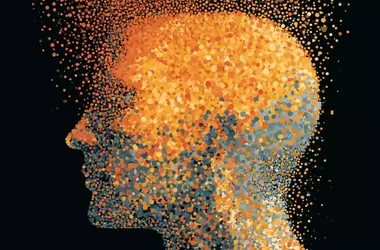
Global Study Unveils the Intricacies of Self-Control Across Cultures
A monumental international study, spanning 77 countries and involving 15,000 participants, is delving into the complexities of intertemporal choice – the psychological balancing act between immediate gratification and long-term rewards. This collaborative effort, led by the University of Bonn, seeks to understand how environmental stability, cultural norms, and individual mood influence decision-making regarding future monetary rewards, offering insights that could shape global policies.

Unraveling the Genetic Blueprint of Mental Health: A Conversation with Andrew Grotzinger
This article features an interview with Andrew Grotzinger, a distinguished researcher and recipient of the 2026 Janet Taylor Spence Award. He discusses his groundbreaking work at the P-Badger Lab, University of Colorado Boulder, focusing on the genetic interplay between psychiatric and neurodegenerative conditions. Grotzinger shares his journey into this specialized field, highlights from his research on genetic overlap in mental disorders, and his future aspirations for more inclusive and nuanced genetic studies. He also offers invaluable career advice to aspiring researchers.
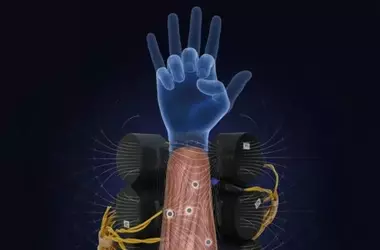
Magnetic Implants Restore Prosthetic Hand Sensation
A novel study reveals that tiny magnets implanted in amputees' residual limb muscles can generate natural, coordinated sensations of prosthetic hand movement. This breakthrough suggests the brain perceives movement as integrated actions, not isolated twitches. The research paves the way for advanced prosthetic limbs that offer users a more intuitive and tactile experience, reducing reliance on visual feedback.

The Digital Age Paradox: Chatbots, Loneliness, and the Erosion of Human Connection
In an era dominated by digital communication, a troubling decline in face-to-face verbal interaction is emerging, fueling a loneliness epidemic. Research indicates that while chatbots offer temporary companionship, their long-term use may intensify feelings of isolation. This shift necessitates new frameworks for understanding social anhedonia and calls for a reevaluation of how technology shapes our mental well-being and genuine human connection.
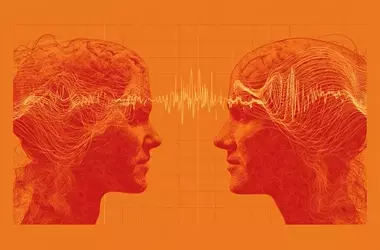
Exploring Brainwave Synchronization to Enhance Human Connection
A decade of groundbreaking research demonstrates that the common expression 'being on the same wavelength' has a tangible neurobiological basis. During face-to-face interactions, human brain rhythms align. This phenomenon, termed social synchrony, has been mapped by neuroscientists in diverse settings, from high schools to music studios, using portable EEG technology. The research indicates that synchronized brainwaves predict social rapport and engagement. Future studies, backed by a significant federal grant, aim to leverage this neural alignment for therapeutic interventions, combating loneliness, and strengthening community bonds.
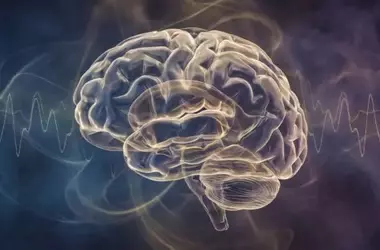
Brainwave Patterns Precede Deception: Unveiling the Neural Signatures of Impending Lies
A recent study published in NeuroImage demonstrates that distinctive brain signals emerge before an individual utters a falsehood, indicating a preparatory cognitive effort. Researchers utilized EEG to monitor electrical activity in participants' brains as they prepared to tell truths or lies about personal information. The findings suggest that detecting these neural markers could pave the way for novel lie detection methodologies by focusing on the pre-deception phase.