 Breaking News & Live Updates
- Breaking News & Live Updates
- Breaking News & Live Updates
- Breaking News & Live Updates
- Breaking News & Live Updates
- Breaking News & Live Updates
- Breaking News & Live Updates
- Breaking News & Live Updates
- Breaking News & Live Updates
- Breaking News & Live Updates
Global Study Unveils the Intricacies of Self-Control Across Cultures
Human behavior is a fascinating tapestry woven with countless choices, none more fundamental than the daily balancing act between instant satisfaction and future gains. Whether it's indulging in a momentary pleasure or diligently working towards a distant goal, these intertemporal decisions profoundly influence every facet of our lives, from personal finances to global sustainability. Yet, despite their pervasive impact, the underlying psychological mechanisms governing these choices and their cultural variations remain largely unexplored.
Global Psychological Investigation into Intertemporal Choices
In a groundbreaking endeavor to illuminate this complex aspect of human psychology, an unprecedented international research consortium has united over 100 laboratories across 77 countries. This collaborative initiative, spearheaded by the University of Bonn, aims to gather insights from approximately 15,000 participants in one of the most extensive psychological studies ever conducted on intertemporal choices. By meticulously examining how diverse demographic and cultural groups value future monetary rewards, the TRICC Project seeks to unveil the universal and culturally specific patterns of human decision-making. These findings promise to provide invaluable data for refining economic policies, public health campaigns, and sustainability efforts worldwide. The research specifically highlights that choosing immediate smaller rewards is not inherently 'wrong,' especially in uncertain or resource-scarce environments where it can be a rational strategy. Furthermore, the study meticulously tracks the influence of transient factors like mood, recognizing that individuals seeking comfort are often drawn to immediate gratification. This entirely self-funded project, relying on the internal resources of participating institutions, underscores a significant shift towards decentralized, grassroots scientific collaboration. Individuals over 18 are encouraged to participate in the brief, multilingual online questionnaire before August 18, 2026, to ensure a truly representative global understanding of human decision-making.
This ambitious research initiative offers a compelling opportunity to understand the intricate interplay between individual psychology, cultural contexts, and global decision-making. As societies grapple with pressing challenges like climate change, economic instability, and public health crises, insights into how people value and plan for the future become critically important. The study's emphasis on monetary rewards provides a standardized metric for cross-cultural comparison, moving beyond anecdotal observations to quantifiable data. The recognition that immediate gratification can be a rational choice, particularly in unstable environments, challenges simplistic notions of 'good' or 'bad' decision-making and fosters a more nuanced understanding of human adaptive strategies. By inviting broad participation from diverse backgrounds, the TRICC Project is not just collecting data; it's building a more inclusive and representative model of the human mind, offering a powerful blueprint for future interventions that are truly responsive to global needs and realities. It's a testament to the power of collective scientific inquiry to shed light on some of humanity's most enduring behavioral puzzles.
Other Articles

Unraveling the Genetic Blueprint of Mental Health: A Conversation with Andrew Grotzinger
This article features an interview with Andrew Grotzinger, a distinguished researcher and recipient of the 2026 Janet Taylor Spence Award. He discusses his groundbreaking work at the P-Badger Lab, University of Colorado Boulder, focusing on the genetic interplay between psychiatric and neurodegenerative conditions. Grotzinger shares his journey into this specialized field, highlights from his research on genetic overlap in mental disorders, and his future aspirations for more inclusive and nuanced genetic studies. He also offers invaluable career advice to aspiring researchers.
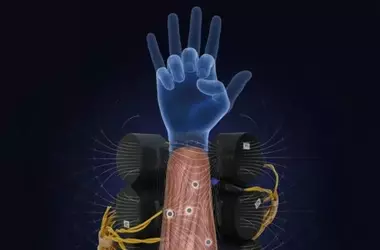
Magnetic Implants Restore Prosthetic Hand Sensation
A novel study reveals that tiny magnets implanted in amputees' residual limb muscles can generate natural, coordinated sensations of prosthetic hand movement. This breakthrough suggests the brain perceives movement as integrated actions, not isolated twitches. The research paves the way for advanced prosthetic limbs that offer users a more intuitive and tactile experience, reducing reliance on visual feedback.

The Digital Age Paradox: Chatbots, Loneliness, and the Erosion of Human Connection
In an era dominated by digital communication, a troubling decline in face-to-face verbal interaction is emerging, fueling a loneliness epidemic. Research indicates that while chatbots offer temporary companionship, their long-term use may intensify feelings of isolation. This shift necessitates new frameworks for understanding social anhedonia and calls for a reevaluation of how technology shapes our mental well-being and genuine human connection.
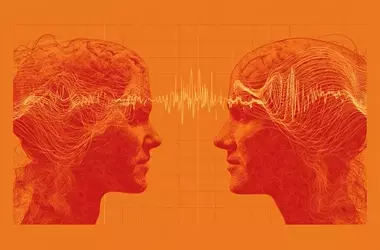
Exploring Brainwave Synchronization to Enhance Human Connection
A decade of groundbreaking research demonstrates that the common expression 'being on the same wavelength' has a tangible neurobiological basis. During face-to-face interactions, human brain rhythms align. This phenomenon, termed social synchrony, has been mapped by neuroscientists in diverse settings, from high schools to music studios, using portable EEG technology. The research indicates that synchronized brainwaves predict social rapport and engagement. Future studies, backed by a significant federal grant, aim to leverage this neural alignment for therapeutic interventions, combating loneliness, and strengthening community bonds.
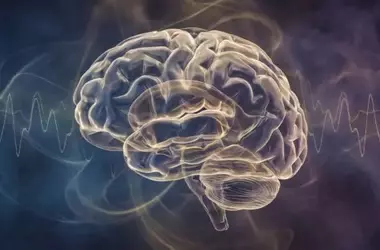
Brainwave Patterns Precede Deception: Unveiling the Neural Signatures of Impending Lies
A recent study published in NeuroImage demonstrates that distinctive brain signals emerge before an individual utters a falsehood, indicating a preparatory cognitive effort. Researchers utilized EEG to monitor electrical activity in participants' brains as they prepared to tell truths or lies about personal information. The findings suggest that detecting these neural markers could pave the way for novel lie detection methodologies by focusing on the pre-deception phase.
Psilocybin's Impact on Advanced Alzheimer's Disease: A Case Study
A recent case study published in Frontiers in Neuroscience suggests that a high dose of psilocybin mushrooms temporarily restored speech and mobility in an 80-year-old woman with advanced Alzheimer's disease. This discovery indicates that certain brain networks might retain dormant capacities even in the late stages of neurodegeneration, opening new avenues for symptom management and future clinical trials for psychedelic compounds.