 Breaking News & Live Updates
- Breaking News & Live Updates
- Breaking News & Live Updates
- Breaking News & Live Updates
- Breaking News & Live Updates
- Breaking News & Live Updates
- Breaking News & Live Updates
- Breaking News & Live Updates
- Breaking News & Live Updates
- Breaking News & Live Updates
Unraveling the Complex Social Paths of Autism and ADHD Traits to Mental Health Issues
New research provides significant insights into how traits associated with autism and attention-deficit/hyperactivity disorder (ADHD) uniquely contribute to mental health challenges in young individuals. This comprehensive study reveals that the journey from neurodevelopmental traits to psychological distress is not a straightforward progression but a complex interplay of social interactions and mental well-being, often resulting in self-perpetuating cycles.
Detailed Findings on Neurodevelopmental Traits and Social Adjustment
A multi-year investigation, conducted by a team including lead author Eriko Hashimoto and Professor Hiroyuki Ito of Ochanomizu University in Tokyo, examined data from 9,619 students across various public elementary and junior high schools in a mid-sized Japanese municipality. This extensive dataset, collected between 2012 and 2023, involved information from students, their parents, and homeroom teachers, offering a holistic view of behavioral and emotional patterns both at home and in academic environments.
Parents provided assessments of their children's autistic tendencies using a condensed Autism Spectrum Screening Questionnaire and evaluated ADHD traits via the ADHD Rating Scale-IV. Students reported on their own difficulties with schoolwork, teacher interactions, and family arguments. Peer relationship challenges were gauged using the Strengths and Difficulties Questionnaire, with input from all three groups—students, teachers, and parents.
Mental health outcomes were categorized into internalizing problems, such as anxiety and depression, and externalizing problems, like anger and disruptive behavior. The research employed cross-lagged structural equation modeling to ascertain how one variable influenced changes in another over time, controlling for gender and grade level.
The study found distinct developmental trajectories for autistic and ADHD traits. Autistic traits consistently correlated with subsequent peer difficulties, showing strong associations across grade transitions. They also linked to later internalizing problems, although less consistently. In contrast, autistic traits did not show a strong connection to academic struggles or conflicts with educators.
ADHD traits presented a different set of patterns. Elevated ADHD characteristics were associated with subsequent externalizing problems, with the strongest links observed in late elementary school. These traits also correlated with increased academic difficulties, particularly in the fourth and fifth grades. Interestingly, academic challenges themselves appeared to be an intermediary factor, predicting internalizing symptoms during elementary school rather than a direct link from ADHD traits to internalizing problems.
A critical discovery was the bidirectional nature of these relationships. For example, while peer problems foreshadowed an increase in internalizing symptoms, higher levels of internalizing symptoms also led to worsening peer issues. Similarly, externalizing behaviors predicted more conflicts with teachers and parents, which, in turn, escalated behavioral difficulties. Academic problems consistently preceded greater family discord in subsequent years.
Moreover, the social environment seemed to influence parental perceptions of neurodevelopmental traits. Experiencing peer problems was linked to higher reported autistic traits in later grades, and elevated externalizing behaviors predicted higher reported ADHD traits. These findings suggest that neurodevelopmental traits might not be static but could evolve with a child's social experiences, or that parental ratings adjust as problems become more apparent.
Reflections on Supporting Children with Neurodevelopmental Traits
This study underscores the crucial need to look beyond individual characteristics and consider the broader social contexts in which children develop. The distinct pathways observed for autism and ADHD traits highlight the importance of personalized support systems. It's a reminder that many children with mild neurodevelopmental traits, who might not meet formal diagnostic criteria, still encounter considerable challenges in social interactions, learning, and relationships. Tailored interventions focusing on academic organization, peer relationship skills, and fostering positive communication between families and schools could be instrumental in disrupting these cycles of difficulty. While the study does not establish direct causation, it provides valuable temporal associations, urging educators and parents to be vigilant and proactive in addressing the intertwined social and emotional needs of these children, ultimately promoting their mental well-being and positive development.
Other Articles
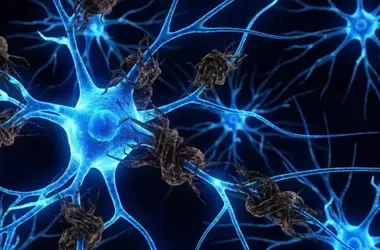
Brain Scans Uncover Tau Buildup in Late-Onset Psychosis Patients
A recent Japanese study revealed a significant correlation between late-onset psychosis (onset after age 40) and the accumulation of amyloid-beta and tau proteins in the brain. These proteins are known indicators of Alzheimer's disease and other forms of dementia. Notably, many patients exhibited tau buildup without amyloid, suggesting diverse underlying brain pathologies. The findings, published in Molecular Psychiatry, underscore the potential neurodegenerative basis of psychosis manifesting later in life, opening new avenues for diagnosis and treatment strategies.
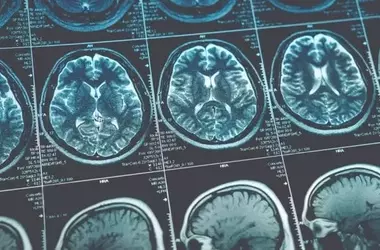
Divergent Brain Responses to Reward in ADHD and Autism Revealed by Advanced Imaging
A recent study utilizing brain scans has uncovered that individuals with Attention Deficit Hyperactivity Disorder (ADHD) and Autism Spectrum Disorder (ASD) exhibit contrasting patterns of reward processing in the brain, despite involving similar deep brain structures. ADHD is linked to heightened activity in response to immediate rewards, contributing to impulsivity, while ASD shows reduced activity, particularly concerning social rewards. These findings, published in Molecular Psychiatry, provide a neurobiological framework for understanding the distinct behavioral characteristics of each condition.

Oxytocin System and Childhood Trauma in Functional Neurological Disorder
A study explored the oxytocin system's role in Functional Neurological Disorder (FND), particularly its links to childhood trauma and interoception. While genetic variations alone didn't directly cause FND, interactions between genetics, epigenetics, and oxytocin levels showed associations with how patients process physical sensations and past trauma. The research suggests a complex interplay between biological factors and life experiences in FND development.

Salsa Dancing: A Rhythmic Remedy for Depression in Young Adults
A recent study published in "Psychological Medicine" reveals that an eight-week salsa dancing program significantly reduces depressive symptoms and social anxiety in young adults. This randomized trial, comparing a dance group to a waitlist control, highlights the potential of social movement activities as an accessible and engaging mental health intervention, especially for a demographic often underserved by traditional therapies. The findings suggest that the combination of physical activity and social interaction inherent in salsa can offer substantial benefits, including improved mood and preserved social enjoyment.

Inner Dialogue During Psilocybin Therapy Linked to Alcohol Abstinence
A new study suggests that how individuals engage with a psilocybin experience may predict their success in maintaining alcohol abstinence. Participants who focused on inner dialogue, self-reflection, and commitment to change during their psychedelic session were more likely to remain abstinent three months later, compared to those who focused on sensory and emotional experiences. This highlights the potential importance of active cognitive processing during psychedelic-assisted therapy for alcohol use disorder.

Childhood Loneliness and Social Isolation: Enduring Impacts on Young Adults
A new study reveals that loneliness experienced during childhood does not necessarily lead socially isolated youth to reconnect with others later in life. Instead, both childhood loneliness and social isolation independently predict a range of mental health and socioeconomic challenges in young adulthood. These findings challenge previous evolutionary theories suggesting that loneliness acts as an adaptive alarm, motivating individuals to improve their social connections. The research highlights the critical need for direct interventions to address loneliness and isolation in children.