 Breaking News & Live Updates
- Breaking News & Live Updates
- Breaking News & Live Updates
- Breaking News & Live Updates
- Breaking News & Live Updates
- Breaking News & Live Updates
- Breaking News & Live Updates
- Breaking News & Live Updates
- Breaking News & Live Updates
- Breaking News & Live Updates
The Perceived Conflict Between Diversity and Merit in Hiring
Navigating the Ideological Divide: Diversity, Merit, and Perceptions in the Workplace
The Rise of Diversity, Equity, and Inclusion Initiatives and the Subsequent Pushback
In contemporary American society, efforts to enhance Diversity, Equity, and Inclusion (DEI) have gained prominence, aiming to address systemic barriers that have historically disadvantaged certain demographic groups in securing esteemed employment. These initiatives encompass various strategies, ranging from broadening applicant pools to ensuring diverse representation in interview selections and, at times, establishing quotas for hiring or admissions.
Public Reaction to DEI Initiatives: A Question of Quality Versus Inclusivity
Despite the noble intentions behind DEI, these initiatives have encountered considerable resistance. A significant segment of the population appears to harbor concerns that increasing workforce or student body diversity might inadvertently compromise overall quality. This perspective often posits that DEI efforts could undermine the fundamental objective of selecting the most qualified individuals. A 2026 study by Evan Apfelbaum, Eileen Suh, and Yue Wu, published in the Journal of Personality and Social Psychology, meticulously investigated the prevalence of this belief across the United States.
Research Design: Examining Perceptions of Merit-Based Hiring in Diverse Search Processes
The aforementioned studies were specifically designed to gauge public perception regarding the efficacy of various search processes in identifying the most suitable candidates. When describing search methodologies that incorporated diversity-enhancing interventions, the researchers emphasized that these techniques primarily aimed to expand the applicant pool, such as by actively recruiting from institutions with a high enrollment of underrepresented groups. The deliberate focus was on illustrating that DEI strategies were not intended to overtly prioritize race, gender, or ethnicity over an applicant's qualifications.
The Role of Political Beliefs in Shaping Perceptions of Diversity Efforts
To ensure a comprehensive understanding, the studies actively recruited participants representing a wide spectrum of political ideologies, with their political affiliations meticulously considered during data analysis. A clear and consistent pattern emerged from the findings: individuals identifying as politically liberal generally believed that search processes employing diversity-enhancing techniques were equally, if not slightly more, likely to identify the best candidate compared to traditional approaches. Conversely, political conservatives tended to perceive that such diversity initiatives diminished the probability of securing the most qualified individual. This divergence in belief extended to perceptions of fairness, where DEI techniques aimed at enlarging the applicant pool were seen as less fair by conservatives but not by liberals.
Unpacking the Ideological Divide: Systemic Bias Versus Individual Drive
Several studies within the research paper sought to uncover the underlying reasons for these differing viewpoints. Participants were asked to assess their beliefs regarding whether disparities in outcomes for specific groups stemmed from systemic biases or from intrinsic qualities such as drive or initiative within those groups. The findings indicated a strong correlation: individuals who more readily acknowledged systemic biases against underrepresented groups were less likely to believe that DEI efforts hindered the selection of the best candidate. In the U.S. context, political liberals are notably more inclined than conservatives to perceive that racial and ethnic groups face systemic disadvantages.
Bridging the Gap: The Impact of Blind Evaluation Processes
The research also explored whether recruitment processes could promote inclusivity without generating perceptions of bias. A specific set of studies investigated scenarios where diversity in the applicant pool was increased, but crucial demographic information about candidates was explicitly withheld during the evaluation phase. When it was made clear that details regarding race, gender, and ethnicity were not factored into the selection decision, the presence of DEI initiatives to expand the applicant pool no longer influenced either liberal or conservative participants' confidence that the search would yield the most qualified candidate.
The Deep-Seated Nature of Ideological Associations and Their Influence on Perceptions
A particularly compelling aspect of this research is its suggestion that individuals internalize political ideologies to such an extent that they develop automatic associations between concepts, such as the perceived link between diversity and merit. The author notes that this association doesn't appear to be a product of explicit reasoning, given that the DEI techniques examined were solely focused on expanding the applicant pool, yet they profoundly impacted beliefs about candidate quality. This underscores the need for clear communication and, critically, transparent evaluation processes that overtly eliminate the consideration of demographic factors to effectively counter ingrained assumptions about the fairness and efficacy of diversity initiatives.
Other Articles
Real-time Feedback Enhances Human-Machine Interface Control
A new study reveals that immediate, real-time feedback significantly improves users' ability to control human-machine interfaces, particularly when visual or physical sensations are limited. This reinforcement learning approach, published in Neuron, holds promise for advancing rehabilitation technologies like prosthetic limbs and stroke recovery tools. By providing continuous success signals, individuals can more effectively learn and adapt to operate complex devices, overcoming sensory deficits.

Ketogenic Diet Shows Promise for Schizophrenia and Bipolar Disorder Symptom Relief
A recent study revealed that a ketogenic diet can significantly improve metabolic function and alleviate psychiatric symptoms in individuals with schizophrenia and bipolar disorder. The research highlights the diet's ability to provide an alternative energy source for the brain, leading to sustained reductions in psychotic symptoms and cognitive impairments without major side effects. This suggests a metabolic approach could be a valuable intervention in mental healthcare.
Sleep, Genetics, and Alzheimer's Risk in Older Women
A recent study highlights the critical connection between sleep quality, genetic predisposition, and the risk of Alzheimer's disease in older women. It suggests that poor sleep may accelerate the formation of tau tangles in the brain and impair visual memory, especially in those with a higher genetic susceptibility. The research underscores the potential of sleep improvement and specific memory tests for early detection.

Brain Health: Age is Just a Number
New research published in Scientific Reports indicates that individuals across all age groups can significantly enhance and maintain their brain health over several years through the use of accessible online training and coaching resources. The findings suggest that engaging with specific cognitive strategies and adopting healthy habits can boost cognitive, emotional, and social well-being. This study paves the way for a future where brain health care prioritizes continuous development rather than solely focusing on memory decline in older age.
AI and Neuroscience: Unraveling the Neural Foundations of Human Speech
A recent study published in Nature reveals how individual brain cells in the human cortex act as specialized building blocks for spoken language. By directly recording electrical activity from the brains of individuals during natural conversation, researchers discovered that distinct groups of neurons are dedicated to processing different aspects of speech, sentence structure, and meaning. These insights could lead to advanced technologies for restoring communication in people with speech disorders.
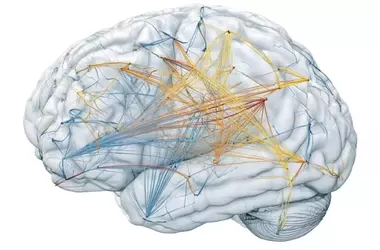
New Research Reveals Core Brain Circuits Behind OCD Symptoms
Scientists have pinpointed the causal brain circuits for Obsessive-Compulsive Disorder (OCD) using a novel approach called Causal Network Mapping. By analyzing rare cases where OCD symptoms emerged after a focal brain injury, researchers identified four key hubs: the orbitofrontal cortex and basal ganglia in both hemispheres. This discovery paves the way for more precise and individualized rTMS treatments, moving beyond generalized brain stimulation to target specific neural pathways implicated in OCD.