 Breaking News & Live Updates
- Breaking News & Live Updates
- Breaking News & Live Updates
- Breaking News & Live Updates
- Breaking News & Live Updates
- Breaking News & Live Updates
- Breaking News & Live Updates
- Breaking News & Live Updates
- Breaking News & Live Updates
- Breaking News & Live Updates
New Research Reveals Core Brain Circuits Behind OCD Symptoms
A groundbreaking study has unveiled the fundamental neural pathways underpinning Obsessive-Compulsive Disorder (OCD), offering new hope for more effective treatments. Researchers utilized an innovative technique known as Causal Network Mapping, moving beyond conventional functional imaging to isolate the causal mechanisms of the disorder rather than just its effects. This method focused on unusual historical cases of "lesional OCD," where individuals developed sudden OCD symptoms only after experiencing a localized brain injury, such as a stroke or tumor.
Breakthrough in Understanding OCD Brain Circuitry
On July 7, 2026, a team of dedicated researchers at the Champalimaud Center for the Unknown, in collaboration with colleagues from Massachusetts General Hospital, published their landmark findings in the esteemed journal Biological Psychiatry. Their investigation marked the first instance where the causal brain circuits responsible for OCD symptoms were definitively identified. Traditionally, diagnosing OCD involves observing debilitating symptoms such as repetitive hand washing, compulsive checking, or overwhelming anxiety that can severely impair daily life. While existing treatments like repetitive Transcranial Magnetic Stimulation (rTMS) have shown promise, their effectiveness has been limited by a lack of precise understanding regarding the exact brain regions to target.
The scientists embarked on their journey by meticulously examining 40 documented cases where patients developed OCD following a brain lesion. Despite the physical injuries being scattered across various brain locations, Causal Network Mapping revealed a remarkable convergence: these seemingly disparate lesions all interfered with the identical underlying neural circuitry. This intricate analysis led to the identification of four primary, interconnected nodes now recognized as the definitive core hubs driving OCD pathology: the orbitofrontal cortex (OFC) and the basal ganglia, present in both the left and right hemispheres of the brain.
Dr. Gonçalo Cotovio illuminated the role of the OFC, explaining that this region is critical for judgment and decision-making. In individuals with OCD, this circuit malfunctions, persistently sending urgent signals that compel specific actions, effectively overriding logical reasoning. Complementing this, the basal ganglia, responsible for regulating habit formation, then solidifies these compulsive behaviors into a reinforced loop, trapping individuals in repetitive actions once they succumb to the OFC's panic-driven signals.
To ensure the relevance of these findings beyond stroke victims, the research team employed NeuroSynth, an advanced software tool, to scrutinize vast fMRI databases of non-lesional OCD patients. The data exhibited a perfect congruence with the four identified core hubs, while distinctly differentiating against co-occurring conditions like depression or anxiety. This crucial validation confirmed that the causal network identified in lesional OCD cases is equally pertinent to the broader population of individuals living with OCD.
The implications for therapeutic interventions are profound. This discovery is poised to revolutionize rTMS therapy. Instead of relying on generalized, unoptimized brain stimulation sites, future clinical trials will compare traditional rTMS coordinates with these newly pinpointed causal network targets. Albino J. Oliveira-Maia, the senior author, emphasized the ultimate vision: to transition psychiatric treatment towards highly individualized approaches. Clinicians will soon utilize this detailed network map as a customized guide, allowing them to precisely identify the millimeter-level cortical spot that optimally connects to each patient's unique OCD circuit, thereby enhancing treatment efficacy and personalization.
This scientific breakthrough marks a significant stride in neuroscience, promising a future where OCD treatments are not only more effective but also tailored to the individual neural landscape of each patient.
This research offers a beacon of hope for countless individuals grappling with the relentless grip of OCD. The shift from a generalized understanding of the disorder to pinpointing its exact neural underpinnings heralds a new era in neuropsychiatry. As a reporter, I am particularly struck by the ingenuity of Causal Network Mapping, which cleverly leverages rare clinical events to unravel complex causal relationships in the brain. This methodology has the potential to be applied to other neuropsychiatric conditions, accelerating our understanding and treatment of various brain disorders. The move towards individualized targeting in rTMS therapy is a testament to the continuous evolution of medical science, pushing the boundaries of what's possible in mental health care. This paves the way for treatments that are not just more effective but also more humane, acknowledging the unique neurological makeup of each patient.
Other Articles

The Pivotal Role of Gut Microbiome in Diabetes Pathogenesis and Reversal
Emerging research highlights the critical involvement of the gut microbiome in the development and potential remission of type 2 diabetes. While the pancreas is traditionally associated with diabetes, a new review underscores how an imbalanced gut ecosystem, termed dysbiosis, can initiate a cascade leading to chronic inflammation, insulin resistance, and ultimately metabolic disease. Dietary modifications, particularly increasing fiber intake, are presented as a powerful strategy to restore gut health and, in many cases, achieve diabetes remission.

The Core Elements of Workplace Satisfaction: Autonomy, Competence, and Relatedness
A comprehensive review of 35 years of workplace research highlights that employees flourish when their fundamental psychological needs for autonomy, competence, and relatedness are fulfilled. Feeling trusted, adequately supported, and connected with colleagues not only boosts motivation and well-being but also enhances performance. Sustainable motivation stems from meaning and enjoyment, rather than external pressures or rewards. Even minor adjustments in work practices can transform a job into a more invigorating, fulfilling, and healthy experience.
Distinct Genetic Links Between Intelligence Forms and Psychiatric Conditions Revealed
A groundbreaking study has unveiled unique genetic connections between different types of intelligence and various psychiatric conditions. Published in Nature Communications, the research indicates that genetic predispositions for conditions like schizophrenia and bipolar disorder are linked to reduced problem-solving capabilities but enhanced knowledge accumulation. These findings underscore the highly specific nature of the genetic interplay between mental health and cognitive skills.
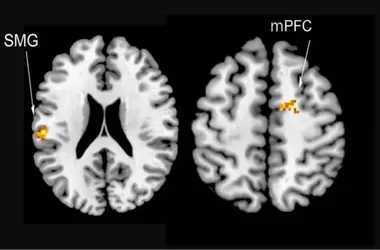
The Brain's Bias: Prioritizing Antagonism Over Amity in Social Cognition
A study by University of Osaka researchers, utilizing fMRI on participants watching a drama series, reveals that the human brain explicitly encodes antagonistic relationships within specific cortical regions, particularly the left anterior supramarginal gyrus and right medial prefrontal cortex. In contrast, friendly relationships elicit a less pronounced neural response. This suggests that social friction serves as a primary organizing principle for our brain's social mapping, offering insights into human cognition and potential advancements for AI development.

Mediterranean Diet Enhances Psychological Well-being in Individuals Over 50
A comprehensive study involving 3,296 adults aged 50 to 90 revealed that consistent adherence to a Mediterranean diet significantly contributes to elevated long-term psychological well-being. This dietary pattern was linked to increased autonomy, self-realization, and overall life satisfaction, even mitigating emotional decline during the COVID-19 pandemic's challenging period. The research highlights the diet's protective effects on mental health, independent of socioeconomic factors or depressive tendencies.
The Symbiotic Relationship Between Human and Artificial Intelligence
This article explores the burgeoning field where psychology and artificial intelligence intersect, highlighting a special issue of "Current Directions in Psychological Science." It delves into perspectives that frame AI not as a rival, but as a complementary force to human cognition, fostering intellectual partnerships. Researchers discuss re-evaluating AI assessment beyond benchmarks, understanding its role in deciphering human intelligence, and the potential pitfalls of merging these two complex domains.