 Breaking News & Live Updates
- Breaking News & Live Updates
- Breaking News & Live Updates
- Breaking News & Live Updates
- Breaking News & Live Updates
- Breaking News & Live Updates
- Breaking News & Live Updates
- Breaking News & Live Updates
- Breaking News & Live Updates
- Breaking News & Live Updates
The Symbiotic Relationship Between Human and Artificial Intelligence
In a recent special issue of 'Current Directions in Psychological Science,' scholars delve into the intricate relationship between human intellect and artificial intelligence. This collection challenges the common perception of AI as a competitor, instead proposing a future where AI serves as a collaborative partner, enhancing human cognitive capabilities. The articles collectively advocate for a re-evaluation of how AI is developed and assessed, emphasizing its potential to deepen our understanding of human thought processes while also cautioning against the inherent complexities of integrating these two sophisticated systems.
The prevailing discourse often positions artificial intelligence as an eventual successor or rival to human intelligence. However, the experts featured in this issue largely diverge from this competitive viewpoint. Cleotilde Gonzalez and Tailia Malloy champion the concept of 'complementary intelligence,' advocating for the development of AI systems that work synergistically with human cognition. Building on this, Katherine Collins and her team envision the evolution of genuine intellectual alliances between humans and AI, partnerships that become increasingly refined and beneficial over time.
A recurring observation within this collection is the tendency for researchers to pose inadequate questions when evaluating AI's capabilities. Melanie Mitchell illustrates this point through analyses of how AI processes abstraction and analogy. She contends that mere benchmark testing is insufficient; a comprehensive evaluation should consider AI's performance on novel tasks and its ability to elucidate the reasons behind its successes or failures.
Gordon Pennycook and his colleagues contribute to this dialogue by examining how AI can illuminate aspects of human intelligence. They draw parallels from history, noting that technological advancements consistently reshape our self-perception. Judith Fan further highlights generative AI as a powerful instrument for investigating human creativity, particularly in the genesis of new concepts like art, narratives, and musical compositions. Fan's research, focusing on drawing, reveals the extensive unexplored territory in cognitive science when open-ended tasks are sidestepped.
Considering the convergence of psychology and artificial intelligence, Iris van Rooij and Olivia Guest offer a crucial caveat. They argue that both fields, individually, possess their own foundational uncertainties. Consequently, combining two inherently unstable foundations does not yield stability, but rather risks creating a 'perfect storm' of intertwined challenges and unforeseen complications.
This special issue provides a compelling exploration of the multifaceted interactions between human and machine minds. It underscores the importance of fostering collaboration over competition, re-evaluating assessment methodologies, and harnessing AI's power to better comprehend human cognition. While acknowledging the immense potential, the collection also prudently highlights the inherent risks and complexities involved in merging these two rapidly evolving domains, urging a cautious yet innovative approach to their future integration.
Other Articles
The Blurry Line Between Wakefulness and Dreams: How Our Brains Bridge the Gap
New research reveals that the boundary between being awake and dreaming is far less defined than commonly believed. Scientists have mapped the brain activity that shows dreaming can begin even before full sleep sets in, and conscious thoughts can persist after drifting off. This study, published in Cell Reports, utilized EEG to track mental states during sleep onset, identifying distinct brain signatures for various experiences regardless of wakefulness or sleep.

The Pinnacle of Human Psychological Functioning: New Research Pinpoints Late Midlife as the Peak
A groundbreaking study integrates various psychological traits to reveal that human cognitive and personality functioning generally reaches its peak in late midlife, specifically between ages 55 and 60. While some abilities like processing speed decline earlier, accumulated knowledge, mature personality traits, and enhanced decision-making skills continue to develop, suggesting an optimal period for complex roles and choices.
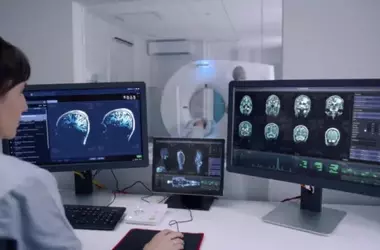
The Neurological Underpinnings of Professional Artistic Creativity Explored Through Brain Imaging
A study featured in 'Psychology of Aesthetics, Creativity, and the Arts' reveals that professional visual artists possess distinct brain structures and activities, which appear to facilitate their capacity for vivid mental imagery essential to artistic creation. This research, using various brain imaging techniques, delves into the neurological characteristics differentiating artists from non-artists.
The Dynamic Nature of Intelligence: How Age and Ability Shape Cognitive Structure
A recent study in Psychology and Aging challenges the traditional view of a single IQ score, revealing that the interconnectedness of cognitive skills varies significantly with age and overall intellectual capacity. For individuals with higher intelligence, specific mental abilities become more distinct, suggesting that a universal IQ metric may not accurately reflect diverse cognitive profiles across all demographics and life stages. This research provides crucial insights for refining intelligence assessments.
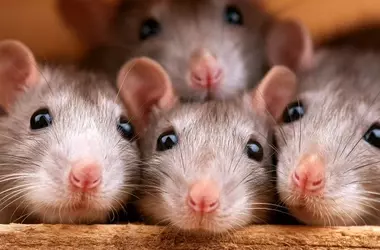
Rats Exhibit Genuine Empathy
New research suggests that rats possess a nuanced form of empathy, challenging previous assumptions that this complex emotional trait is exclusively human. By developing a five-dimensional model to assess empathetic behavior, scientists found that rats demonstrate flexible and other-oriented responses, particularly towards familiar companions in distress. While their empathic profile differs from humans, primarily lacking a deep understanding of complex mental states, this study provides a more precise framework for evaluating empathy across species, moving beyond a simple 'yes/no' categorization.
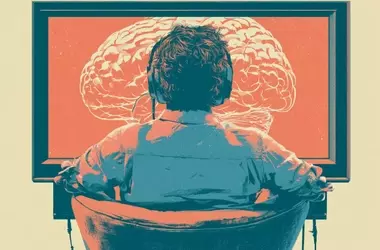
Modern Digital Life and its Impact on Brain Function
A new study explores how the constant stimulation of modern digital environments and urban living can hijack ancient human survival instincts, leading to chronic stress, anxiety, and a relentless sense of social competition. Researchers argue that current societal structures overstimulate our innate need for social status, transforming it into a toxic comparison engine fueled by screens. This "evolutionary mismatch" highlights the need for human-centered design in both physical and digital spaces to mitigate negative mental health impacts.