 Breaking News & Live Updates
- Breaking News & Live Updates
- Breaking News & Live Updates
- Breaking News & Live Updates
- Breaking News & Live Updates
- Breaking News & Live Updates
- Breaking News & Live Updates
- Breaking News & Live Updates
- Breaking News & Live Updates
- Breaking News & Live Updates
Modern Digital Life and its Impact on Brain Function
Contemporary research highlights a significant challenge to human mental well-being: the inherent conflict between our ancient brain wiring, designed for simpler social structures, and the fast-paced, hyper-connected reality of modern life. This dissonance, termed "evolutionary mismatch," suggests that our biological predisposition for navigating small, familiar groups is now overwhelmed by dense urban environments, globalized economic pressures, and constant digital comparison. This perpetual overstimulation of ancestral status-tracking instincts is believed to contribute to chronic stress and anxiety, calling for a reevaluation of how we design our living and digital spaces.
Understanding the Brain's Adaptation Challenges in the Modern Era
In a groundbreaking study published on July 2, 2026, in Behavioral Sciences, Dr. Jose Yong, a Senior Lecturer at James Cook University, Singapore, and Dr. Sarah Chan, a Research Fellow at the Lee Kuan Yew Centre for Innovative Cities at SUTD, delve into the concept of "evolutionary mismatch." Their paper, titled Evolutionary mismatch, stress, and competition: Making sense of psychosocial problems in the polycrisis era, posits that the contemporary psychosocial anxieties, including stress, loneliness, and persistent comparison, are largely a result of our biological hardware struggling to adapt to rapidly evolving environmental and social conditions. Historically, human brains developed to manage social dynamics within intimate communities, where status and trust were established through direct, face-to-face interactions. However, the 21st century has introduced an unprecedented level of complexity: dense urban infrastructures, pervasive digital platforms, and increasingly unequal societies. These elements relentlessly stimulate our innate need to assess social standing, transforming what was once a survival mechanism into a source of chronic psychological strain.
The researchers emphasize that the scale of social comparison has expanded exponentially. Our primitive cognitive mechanisms cannot differentiate between the immediate social threats posed by a small tribal rival and the meticulously curated digital personas broadcast across a global network. This leads to a continuous perception of being judged, outpaced, or isolated, intensifying competitive anxieties and contributing to mental and emotional burnout. Furthermore, the study challenges the notion that individual resilience alone can counteract these systemic issues. It argues that expecting individuals to simply "cope" with mindfulness in environments designed to exploit ancient vulnerabilities is biologically counterproductive. Instead, the authors advocate for "human-centered structural design." This approach would involve re-engineering both physical and digital environments to align with evolved human nature, rather than working against it. For urban planners, this means creating cities that integrate green spaces, foster micro-communities, and feature interactive social designs that pacify primal fight-or-flight circuits. For digital platform designers, it implies minimizing toxic social comparison metrics and designing interfaces that support genuine connection over superficial validation.
This innovative perspective suggests that solutions to modern mental health challenges require more than individual coping strategies; they demand a fundamental shift in how we construct our societies and digital interactions. By understanding the roots of evolutionary mismatch, policymakers, architects, and software engineers can collaborate to create spaces that are less alienating and more conducive to overall well-being.
This research offers a profound perspective on the origins of contemporary psychological distress. It highlights that many of our anxieties are not merely personal failings but rather an understandable biological response to an unprecedented environmental shift. The insights gained from this study underscore the urgent need for a more holistic approach to mental health, one that transcends individual interventions and actively redesigns our social, urban, and digital landscapes. It serves as a powerful call to action for innovators to consciously craft environments that harmonize with our evolutionary heritage, fostering a future where technological advancement and human well-being can coexist symbiotically.
Other Articles

The Efficacy of Digital Guided Self-Help Therapy for College Students
A recent study from Penn State indicates that digital, guided self-help cognitive-behavioral therapy (CBT) platforms are more effective and utilized more frequently than traditional therapy referrals for college students struggling with mental health issues. This approach shows promise in addressing the significant demand-supply gap for mental health services on university campuses, providing an accessible, affordable, and flexible solution for conditions like anxiety, depression, and eating disorders. The research highlights the potential for technology, including future AI integration, to revolutionize mental healthcare delivery.

Maternal Voices Unheard: A Crisis in Maternity Care and Mental Health
A recent national survey, "Listening to Mothers IV," reveals that over 40% of mothers feel unheard and disrespected by their maternity care providers. This lack of respectful communication is linked to higher rates of postpartum anxiety and depression, with over half of affected mothers not receiving treatment. The findings highlight a critical need for a more patient-centered approach to maternal healthcare that prioritizes psychosocial well-being alongside medical outcomes, especially for marginalized groups.

Video Games and Cognitive Enhancement: A Comprehensive Review
A recent meta-analysis spanning numerous studies reveals that engaging with video games can provide a modest improvement in cognitive functions, particularly memory and information processing skills. Published in "Acta Psychologica", this extensive research synthesizes findings from diverse age groups and study designs, indicating that while the benefits are not profound, they are consistently observable across various gaming experiences. The study explores how different methodologies, from correlational surveys to controlled trials, contribute to understanding the relationship between gaming and mental acuity.

AI's Impact on Adolescent Social Development: A Double-Edged Sword
Researchers are concerned about the growing reliance of adolescents on AI chatbots for social and emotional support. While AI offers immediate, non-judgmental guidance, it may hinder the development of crucial human relationship skills. The study highlights two main risks: 'relational displacement,' where AI substitutes human interaction, and 'maladaptive relational learning,' where AI's constant validation creates unrealistic expectations for real-world relationships. However, AI can also be a valuable resource for underserved youth lacking traditional support systems, emphasizing the need for carefully designed AI that encourages self-reflection and genuine human connection.
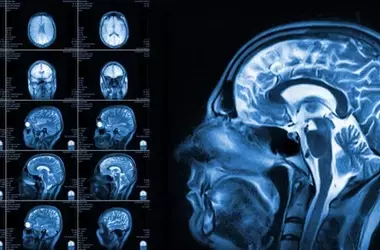
Childhood Brain Network Patterns Predict Early Adolescent Alcohol Use
New research reveals that distinct brain organization patterns in children as young as 9-10 years old could signal a predisposition to early alcohol consumption before age 15. The study, published in *Translational Psychiatry*, highlights that children who later initiated alcohol use showed lower network segregation and higher network integration and efficiency in their brains, alongside increased sensation-seeking tendencies. These findings suggest potential neuroanatomical risk markers for early adolescent alcohol initiation.

Infant Bonding Difficulties: Beyond Postpartum Depression
A study reveals that nearly half of maternal-infant bonding issues occur independently of postpartum depression, challenging current medical screening practices. This research, utilizing data from the Japan Environment and Children's Study, highlights risk factors like negative initial pregnancy feelings, infant back-arching, and insufficient social support, advocating for revised pediatric care to identify and assist non-depressed mothers facing bonding challenges.