 Breaking News & Live Updates
- Breaking News & Live Updates
- Breaking News & Live Updates
- Breaking News & Live Updates
- Breaking News & Live Updates
- Breaking News & Live Updates
- Breaking News & Live Updates
- Breaking News & Live Updates
- Breaking News & Live Updates
- Breaking News & Live Updates
Maternal Voices Unheard: A Crisis in Maternity Care and Mental Health
A comprehensive national survey, "Listening to Mothers IV," has illuminated a concerning trend in maternal healthcare: a significant number of new mothers report feeling disregarded and mistreated by their healthcare providers. This groundbreaking study, which gathered insights from nearly 4,000 childbearing women, underscores the urgent need for a more empathetic and patient-centric approach to maternity services. The implications of these findings extend beyond physical health, profoundly impacting the mental well-being of mothers during a crucial period of their lives.
Details of the "Listening to Mothers IV" Survey Findings
On June 10, 2026, the National Partnership for Women & Families unveiled the profound insights from its latest "Listening to Mothers IV" survey. This extensive study, which gathered responses from nearly 4,000 women who have recently given birth, delves into their experiences throughout pregnancy, childbirth, and the postpartum phase. A particularly striking revelation from the survey indicates that more than 40% of mothers felt their maternity care providers did not adequately listen to them, and 43% reported that their knowledge and experiences were not valued. This finding echoes a similar 2023 survey by the Centers for Disease Control (CDC), which found that one in five women experienced mistreatment during maternity care, a figure that escalated to one in three for women of color. Furthermore, nearly half of all women surveyed admitted to refraining from asking questions or voicing concerns during their maternity appointments.
These patterns of disrespect and poor communication have significant consequences. The survey highlights that the psychosocial experience of patients within healthcare settings plays a crucial role in preventing trauma during childbirth. It notes that the perception and emotional impact of the birth experience, rather than solely medical outcomes, are key determinants of psychological trauma. This is particularly vital as mothers who undergo traumatic birth experiences are more prone to developing postpartum mental health disorders, a trend also identified in the "Listening to Mothers IV" report.
The study also sheds light on the prevalence of mental health conditions during the perinatal period (encompassing pregnancy and postpartum). Depressive symptoms were reported by 20-25% of mothers, while anxiety symptoms were even higher, affecting 35-43% during this timeframe.Alarmingly, over half (53%) of the mothers experiencing postpartum anxiety and/or depression did not receive any form of treatment, therapy, or medication. This suggests a significant gap in care, particularly given that current perinatal mental health discussions predominantly focus on depression, potentially overlooking the equally pressing issue of anxiety.
The burden of these mental health challenges is not evenly distributed. The survey revealed that women of color, mothers covered by Medicaid, and those with one or more disabilities experienced worse outcomes, underscoring existing disparities within the healthcare system. These findings collectively emphasize that respectful communication and shared decision-making are not merely supplementary elements of maternity care; they are foundational to ensuring both healthy birth outcomes and positive birth experiences.
A Call for Empathy and Holistic Care in Maternal Health
The stark findings of the "Listening to Mothers IV" survey serve as a powerful reminder that maternal healthcare must evolve beyond a purely medical paradigm. It's not enough to simply ensure physical safety; the emotional and psychological well-being of mothers must be equally prioritized. This report underscores a critical societal issue: the systematic failure to adequately support women during one of life's most transformative and vulnerable periods. From a journalistic perspective, these statistics are not just numbers; they represent countless individual stories of unheard voices, unacknowledged pain, and unmet needs. It calls into question the very fabric of our healthcare system and its capacity to deliver compassionate, equitable care.
The emphasis on the psychosocial experience as a primary determinant of birth trauma is particularly illuminating. It challenges the conventional wisdom that a good medical outcome automatically equates to a positive birth experience. This nuanced understanding necessitates a shift in training for healthcare providers, emphasizing communication skills, empathetic listening, and cultural competency. The disproportionate impact on women of color and other marginalized groups highlights systemic inequities that demand urgent attention. Addressing these disparities requires not only policy changes but also a profound re-evaluation of how care is delivered at every level.
Ultimately, this report is a clarion call for a holistic approach to maternal health. It's an invitation to foster environments where mothers feel seen, heard, and respected, not just as patients, but as individuals undergoing a monumental life transition. Only by integrating mental health support, respectful communication, and equitable access to care can we truly champion the well-being of all mothers and, by extension, the next generation.
Other Articles

Video Games and Cognitive Enhancement: A Comprehensive Review
A recent meta-analysis spanning numerous studies reveals that engaging with video games can provide a modest improvement in cognitive functions, particularly memory and information processing skills. Published in "Acta Psychologica", this extensive research synthesizes findings from diverse age groups and study designs, indicating that while the benefits are not profound, they are consistently observable across various gaming experiences. The study explores how different methodologies, from correlational surveys to controlled trials, contribute to understanding the relationship between gaming and mental acuity.

AI's Impact on Adolescent Social Development: A Double-Edged Sword
Researchers are concerned about the growing reliance of adolescents on AI chatbots for social and emotional support. While AI offers immediate, non-judgmental guidance, it may hinder the development of crucial human relationship skills. The study highlights two main risks: 'relational displacement,' where AI substitutes human interaction, and 'maladaptive relational learning,' where AI's constant validation creates unrealistic expectations for real-world relationships. However, AI can also be a valuable resource for underserved youth lacking traditional support systems, emphasizing the need for carefully designed AI that encourages self-reflection and genuine human connection.
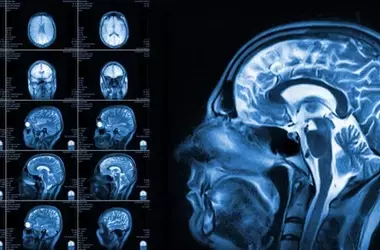
Childhood Brain Network Patterns Predict Early Adolescent Alcohol Use
New research reveals that distinct brain organization patterns in children as young as 9-10 years old could signal a predisposition to early alcohol consumption before age 15. The study, published in *Translational Psychiatry*, highlights that children who later initiated alcohol use showed lower network segregation and higher network integration and efficiency in their brains, alongside increased sensation-seeking tendencies. These findings suggest potential neuroanatomical risk markers for early adolescent alcohol initiation.

Infant Bonding Difficulties: Beyond Postpartum Depression
A study reveals that nearly half of maternal-infant bonding issues occur independently of postpartum depression, challenging current medical screening practices. This research, utilizing data from the Japan Environment and Children's Study, highlights risk factors like negative initial pregnancy feelings, infant back-arching, and insufficient social support, advocating for revised pediatric care to identify and assist non-depressed mothers facing bonding challenges.

Bilingual Brains Share a Unified Neural Map for Meaning Across Languages
A recent study published in the journal Cell reveals that the human brain utilizes a common organizational map to represent word meanings across different languages. This suggests that despite distinct cellular activity patterns for each language, the brain maintains a universal, language-independent internal model for meaning. The research, involving bilingual individuals, highlights that translation isn't solely reliant on specific 'dictionary neurons' but emerges from the coordinated activity of neural populations, aligning with the structuralist view of language.

Beyond the Wardrobe: Unpacking the Psychological Impact of Clothing Choices on Women's Well-being
A recent study highlights the profound connection between clothing satisfaction and psychological well-being in middle-aged women. Far from a superficial concern, the inability to find suitable attire often leads to social avoidance and diminished life engagement. This phenomenon, colloquially known as 'having nothing to wear,' reflects deeper struggles with self-perception, societal expectations, and market inclusivity, suggesting that clothing serves as a crucial bridge between inner authenticity and external social participation.