 Breaking News & Live Updates
- Breaking News & Live Updates
- Breaking News & Live Updates
- Breaking News & Live Updates
- Breaking News & Live Updates
- Breaking News & Live Updates
- Breaking News & Live Updates
- Breaking News & Live Updates
- Breaking News & Live Updates
- Breaking News & Live Updates
Rats Exhibit Genuine Empathy
Historically, empathy, the profound human capacity to grasp and mirror the emotional experiences of others, has been lauded as the cornerstone of human interaction, fostering connection and mutual support. This complex trait was long considered a distinguishing feature of humanity, setting us apart from the animal kingdom.
However, recent scientific inquiry is questioning this long-held belief. While many pet owners intuitively feel their animals possess empathy—a sentiment often dismissed as anthropomorphism—the perception of less-favored species, like rats, typically lacks such consideration. This raises a crucial question: how can we objectively evaluate empathy in other species?
A groundbreaking study addresses this by introducing a systematic, five-dimensional framework for assessing empathetic behavior. This new approach reveals that rats engage in adaptable and altruistic actions, indicative of empathy, even if their understanding of another's mental state is not as complex as that observed in humans.
This pioneering research builds upon a notable 2011 "Science" study where a free rat prioritized releasing a trapped companion over accessing a preferred food source. This act of assistance was not a mere instinct; further investigation showed that rats exhibit this helping behavior exclusively towards familiar peers, not strangers, underscoring its social, rather than reflexive, nature. The five dimensions used to rigorously define empathetic behavior include: recognizing another's emotional state, comprehending their immediate physical situation, discerning their mental states (though this is limited in rats), demonstrating flexible helping behavior, and ensuring the actions are genuinely other-oriented. When evaluated against these criteria, rats showed moderate to high capabilities in flexibility, and emotional and situational awareness, with a less pronounced ability to interpret complex mental states. The ultimate conclusion is that rat altruism qualifies as empathy due to its flexible and directed nature, albeit a distinct form of empathy compared to humans, primarily due to differences in cognitive depth regarding others' intentions. Professor Newen highlights that this multi-dimensional approach moves beyond speculative philosophical arguments, providing empirical data to precisely characterize the specific empathic profiles of various species.
This innovative understanding encourages us to broaden our perspective on animal intelligence and emotional capacities. Instead of judging animals by human standards, this framework allows for an appreciation of the diverse ways empathy manifests across different species. It reveals that empathy is not a monolithic human attribute but a spectrum of capabilities, enabling a more accurate and respectful study of the social tools and altruism present in the animal world, such as those demonstrated by rats.
Other Articles
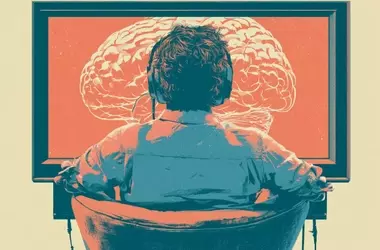
Modern Digital Life and its Impact on Brain Function
A new study explores how the constant stimulation of modern digital environments and urban living can hijack ancient human survival instincts, leading to chronic stress, anxiety, and a relentless sense of social competition. Researchers argue that current societal structures overstimulate our innate need for social status, transforming it into a toxic comparison engine fueled by screens. This "evolutionary mismatch" highlights the need for human-centered design in both physical and digital spaces to mitigate negative mental health impacts.

The Efficacy of Digital Guided Self-Help Therapy for College Students
A recent study from Penn State indicates that digital, guided self-help cognitive-behavioral therapy (CBT) platforms are more effective and utilized more frequently than traditional therapy referrals for college students struggling with mental health issues. This approach shows promise in addressing the significant demand-supply gap for mental health services on university campuses, providing an accessible, affordable, and flexible solution for conditions like anxiety, depression, and eating disorders. The research highlights the potential for technology, including future AI integration, to revolutionize mental healthcare delivery.

Maternal Voices Unheard: A Crisis in Maternity Care and Mental Health
A recent national survey, "Listening to Mothers IV," reveals that over 40% of mothers feel unheard and disrespected by their maternity care providers. This lack of respectful communication is linked to higher rates of postpartum anxiety and depression, with over half of affected mothers not receiving treatment. The findings highlight a critical need for a more patient-centered approach to maternal healthcare that prioritizes psychosocial well-being alongside medical outcomes, especially for marginalized groups.

Video Games and Cognitive Enhancement: A Comprehensive Review
A recent meta-analysis spanning numerous studies reveals that engaging with video games can provide a modest improvement in cognitive functions, particularly memory and information processing skills. Published in "Acta Psychologica", this extensive research synthesizes findings from diverse age groups and study designs, indicating that while the benefits are not profound, they are consistently observable across various gaming experiences. The study explores how different methodologies, from correlational surveys to controlled trials, contribute to understanding the relationship between gaming and mental acuity.

AI's Impact on Adolescent Social Development: A Double-Edged Sword
Researchers are concerned about the growing reliance of adolescents on AI chatbots for social and emotional support. While AI offers immediate, non-judgmental guidance, it may hinder the development of crucial human relationship skills. The study highlights two main risks: 'relational displacement,' where AI substitutes human interaction, and 'maladaptive relational learning,' where AI's constant validation creates unrealistic expectations for real-world relationships. However, AI can also be a valuable resource for underserved youth lacking traditional support systems, emphasizing the need for carefully designed AI that encourages self-reflection and genuine human connection.
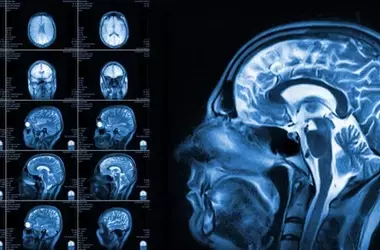
Childhood Brain Network Patterns Predict Early Adolescent Alcohol Use
New research reveals that distinct brain organization patterns in children as young as 9-10 years old could signal a predisposition to early alcohol consumption before age 15. The study, published in *Translational Psychiatry*, highlights that children who later initiated alcohol use showed lower network segregation and higher network integration and efficiency in their brains, alongside increased sensation-seeking tendencies. These findings suggest potential neuroanatomical risk markers for early adolescent alcohol initiation.