 Breaking News & Live Updates
- Breaking News & Live Updates
- Breaking News & Live Updates
- Breaking News & Live Updates
- Breaking News & Live Updates
- Breaking News & Live Updates
- Breaking News & Live Updates
- Breaking News & Live Updates
- Breaking News & Live Updates
- Breaking News & Live Updates
Distinct Genetic Links Between Intelligence Forms and Psychiatric Conditions Revealed
A significant new study has shed light on the intricate genetic relationships between various forms of intelligence and specific psychiatric conditions. This research, published in Nature Communications, highlights that the genetic underpinnings of mental health disorders, such as schizophrenia and bipolar disorder, are associated with distinct cognitive profiles. Specifically, individuals with a genetic risk for these conditions tend to exhibit lower abilities in fluid reasoning and processing speed, yet possess higher levels of crystallized knowledge and non-cognitive educational skills. These revelations emphasize that cognitive function is not a monolithic entity but rather a collection of separable skills, each with its own unique genetic ties to mental well-being.
For a long time, the scientific community has observed a connection between psychiatric diagnoses and variations in cognitive performance. People affected by certain mental health issues often show different results on standardized cognitive tests compared to those without such conditions. Furthermore, genetic investigations have consistently shown an overlap in the genetic blueprints influencing both overall cognitive capacity and mental health. Historically, much of this genetic research tended to simplify cognitive function into a single, overarching trait. However, human intellect is far more complex, encompassing a range of distinct abilities. Psychological theories frequently categorize intelligence into separate domains, each evolving differently over an individual's lifespan.
These domains include reaction time, which measures fundamental processing speed; fluid reasoning, which involves the capacity to solve novel problems and understand complex patterns; and crystallized knowledge, which represents accumulated information, vocabulary, and factual understanding acquired through education and life experiences. Clinical observations have indicated that psychiatric conditions manifest differently across these cognitive areas. For instance, individuals with schizophrenia might struggle with abstract problem-solving but maintain their acquired knowledge. Inspired by these observations, Diego Londono-Correa and his team at the University of Texas at Austin sought to determine if these patterns were rooted in human DNA.
To explore this, the researchers utilized extensive genetic datasets, analyzing the genomes of hundreds of thousands of individuals. Through a genome-wide association study, they identified minute genetic variations corresponding to performance on specific cognitive assessments. The team developed sophisticated statistical models to disentangle the genetic associations for reaction time, fluid reasoning, and crystallized knowledge, arranging them hierarchically from basic biological functions to more complex, socially influenced skills. They also isolated genetic factors related to educational attainment that were independent of traditional intelligence, revealing a genetic component linked to non-cognitive skills like intellectual curiosity and persistence.
The refined genetic profiles were then cross-referenced with known genetic risk factors for five major psychiatric conditions: schizophrenia, bipolar disorder, autism spectrum disorder, attention deficit hyperactivity disorder (ADHD), and Alzheimer's disease. The genetic associations varied significantly depending on the specific condition and cognitive skill. Schizophrenia and bipolar disorder shared similar genetic patterns, both linked to reduced processing speed and fluid reasoning, yet surprisingly correlated with higher crystallized knowledge and non-cognitive educational skills. ADHD presented a distinct profile, associated with faster reaction times but lower fluid reasoning, crystallized knowledge, and non-cognitive educational skills. Autism spectrum disorder showed a genetic link to higher crystallized knowledge, while Alzheimer's disease was uniquely associated with lower fluid reasoning, showing no statistical connection to crystallized knowledge.
During their extensive investigation, the researchers pinpointed 78 distinct genetic locations influencing crystallized knowledge, five of which had not been previously associated with any cognitive trait. One new discovery was a genetic location also known to affect bone mineral density, illustrating the diverse functions a single gene can have across the body. By examining where these genes are active, the team mapped brain development across different life stages. Genes for fluid reasoning were most active during early childhood, while those for crystallized knowledge showed increased activity in adolescence and early adulthood, consistent with how knowledge accumulates over time. Brain regions also showed differential genetic activity: both intelligence types were highly active in the frontal cortex, but fluid reasoning displayed greater genetic enrichment in the hippocampus, a region crucial for memory and abstract problem-solving.
The study further explored genetic overlaps between specific intelligence forms and personality traits. Openness to experience was strongly correlated with crystallized knowledge, while conscientiousness was linked to non-cognitive academic skills. These overlapping genetic links may shed light on the evolutionary puzzle of why genetic variants increasing the risk for severe psychiatric conditions have persisted. The concept of antagonistic pleiotropy suggests that some genetic variations might offer both advantages and disadvantages. For instance, genetic variants that heighten the risk for bipolar disorder could simultaneously confer cognitive benefits, such as increased drive to learn and accumulate knowledge, thereby providing a reproductive or social edge that helps explain their continued presence in the human gene pool.
However, the study acknowledges certain limitations. The genetic data primarily came from individuals of European ancestry, which restricts the generalizability of these findings to more diverse global populations. Additionally, the statistical methods sometimes merged closely located genetic variations, potentially obscuring distinct biological mechanisms. Future research should include diverse genetic databases and animal models to further elucidate how these newly identified genetic locations influence brain development. The authors stress the importance of treating mental abilities as distinct, separate traits rather than a single score to gain a comprehensive understanding of human brain function.
Other Articles
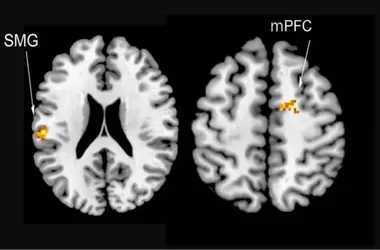
The Brain's Bias: Prioritizing Antagonism Over Amity in Social Cognition
A study by University of Osaka researchers, utilizing fMRI on participants watching a drama series, reveals that the human brain explicitly encodes antagonistic relationships within specific cortical regions, particularly the left anterior supramarginal gyrus and right medial prefrontal cortex. In contrast, friendly relationships elicit a less pronounced neural response. This suggests that social friction serves as a primary organizing principle for our brain's social mapping, offering insights into human cognition and potential advancements for AI development.

Mediterranean Diet Enhances Psychological Well-being in Individuals Over 50
A comprehensive study involving 3,296 adults aged 50 to 90 revealed that consistent adherence to a Mediterranean diet significantly contributes to elevated long-term psychological well-being. This dietary pattern was linked to increased autonomy, self-realization, and overall life satisfaction, even mitigating emotional decline during the COVID-19 pandemic's challenging period. The research highlights the diet's protective effects on mental health, independent of socioeconomic factors or depressive tendencies.
The Symbiotic Relationship Between Human and Artificial Intelligence
This article explores the burgeoning field where psychology and artificial intelligence intersect, highlighting a special issue of "Current Directions in Psychological Science." It delves into perspectives that frame AI not as a rival, but as a complementary force to human cognition, fostering intellectual partnerships. Researchers discuss re-evaluating AI assessment beyond benchmarks, understanding its role in deciphering human intelligence, and the potential pitfalls of merging these two complex domains.
The Blurry Line Between Wakefulness and Dreams: How Our Brains Bridge the Gap
New research reveals that the boundary between being awake and dreaming is far less defined than commonly believed. Scientists have mapped the brain activity that shows dreaming can begin even before full sleep sets in, and conscious thoughts can persist after drifting off. This study, published in Cell Reports, utilized EEG to track mental states during sleep onset, identifying distinct brain signatures for various experiences regardless of wakefulness or sleep.

The Pinnacle of Human Psychological Functioning: New Research Pinpoints Late Midlife as the Peak
A groundbreaking study integrates various psychological traits to reveal that human cognitive and personality functioning generally reaches its peak in late midlife, specifically between ages 55 and 60. While some abilities like processing speed decline earlier, accumulated knowledge, mature personality traits, and enhanced decision-making skills continue to develop, suggesting an optimal period for complex roles and choices.

The Neurological Underpinnings of Professional Artistic Creativity Explored Through Brain Imaging
A study featured in 'Psychology of Aesthetics, Creativity, and the Arts' reveals that professional visual artists possess distinct brain structures and activities, which appear to facilitate their capacity for vivid mental imagery essential to artistic creation. This research, using various brain imaging techniques, delves into the neurological characteristics differentiating artists from non-artists.