 Breaking News & Live Updates
- Breaking News & Live Updates
- Breaking News & Live Updates
- Breaking News & Live Updates
- Breaking News & Live Updates
- Breaking News & Live Updates
- Breaking News & Live Updates
- Breaking News & Live Updates
- Breaking News & Live Updates
- Breaking News & Live Updates
The Pivotal Role of Gut Microbiome in Diabetes Pathogenesis and Reversal
Recent findings are shedding new light on the intricate connection between our digestive system's microbial inhabitants and the onset of type 2 diabetes. Far from being solely a pancreatic issue, an unhealthy gut environment appears to play a significant role in triggering the inflammatory responses and insulin resistance that characterize this widespread metabolic disorder. The exciting news is that by nurturing a balanced gut microbiome through targeted dietary and lifestyle interventions, individuals may be able to not only prevent but also reverse type 2 diabetes, offering a delicious path to recovery.
The Intricate Dance: Gut Microbiome, Diet, and Diabetes
For too long, the conversation around diabetes has primarily focused on the pancreas and its insulin-producing capabilities. However, a groundbreaking new review reveals that the gut, specifically its microbial community, is a pivotal player in this debilitating condition affecting millions globally. This understanding deepens further when considering the alarming statistic that individuals with depression are significantly more prone to developing diabetes, hinting at a complex bidirectional relationship that extends beyond mere physiological symptoms.
Type 1 diabetes, a minority of cases, stems from insulin-producing cell deficiency. In contrast, the vast majority, type 2 diabetes, is where the gut's influence becomes paramount. Our modern, high-carbohydrate diet, often stripped of essential fiber by food manufacturers aiming for palatability, fuels rapid sugar absorption. While the pancreas responds by releasing insulin to guide sugar into cells, this process is disrupted when our gut microbes, deprived of fiber, fall into a state of dysbiosis. This microbial imbalance can lead to a 'leaky gut,' allowing toxins to penetrate tissues and trigger systemic inflammation. The body's immune system, constantly on alert, demands energy, leading muscle cells to resist insulin, thus freeing up sugar for the ongoing inflammatory battle. If this cycle of dysbiosis and inflammation persists, chronic insulin resistance takes hold, paving the way for type 2 diabetes.
Remarkably, studies have demonstrated the transformative power of a healthy gut. A notable 2013 Dutch study showed that transferring fecal matter from healthy, lean individuals to those with metabolic syndrome doubled their insulin sensitivity within six weeks. While genetic predispositions, stress, sleep patterns, and physical activity all contribute to diabetes risk, a compromised microbiome can decisively tip the scales from metabolic syndrome to full-blown type 2 diabetes.
Empowering Change: Diet and Lifestyle as Diabetes Remedies
While some factors like genetics are beyond our control, diet and exercise remain powerful levers for health. Adopting a Mediterranean-style diet, rich in fiber and fermented foods, can nourish beneficial gut microbes, offering a palatable and effective route to recovery. It is estimated that a substantial portion of type 2 diabetics could achieve remission through dietary and exercise adjustments, with success closely linked to weight loss. Losing 15 percent of body weight has been shown to result in complete remission for a significant number of individuals, as this allows the liver and pancreas to regain optimal function.
Fiber, in particular, delivers a dual punch: stabilizing blood sugar and feeding the gut's beneficial bacteria. Integrating 25 grams of fiber daily through grains, vegetables, fruits (especially berries, with careful monitoring for sugar-sensitive individuals), beans, lentils, and peas can dramatically improve overall health. Moreover, this fiber-rich diet can positively impact mood via the gut-brain axis. For those new to high-fiber diets, a gradual introduction is advised, and consultation with a healthcare professional is recommended, particularly for individuals prone to gut issues. Initial gas production is a common, temporary side effect, a small price to pay for significant health benefits.
The burgeoning understanding of the gut-brain axis and the profound influence of our microbiome offers a hopeful perspective on managing and preventing type 2 diabetes. This evolving research not only highlights the importance of what we eat but also underscores the critical role of our often-overlooked internal ecosystem. It empowers individuals with practical, actionable strategies to take control of their health, transforming a potentially chronic condition into a manageable, and often reversible, health journey. As we unravel the complexities of human biology, the message is clear: nurturing our gut is nurturing our overall well-being.
Other Articles

The Core Elements of Workplace Satisfaction: Autonomy, Competence, and Relatedness
A comprehensive review of 35 years of workplace research highlights that employees flourish when their fundamental psychological needs for autonomy, competence, and relatedness are fulfilled. Feeling trusted, adequately supported, and connected with colleagues not only boosts motivation and well-being but also enhances performance. Sustainable motivation stems from meaning and enjoyment, rather than external pressures or rewards. Even minor adjustments in work practices can transform a job into a more invigorating, fulfilling, and healthy experience.
Distinct Genetic Links Between Intelligence Forms and Psychiatric Conditions Revealed
A groundbreaking study has unveiled unique genetic connections between different types of intelligence and various psychiatric conditions. Published in Nature Communications, the research indicates that genetic predispositions for conditions like schizophrenia and bipolar disorder are linked to reduced problem-solving capabilities but enhanced knowledge accumulation. These findings underscore the highly specific nature of the genetic interplay between mental health and cognitive skills.
The Brain's Bias: Prioritizing Antagonism Over Amity in Social Cognition
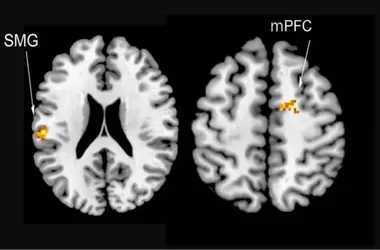
A study by University of Osaka researchers, utilizing fMRI on participants watching a drama series, reveals that the human brain explicitly encodes antagonistic relationships within specific cortical regions, particularly the left anterior supramarginal gyrus and right medial prefrontal cortex. In contrast, friendly relationships elicit a less pronounced neural response. This suggests that social friction serves as a primary organizing principle for our brain's social mapping, offering insights into human cognition and potential advancements for AI development.

Mediterranean Diet Enhances Psychological Well-being in Individuals Over 50
A comprehensive study involving 3,296 adults aged 50 to 90 revealed that consistent adherence to a Mediterranean diet significantly contributes to elevated long-term psychological well-being. This dietary pattern was linked to increased autonomy, self-realization, and overall life satisfaction, even mitigating emotional decline during the COVID-19 pandemic's challenging period. The research highlights the diet's protective effects on mental health, independent of socioeconomic factors or depressive tendencies.
The Symbiotic Relationship Between Human and Artificial Intelligence
This article explores the burgeoning field where psychology and artificial intelligence intersect, highlighting a special issue of "Current Directions in Psychological Science." It delves into perspectives that frame AI not as a rival, but as a complementary force to human cognition, fostering intellectual partnerships. Researchers discuss re-evaluating AI assessment beyond benchmarks, understanding its role in deciphering human intelligence, and the potential pitfalls of merging these two complex domains.
The Blurry Line Between Wakefulness and Dreams: How Our Brains Bridge the Gap
New research reveals that the boundary between being awake and dreaming is far less defined than commonly believed. Scientists have mapped the brain activity that shows dreaming can begin even before full sleep sets in, and conscious thoughts can persist after drifting off. This study, published in Cell Reports, utilized EEG to track mental states during sleep onset, identifying distinct brain signatures for various experiences regardless of wakefulness or sleep.