 Breaking News & Live Updates
- Breaking News & Live Updates
- Breaking News & Live Updates
- Breaking News & Live Updates
- Breaking News & Live Updates
- Breaking News & Live Updates
- Breaking News & Live Updates
- Breaking News & Live Updates
- Breaking News & Live Updates
- Breaking News & Live Updates
The Core Elements of Workplace Satisfaction: Autonomy, Competence, and Relatedness
Decades of extensive research reveal a profound truth about human well-being in professional settings: the oscillating experience of work, sometimes exhilarating and purposeful, other times draining and disheartening, is rooted in fundamental psychological needs. A recent in-depth analysis, drawing upon 1,192 studies conducted over 35 years, underscores a remarkably straightforward conclusion: individuals perform optimally when three core psychological necessities—autonomy, competence, and relatedness—are adequately addressed.
Understanding the Pillars of Workplace Fulfillment
This critical insight holds true across diverse professions, sectors, age groups, and career trajectories, forming the bedrock of both high performance and overall contentment at work.
1. Autonomy: The Freedom of Choice and Authenticity
Autonomy within the workplace isn't about the absence of rules or unrestricted freedom. Instead, it signifies an internal sense of acting voluntarily, making deliberate choices, and expressing one's authentic self through work. When employees face excessive pressure, micromanagement, or constant surveillance, their intrinsic drive diminishes, as their need for autonomy is compromised. Conversely, fostering an environment of trust and providing meaningful choices invigorates motivation and enhances well-being, leading to superior output.
2. Competence: Excelling and Evolving
A fundamental human desire is to excel in one's endeavors and continuously expand one's capabilities. Individuals thrive when afforded avenues for continuous learning, skill development, constructive feedback, and the opportunity to achieve mastery. Conversely, roles that are ambiguous, overly challenging without adequate support, or devoid of growth prospects inevitably stifle motivation.
Competence is not about achieving flawlessness, but rather about the consistent pursuit of progress and the confidence to conquer challenges.
3. Relatedness: The Power of Connection
While the adage suggests that people leave managers, not companies, and stay for colleagues, not just the job, research points to an even broader truth: the profound human need for meaningful interpersonal connections at work. Supportive team members, empathetic leaders, and a strong sense of belonging significantly contribute to both motivation and overall happiness. Even brief, authentic interactions can have a substantial positive impact. This aspect has gained heightened importance in the era of remote and hybrid work models, where increased flexibility can inadvertently lead to reduced opportunities for meaningful social interaction.
The Unseen Drivers of Performance
Many organizations prioritize increasing employee effort. However, a more pertinent question emerges from the research: What truly motivates individuals to perform? Motivation derived from genuine enjoyment and a sense of purpose consistently correlates with superior well-being and stronger performance, outperforming motivation spurred by external pressures, guilt, rewards, or fear. This suggests that high performance need not come at the cost of personal well-being; rather, flourishing at work and achieving strong results can be mutually reinforcing, with enhanced well-being directly contributing to improved performance.
While financial incentives are undoubtedly important, individuals are most likely to thrive when their work brings them both satisfaction and meaning.
Understanding Workplace Exhaustion
A significant development in recent studies is the recognition of what transpires when psychological needs are not only neglected but actively thwarted. When employees feel controlled rather than trusted, overwhelmed instead of adequately resourced, or isolated instead of connected, they experience "need frustration." This phenomenon is strongly linked to professional burnout, disengagement, diminished well-being, and a heightened desire to leave their positions. Therefore, workplaces must proactively cultivate environments that nurture psychological needs and actively prevent their suppression.
The Future of Work: AI, Remote Environments, and Human Needs
The evolving landscape of work, marked by advancements in artificial intelligence and the proliferation of remote models, presents new frontiers for understanding workplace well-being. Key questions for both employees and organizations include:
- Does AI empower individuals or diminish their sense of control?
- How can remote work offer flexibility without sacrificing vital human connection?
- Can technology be leveraged to support, rather than undermine, overall well-being?
- What are the implications when algorithms begin to manage people, replacing human supervision?
Instead of merely classifying new technologies as inherently "good" or "bad," a more insightful approach is to ask: Do they foster or impede autonomy, competence, and relatedness?
Empowering Individual Action
While organizational structures play a pivotal role in shaping motivation, employees are not passive recipients. Emerging research highlights the concept of "job crafting," where individuals can proactively make small, deliberate changes to their work to enhance their sense of autonomy, competence, and connection.
This might involve:
- Actively seeking opportunities to acquire new skills.
- Cultivating stronger relationships with colleagues.
- Discovering ways to align daily tasks with personal values.
- Engaging in dialogues about how work is structured.
- Taking greater ownership and initiative within their roles.
After decades of accumulated evidence, the central message remains profoundly human. Individuals flourish when their work enables them to feel capable, connected, and empowered to make meaningful choices. When these fundamental needs are met, work transforms into a wellspring of energy, personal development, and overall well-being. Considering that most people dedicate approximately 90,000 hours—or a decade—of their lives to work, and given its far-reaching impact on other aspects of life, it is undeniably better for work to be a place of growth rather than depletion.
Other Articles
Distinct Genetic Links Between Intelligence Forms and Psychiatric Conditions Revealed
A groundbreaking study has unveiled unique genetic connections between different types of intelligence and various psychiatric conditions. Published in Nature Communications, the research indicates that genetic predispositions for conditions like schizophrenia and bipolar disorder are linked to reduced problem-solving capabilities but enhanced knowledge accumulation. These findings underscore the highly specific nature of the genetic interplay between mental health and cognitive skills.
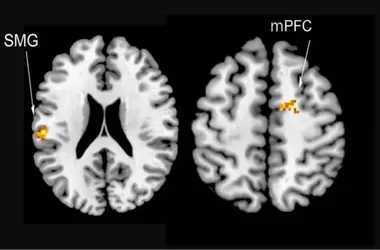
The Brain's Bias: Prioritizing Antagonism Over Amity in Social Cognition
A study by University of Osaka researchers, utilizing fMRI on participants watching a drama series, reveals that the human brain explicitly encodes antagonistic relationships within specific cortical regions, particularly the left anterior supramarginal gyrus and right medial prefrontal cortex. In contrast, friendly relationships elicit a less pronounced neural response. This suggests that social friction serves as a primary organizing principle for our brain's social mapping, offering insights into human cognition and potential advancements for AI development.

Mediterranean Diet Enhances Psychological Well-being in Individuals Over 50
A comprehensive study involving 3,296 adults aged 50 to 90 revealed that consistent adherence to a Mediterranean diet significantly contributes to elevated long-term psychological well-being. This dietary pattern was linked to increased autonomy, self-realization, and overall life satisfaction, even mitigating emotional decline during the COVID-19 pandemic's challenging period. The research highlights the diet's protective effects on mental health, independent of socioeconomic factors or depressive tendencies.
The Symbiotic Relationship Between Human and Artificial Intelligence
This article explores the burgeoning field where psychology and artificial intelligence intersect, highlighting a special issue of "Current Directions in Psychological Science." It delves into perspectives that frame AI not as a rival, but as a complementary force to human cognition, fostering intellectual partnerships. Researchers discuss re-evaluating AI assessment beyond benchmarks, understanding its role in deciphering human intelligence, and the potential pitfalls of merging these two complex domains.
The Blurry Line Between Wakefulness and Dreams: How Our Brains Bridge the Gap
New research reveals that the boundary between being awake and dreaming is far less defined than commonly believed. Scientists have mapped the brain activity that shows dreaming can begin even before full sleep sets in, and conscious thoughts can persist after drifting off. This study, published in Cell Reports, utilized EEG to track mental states during sleep onset, identifying distinct brain signatures for various experiences regardless of wakefulness or sleep.

The Pinnacle of Human Psychological Functioning: New Research Pinpoints Late Midlife as the Peak
A groundbreaking study integrates various psychological traits to reveal that human cognitive and personality functioning generally reaches its peak in late midlife, specifically between ages 55 and 60. While some abilities like processing speed decline earlier, accumulated knowledge, mature personality traits, and enhanced decision-making skills continue to develop, suggesting an optimal period for complex roles and choices.