 Breaking News & Live Updates
- Breaking News & Live Updates
- Breaking News & Live Updates
- Breaking News & Live Updates
- Breaking News & Live Updates
- Breaking News & Live Updates
- Breaking News & Live Updates
- Breaking News & Live Updates
- Breaking News & Live Updates
- Breaking News & Live Updates
Exploring Empathy in AI Interactions
In an era where artificial intelligence increasingly permeates daily life, offering rapid information retrieval and even emotional succor, a crucial question arises: How does AI-generated empathy compare to human empathy? This article synthesizes findings from 23 studies, revealing a curious paradox: AI-generated responses are often rated as more empathetic than human-crafted ones when the source is unknown, yet perceived empathy plummets when the AI origin is revealed. This phenomenon, dubbed the "credibility effect," underscores a pervasive human mistrust of technology. The research also highlights significant gaps in current methodologies, particularly the need for longer-term studies and the consideration of mediating factors like culture and loneliness.
The Paradox of AI-Generated Empathy: A Deep Dive into Human-AI Interactions
The burgeoning landscape of artificial intelligence has introduced a new dynamic to human social support systems. Many individuals, seeking solace and understanding, are now turning to sophisticated AI platforms like ChatGPT. However, a recent comprehensive review by Ong, Goldenberg, Inzlicht, and Perry (2026) published in Current Directions in Psychological Science illuminates the complex interplay between human perception and AI-generated empathy.
This critical analysis reveals that while AI systems are easily accessible and programmed to respond with apparent care, the human reception of this care is far from straightforward. The research, which involved a meticulous examination of 23 studies, predominantly utilized a methodology where participants evaluated the empathic qualities of responses to hypothetical scenarios, often without knowing the source. A striking finding emerged: when unaware of the AI's involvement, participants consistently rated AI-generated language as more empathetic than human responses, even those from trained professionals such as crisis counselors. This suggests a potential for AI to craft highly effective, supportive linguistic output.
However, a significant shift in perception occurred once participants were informed that the responses originated from AI. In these instances, the perceived empathy sharply declined. This fascinating "credibility effect" illustrates a deep-seated human skepticism towards technology, particularly when it attempts to replicate nuanced human emotions. The authors posit that this mistrust stems from common cultural narratives, as seen in popular science fiction works like The Terminator or 2001: A Space Odyssey, which frequently portray AI as morally ambiguous or even dangerous entities. The belief that AI lacks genuine feelings and the capacity to care further amplifies this suspicion.
Dr. Desmond Ong, an associate professor at the University of Texas at Austin, a lead researcher in this area, emphasizes the importance of robust research methodologies. He points out that many existing studies are short-term, failing to capture the intricacies of long-term human-AI interactions. Future research, he suggests, should explore the influence of factors such as culture, loneliness, and overall well-being on how individuals perceive and respond to AI-generated empathy. Dr. Ong, an award-winning educator, advocates for incorporating these discussions into psychology curricula, encouraging students to critically evaluate the ethical and practical implications of AI in emotional support contexts.
This evolving field is also witnessing leadership changes, with APS Fellow Beth Morling from the University of Delaware taking over as editor of the Teaching Current Directions column. Morling, alongside new contributors Dr. Jhotisha Mugon and Dr. Melissa Oxlad, aims to further broaden the column's scope, including a new "Researcher-Teacher Feature" that delves into the teaching philosophies of featured scientists.
The insights garnered from this research provide a valuable foundation for educators and developers alike. Understanding the nuances of human perception of AI-generated empathy is crucial for designing more effective and trustworthy AI systems, fostering a more informed public discourse, and preparing future generations to navigate a world increasingly intertwined with artificial intelligence.
The exploration into AI-generated empathy offers profound insights into human psychology and our evolving relationship with technology. It challenges us to reconsider the very nature of empathy—is it solely an intrinsic human quality, or can it be convincingly simulated? The paradox uncovered, where AI is judged less empathetic when its source is known, highlights our inherent bias and perhaps a fundamental need for genuine human connection in emotional contexts. As AI continues to advance, it prompts us to critically examine not only the capabilities of machines but also our own definitions of trust, authenticity, and emotional support. This journey of understanding promises to reshape educational approaches, ethical considerations in AI development, and ultimately, the fabric of human interaction in the digital age.
Other Articles

AI as a Catalyst for Candid Communication in the Workplace
A recent study from Zhejiang University indicates that employees are more inclined to offer frank feedback to AI leaders compared to human managers, particularly concerning cognitive tasks. This phenomenon is attributed to the perception of AI as fairer, fostering a greater sense of psychological safety. The findings suggest a re-evaluation of human leadership practices, as the ability to cultivate an environment where honesty is not penalized appears crucial for effective communication.

APS Student Caucus: Fostering an Inclusive Global Community
The APS Student Caucus (APSSC) is committed to enhancing the professional development of its student members and fostering an inclusive and supportive global student community in psychological science. This year marks a significant milestone as APS holds its first-ever annual convention outside the United States. The APSSC will introduce a Global Advocate position and an Early Career Task Force to better serve its diverse student body and support their transition into professional roles.

Understanding Adolescent Nighttime Wakefulness: Beyond Biology
Adolescents staying up late is a common observation, with sleep insufficiency impacting school performance, emotional regulation, and overall health. This article explores the various factors contributing to delayed sleep patterns in teenagers, moving beyond solely biological explanations to include social and behavioral influences. It discusses the interplay of these elements and highlights the importance of self-regulation and good sleep hygiene in improving adolescent sleep.

Understanding and Addressing Post-Depression Cognitive Fog
Many individuals recovering from depression experience a persistent 'brain fog' that affects cognitive functions like memory and attention, even after mood symptoms improve. This phenomenon, which affects around 80% of people with depression, may be linked to specific serotonin receptors not targeted by conventional antidepressants. Recent research indicates that a drug typically used for constipation, prucalopride, shows promise in alleviating these cognitive deficits by acting on a distinct serotonin pathway. While not yet a treatment, this discovery offers valuable insights into the biological underpinnings of cognitive dysfunction in depression.

Understanding the False Cause Fallacy in Public Research Interpretation
This article highlights how the 'false cause fallacy' frequently distorts public understanding of research, particularly when correlation is mistaken for causation. It examines recent studies on night owls, remote workers, and 'time buyers,' showing how media often misrepresents findings. The piece stresses the importance of clear scientific communication to prevent misconceptions and biased interpretations, while still acknowledging the value of general health recommendations from these studies.
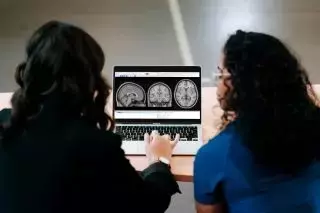
Depression: Beyond the Mind, Into the Body
A groundbreaking study analyzing over 23,000 brain scans reveals that depression's impact extends beyond traditional mood and cognitive regions, significantly affecting motor and visual areas. This research challenges long-held beliefs, suggesting that the physical symptoms of depression, like sluggishness and dulled perception, have direct neural underpinnings rather than being mere secondary effects of emotional distress. The hippocampus, previously thought to be consistently altered, showed no significant changes in this large-scale analysis, prompting a reevaluation of depression's neurobiological profile.