 Breaking News & Live Updates
- Breaking News & Live Updates
- Breaking News & Live Updates
- Breaking News & Live Updates
- Breaking News & Live Updates
- Breaking News & Live Updates
- Breaking News & Live Updates
- Breaking News & Live Updates
- Breaking News & Live Updates
- Breaking News & Live Updates
AI as a Catalyst for Candid Communication in the Workplace
Emerging research has unveiled a fascinating paradox in the modern workplace: individuals exhibit a greater propensity for transparent communication with artificial intelligence overseers than with their human counterparts. This revelation challenges conventional notions of leadership, compelling a re-examination of the factors that foster psychological safety and encourage genuine feedback within organizational structures. The implications extend beyond the mere adoption of technology, prompting a deeper inquiry into the inherent dynamics of human-led environments and the subtle anxieties that can impede open dialogue.
The current discourse on leadership often emphasizes the irreplaceable human elements of empathy, nonverbal cues, and emotional intelligence. However, the unexpected comfort found in confiding in algorithms suggests that the absence of perceived social repercussions can unlock a level of candor rarely seen when interacting with human managers. This shift in employee behavior, particularly in the realm of objective and cognitive tasks, highlights a critical area for improvement in cultivating trust and openness in traditional leadership models. It underscores the necessity for human leaders to actively dismantle barriers to honest communication, creating spaces where vulnerability is not equated with risk.
The Unexpected Trust in Algorithmic Leadership
A recent scholarly investigation, conducted by researchers at Zhejiang University and published in Scientific Reports, unearthed compelling evidence that individuals demonstrate a considerably higher willingness to articulate their unvarnished opinions to artificial intelligence leaders than to human supervisors. This groundbreaking study, which involved a series of three meticulously designed experiments, consistently revealed that the presence of an AI figurehead fostered an environment where employees felt more secure in expressing concerns, offering critiques, and providing genuine input without fear of negative social consequences. This perception of impartiality and fairness, inherently attributed to the algorithmic nature of the leadership, cultivated a significant increase in psychological safety, directly correlating with more forthright and authentic communication streams. The findings specifically underscored that this enhanced candor was most pronounced when dealing with cognitive responsibilities, such as evaluation processes, strategic decision-making, and the allocation of organizational resources.
The profound implication of this research lies in its suggestion that the perceived fairness of AI plays a pivotal role in liberating employees from the apprehension of social risk often associated with honest communication in a human-led environment. Unlike human managers who may consciously or unconsciously hold biases, remember past disagreements, or allow personal impressions to influence performance assessments, an algorithm operates devoid of such emotional and relational complexities. This perceived neutrality creates a safe haven for employees to voice their true thoughts, as they believe the AI leader will not harbor grudges or penalize them for dissenting views. While the study clarifies that this effect is specific to cognitive tasks and does not extend to emotional vulnerability, it nevertheless presents a powerful challenge to the traditional understanding of leadership, highlighting how the absence of social implications can dramatically alter communication patterns and foster a more open, feedback-rich workplace.
Reflecting on Human Leadership in an AI Era
The insights garnered from this research compel a critical introspection into the prevalent practices of human leadership. If employees exhibit greater transparency with an algorithmic supervisor than with their human boss, it raises an uncomfortable yet vital question about the underlying dynamics of human-led workplaces: what factors contribute to an environment where honesty becomes a social liability? This phenomenon points to a potential systemic issue where employees may feel compelled to withhold genuine feedback due to the fear of professional repercussions, such as being unfavorably remembered during performance reviews or being unconsciously marginalized for expressing dissenting views. The study, therefore, serves as a powerful mirror, reflecting the areas where human leadership might inadvertently stifle open communication and psychological safety, thereby hindering innovation and growth.
Far from suggesting a wholesale replacement of human managers with artificial intelligence, these findings advocate for a deeper understanding and recalibration of human leadership strategies. The core takeaway is not that AI is inherently superior, but rather that it exposes a vulnerability in human-led teams: the perception of social risk tied to honesty. Human leaders are now challenged to actively cultivate an atmosphere where employees feel genuinely safe to speak their minds, much like they would to an impartial algorithm. This involves fostering a culture of trust, ensuring equitable treatment, and actively demonstrating that constructive feedback is valued, not penalized. By addressing these foundational elements, human leaders can learn from the "algorithmic advantage" and build more resilient, transparent, and psychologically safe workplaces, ultimately enhancing both individual well-being and organizational effectiveness.
Other Articles

APS Student Caucus: Fostering an Inclusive Global Community
The APS Student Caucus (APSSC) is committed to enhancing the professional development of its student members and fostering an inclusive and supportive global student community in psychological science. This year marks a significant milestone as APS holds its first-ever annual convention outside the United States. The APSSC will introduce a Global Advocate position and an Early Career Task Force to better serve its diverse student body and support their transition into professional roles.

Understanding Adolescent Nighttime Wakefulness: Beyond Biology
Adolescents staying up late is a common observation, with sleep insufficiency impacting school performance, emotional regulation, and overall health. This article explores the various factors contributing to delayed sleep patterns in teenagers, moving beyond solely biological explanations to include social and behavioral influences. It discusses the interplay of these elements and highlights the importance of self-regulation and good sleep hygiene in improving adolescent sleep.

Understanding and Addressing Post-Depression Cognitive Fog
Many individuals recovering from depression experience a persistent 'brain fog' that affects cognitive functions like memory and attention, even after mood symptoms improve. This phenomenon, which affects around 80% of people with depression, may be linked to specific serotonin receptors not targeted by conventional antidepressants. Recent research indicates that a drug typically used for constipation, prucalopride, shows promise in alleviating these cognitive deficits by acting on a distinct serotonin pathway. While not yet a treatment, this discovery offers valuable insights into the biological underpinnings of cognitive dysfunction in depression.

Understanding the False Cause Fallacy in Public Research Interpretation
This article highlights how the 'false cause fallacy' frequently distorts public understanding of research, particularly when correlation is mistaken for causation. It examines recent studies on night owls, remote workers, and 'time buyers,' showing how media often misrepresents findings. The piece stresses the importance of clear scientific communication to prevent misconceptions and biased interpretations, while still acknowledging the value of general health recommendations from these studies.
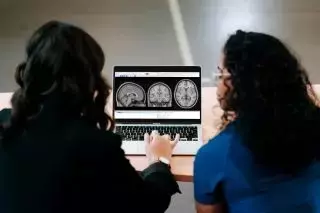
Depression: Beyond the Mind, Into the Body
A groundbreaking study analyzing over 23,000 brain scans reveals that depression's impact extends beyond traditional mood and cognitive regions, significantly affecting motor and visual areas. This research challenges long-held beliefs, suggesting that the physical symptoms of depression, like sluggishness and dulled perception, have direct neural underpinnings rather than being mere secondary effects of emotional distress. The hippocampus, previously thought to be consistently altered, showed no significant changes in this large-scale analysis, prompting a reevaluation of depression's neurobiological profile.

The Growth Potential of Singlehood: Beyond Societal Norms
This article explores how viewing singlehood as an opportunity for personal development can lead to greater well-being, challenging the common perception of being unattached as a deficit state. It delves into the self-expansion theory, traditionally linked to romantic relationships, and reveals how novel experiences, both social and solitary, contribute to self-growth among single individuals, backed by new research findings.