 Breaking News & Live Updates
- Breaking News & Live Updates
- Breaking News & Live Updates
- Breaking News & Live Updates
- Breaking News & Live Updates
- Breaking News & Live Updates
- Breaking News & Live Updates
- Breaking News & Live Updates
- Breaking News & Live Updates
- Breaking News & Live Updates
APS Student Caucus: Fostering an Inclusive Global Community
The APS Student Caucus (APSSC) is embarking on a pivotal new phase, reaffirming its dedication to nurturing an inclusive and supportive global community for students in psychological science. As the parent organization, APS, celebrates its first international annual convention in Barcelona, the APSSC is introducing strategic initiatives aimed at broadening student engagement, facilitating career transitions, and amplifying student voices worldwide. These efforts reflect a deep commitment to its diverse membership, ensuring that students from all geographical and academic backgrounds receive tailored support and opportunities for professional growth within the field.
Since its inception in 1989, the APSSC has consistently championed the professional advancement of its student members, aligning with the broader mission of the Association for Psychological Science (APS). A notable development in the 2026–27 term is the APSSC's heightened focus on global outreach. Despite a substantial portion of its student members hailing from institutions outside the U.S., historical data indicates an underrepresentation in APSSC's key decision-making processes and initiatives. To rectify this, the caucus refined its global engagement strategies in the 2025–26 term, organizing specialized panels at the 2025 APS Global Psychological Science Summit and the 2026 APS Annual Convention. These sessions addressed critical topics such as global career pathways, international mentorship, and securing funding for international students, with key insights now accessible through the Observer's Student Notebook and Career Development sections.
In a significant move to solidify its commitment to global members, the APSSC Executive Board unanimously approved the creation of a Global Advocate position, set to be filled during the 2027–28 term. This individual will serve as the primary representative and advocate for APS's global student cohort, including those studying abroad. Collaborating with the Executive Board, the Global Advocate will spearhead initiatives such as program development, facilitating mentorship via the APS Mentorship Program, and showcasing global student perspectives through the Observer's Student Notebook. Additionally, the establishment of the APSSC Global Student Committee aims to further integrate international students into the caucus's activities, with the Global Advocate chairing this committee.
Another core objective for the APSSC is to equip student members for successful transitions into early career roles. The newly formed Early Career Task Force, established at the May board meeting, is designed to support students as they move from academic life into professions as scientists, educators, and practitioners in psychological science. The upcoming 2026 cohort of the APS Mentorship Program, open to all APS members including early and mid-career professionals, will be further enhanced through collaboration between the Task Force and the APSSC Executive Board. This strategic alignment will lead to more targeted programming and partnerships with other APS committees, offering valuable professional development opportunities, especially at the APS Annual Convention.
For over three decades, the involvement and experiences of student members have been the bedrock of the APSSC's identity. APS has consistently supported these students, empowering them to contribute significantly to psychological science through research, innovation, education, and advocacy. The APSSC will continue to provide existing involvement avenues and actively encourage student participation in the 2026–27 term. Furthermore, it plans to amplify student voices, perspectives, and experiences through the Observer's Student Notebook, complementing these insights with essential information on funding and professional development to foster a vibrant and inclusive community.
Other Articles

Understanding Adolescent Nighttime Wakefulness: Beyond Biology
Adolescents staying up late is a common observation, with sleep insufficiency impacting school performance, emotional regulation, and overall health. This article explores the various factors contributing to delayed sleep patterns in teenagers, moving beyond solely biological explanations to include social and behavioral influences. It discusses the interplay of these elements and highlights the importance of self-regulation and good sleep hygiene in improving adolescent sleep.

Understanding and Addressing Post-Depression Cognitive Fog
Many individuals recovering from depression experience a persistent 'brain fog' that affects cognitive functions like memory and attention, even after mood symptoms improve. This phenomenon, which affects around 80% of people with depression, may be linked to specific serotonin receptors not targeted by conventional antidepressants. Recent research indicates that a drug typically used for constipation, prucalopride, shows promise in alleviating these cognitive deficits by acting on a distinct serotonin pathway. While not yet a treatment, this discovery offers valuable insights into the biological underpinnings of cognitive dysfunction in depression.

Understanding the False Cause Fallacy in Public Research Interpretation
This article highlights how the 'false cause fallacy' frequently distorts public understanding of research, particularly when correlation is mistaken for causation. It examines recent studies on night owls, remote workers, and 'time buyers,' showing how media often misrepresents findings. The piece stresses the importance of clear scientific communication to prevent misconceptions and biased interpretations, while still acknowledging the value of general health recommendations from these studies.
Depression: Beyond the Mind, Into the Body
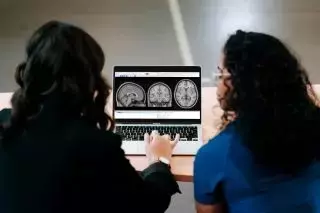
A groundbreaking study analyzing over 23,000 brain scans reveals that depression's impact extends beyond traditional mood and cognitive regions, significantly affecting motor and visual areas. This research challenges long-held beliefs, suggesting that the physical symptoms of depression, like sluggishness and dulled perception, have direct neural underpinnings rather than being mere secondary effects of emotional distress. The hippocampus, previously thought to be consistently altered, showed no significant changes in this large-scale analysis, prompting a reevaluation of depression's neurobiological profile.

The Growth Potential of Singlehood: Beyond Societal Norms
This article explores how viewing singlehood as an opportunity for personal development can lead to greater well-being, challenging the common perception of being unattached as a deficit state. It delves into the self-expansion theory, traditionally linked to romantic relationships, and reveals how novel experiences, both social and solitary, contribute to self-growth among single individuals, backed by new research findings.
Facial Perception: The Impact of Contrast on Perceived Skin Evenness
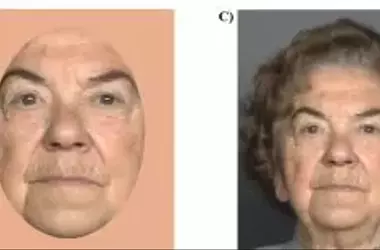
A new study reveals that the perceived evenness of facial skin is significantly influenced by the contrast created by surrounding elements like background color and hair. This research suggests that high contrast can enhance the perception of smoother skin, offering insights into why certain clothing and hair styles are considered more attractive.