 Breaking News & Live Updates
- Breaking News & Live Updates
- Breaking News & Live Updates
- Breaking News & Live Updates
- Breaking News & Live Updates
- Breaking News & Live Updates
- Breaking News & Live Updates
- Breaking News & Live Updates
- Breaking News & Live Updates
- Breaking News & Live Updates
Understanding and Addressing Post-Depression Cognitive Fog
Unveiling the Hidden Cognitive Challenge Post-Depression
The Unforeseen Lingering Effects of Depression
When recovering from a depressive episode, individuals often anticipate a complete return to their former selves, marked by improved mood and better sleep. However, many find themselves grappling with a perplexing cognitive gap: a period where their emotional state has uplifted, but their mental clarity remains elusive. This persistent fogginess can manifest as slowed thought processes, difficulty recalling information, prolonged task completion times, and a struggle to absorb written content, raising concerns about the nature of their recovery or the efficacy of their medication.
Exploring Serotonin's Broader Role Beyond Mood Regulation
While serotonin is widely recognized for its influence on mood, particularly in the context of antidepressant medications like SSRIs, its impact on cognitive functions is often less understood. Conventional antidepressants primarily target various serotonin receptors to elevate mood, yet they frequently fall short in addressing cognitive deficits. This suggests that the biological mechanisms governing mood and cognition, despite both involving serotonin, might operate through distinct pathways and involve different receptor types.
Promising Discoveries from a Novel Clinical Investigation
A recent study, featured in Psychological Medicine, investigated the role of the 5-HT4 serotonin receptor, present in both the gut and brain, in cognitive function. Researchers recruited 50 adults who had previously experienced at least two depressive episodes but had been off medication and fully recovered for several months. Participants were administered either 2 mg of prucalopride, a medication approved for chronic constipation, or a placebo for a week to ten days. The findings revealed that the prucalopride group demonstrated significant improvements in various cognitive assessments, including memory, attention, and executive function, performing with greater speed and accuracy on objective tests.
Clarifying the Scope and Implications of the Research
It is crucial to understand that these findings, while encouraging, do not constitute a immediate treatment recommendation. The lead researcher, Angharad de Cates, emphasizes that this area of study is still in its nascent, exploratory phase. Prucalopride is not currently approved for cognitive symptoms associated with depression, and its use for this purpose is premature. Individuals experiencing cognitive difficulties post-depression should consult with a healthcare professional for appropriate guidance and support.
Gaining Deeper Understanding into Persistent Cognitive Impairment
Despite not offering an immediate cure, this research provides invaluable insights into the enduring mystery of cognitive fog following depression. By demonstrating that cognitive symptoms might stem from different neurological roots and respond to distinct serotonin pathways compared to mood symptoms, the study clarifies why resolving mood issues doesn't automatically eliminate cognitive challenges. This distinction suggests that brain fog isn't merely a residual symptom but potentially a separate biological problem requiring a targeted approach.
Other Articles

Understanding the False Cause Fallacy in Public Research Interpretation
This article highlights how the 'false cause fallacy' frequently distorts public understanding of research, particularly when correlation is mistaken for causation. It examines recent studies on night owls, remote workers, and 'time buyers,' showing how media often misrepresents findings. The piece stresses the importance of clear scientific communication to prevent misconceptions and biased interpretations, while still acknowledging the value of general health recommendations from these studies.
Depression: Beyond the Mind, Into the Body
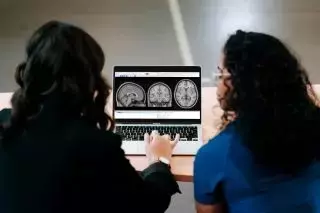
A groundbreaking study analyzing over 23,000 brain scans reveals that depression's impact extends beyond traditional mood and cognitive regions, significantly affecting motor and visual areas. This research challenges long-held beliefs, suggesting that the physical symptoms of depression, like sluggishness and dulled perception, have direct neural underpinnings rather than being mere secondary effects of emotional distress. The hippocampus, previously thought to be consistently altered, showed no significant changes in this large-scale analysis, prompting a reevaluation of depression's neurobiological profile.

The Growth Potential of Singlehood: Beyond Societal Norms
This article explores how viewing singlehood as an opportunity for personal development can lead to greater well-being, challenging the common perception of being unattached as a deficit state. It delves into the self-expansion theory, traditionally linked to romantic relationships, and reveals how novel experiences, both social and solitary, contribute to self-growth among single individuals, backed by new research findings.

Facial Perception: The Impact of Contrast on Perceived Skin Evenness
A new study reveals that the perceived evenness of facial skin is significantly influenced by the contrast created by surrounding elements like background color and hair. This research suggests that high contrast can enhance the perception of smoother skin, offering insights into why certain clothing and hair styles are considered more attractive.

Children's Perception of AI: Understanding the Young Mind's View of Artificial Intelligence
A recent study explored how fourth and eighth-grade students perceive artificial intelligence, revealing age and gender-based differences. Older students conceptualize AI more abstractly, while younger ones associate it with tangible devices. Girls tend to view AI as more emotional and social, often comparing it to a friend, whereas boys focus on its technical and instrumental aspects. The research emphasizes the growing presence of AI in children's lives and the need for parental guidance to ensure its productive and age-appropriate use.

Innovations in Psychological Science Education and Therapeutic Training
The APS Fund for Teaching and Public Understanding of Psychological Science is supporting three new initiatives by psychology professors. These projects aim to advance the understanding of memory science, equip undergraduates with skills in clinical interventions, and introduce a reflective framework for youth therapy. These efforts seek to broaden access to psychological science, particularly in underserved regions, and improve the delivery of mental health services through innovative educational and training methodologies.