 Breaking News & Live Updates
- Breaking News & Live Updates
- Breaking News & Live Updates
- Breaking News & Live Updates
- Breaking News & Live Updates
- Breaking News & Live Updates
- Breaking News & Live Updates
- Breaking News & Live Updates
- Breaking News & Live Updates
- Breaking News & Live Updates
Understanding the False Cause Fallacy in Public Research Interpretation
The distinction between correlation and causation is a fundamental principle in scientific inquiry, yet it is frequently blurred in public discourse, leading to misunderstandings of research findings. This phenomenon, known as the 'false cause fallacy,' occurs when a causal relationship is inferred solely from observed correlations between variables. This issue is pervasive, affecting public perception of various groups and behaviors, as evidenced by recent discussions surrounding nocturnal individuals, telecommuters, and those who spend money to save time.
Recent studies concerning night owls, remote workers, and individuals who purchase time-saving services illustrate how easily correlation can be misinterpreted as causation. For example, a study on night owls and cardiovascular health, despite being correlational, led to headlines implying a direct causal link between late nights and heart problems. Similarly, research on remote work's impact on mental health, while observational, has been presented as definitive proof of remote work causing psychological distress. The case of 'time buyers,' where spending on services like housekeeping was linked to happiness, also saw correlational data being framed as causal, with popular media often making strong, unwarranted conclusions. These examples underscore the critical need for careful interpretation of research, acknowledging the complexities and limitations inherent in correlational studies.
Despite the challenges in discerning causation from correlation, the general health and well-being recommendations stemming from these studies often hold intrinsic value. For instance, suggestions for night owls to improve sleep and diet, or for remote workers to counteract social isolation, are beneficial regardless of the specific causal pathways. Therefore, while critical evaluation of how research is presented is essential to avoid perpetuating false narratives, embracing the positive, actionable advice offered by such studies can still lead to healthier lifestyles and improved societal understanding.
It is imperative for both researchers and journalists to communicate scientific findings with precision, clearly distinguishing between observed relationships and direct causal effects. By fostering a more nuanced understanding of scientific methodology, we can empower the public to interpret research critically, make informed decisions, and cultivate a society that values accuracy and evidence-based insights.
Other Articles

Depression: Beyond the Mind, Into the Body
A groundbreaking study analyzing over 23,000 brain scans reveals that depression's impact extends beyond traditional mood and cognitive regions, significantly affecting motor and visual areas. This research challenges long-held beliefs, suggesting that the physical symptoms of depression, like sluggishness and dulled perception, have direct neural underpinnings rather than being mere secondary effects of emotional distress. The hippocampus, previously thought to be consistently altered, showed no significant changes in this large-scale analysis, prompting a reevaluation of depression's neurobiological profile.

The Growth Potential of Singlehood: Beyond Societal Norms
This article explores how viewing singlehood as an opportunity for personal development can lead to greater well-being, challenging the common perception of being unattached as a deficit state. It delves into the self-expansion theory, traditionally linked to romantic relationships, and reveals how novel experiences, both social and solitary, contribute to self-growth among single individuals, backed by new research findings.
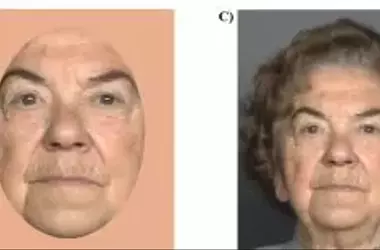
Facial Perception: The Impact of Contrast on Perceived Skin Evenness
A new study reveals that the perceived evenness of facial skin is significantly influenced by the contrast created by surrounding elements like background color and hair. This research suggests that high contrast can enhance the perception of smoother skin, offering insights into why certain clothing and hair styles are considered more attractive.

Children's Perception of AI: Understanding the Young Mind's View of Artificial Intelligence
A recent study explored how fourth and eighth-grade students perceive artificial intelligence, revealing age and gender-based differences. Older students conceptualize AI more abstractly, while younger ones associate it with tangible devices. Girls tend to view AI as more emotional and social, often comparing it to a friend, whereas boys focus on its technical and instrumental aspects. The research emphasizes the growing presence of AI in children's lives and the need for parental guidance to ensure its productive and age-appropriate use.

Innovations in Psychological Science Education and Therapeutic Training
The APS Fund for Teaching and Public Understanding of Psychological Science is supporting three new initiatives by psychology professors. These projects aim to advance the understanding of memory science, equip undergraduates with skills in clinical interventions, and introduce a reflective framework for youth therapy. These efforts seek to broaden access to psychological science, particularly in underserved regions, and improve the delivery of mental health services through innovative educational and training methodologies.

New Insights from Current Directions in Psychological Science
This compilation from Current Directions in Psychological Science features several new articles exploring diverse aspects of human cognition and behavior. Topics include the generative nature of human thought and its implications for cognitive modeling, the development of place-value understanding in children, the intricate dynamics of collective memory, the potential for long-term human-AI partnerships, responses to ambiguity, the integration of explanation and prediction in behavioral science, a culture-first approach to early learning, the social perception of intellectual humility, the racial position model, and the evaluation of abstraction and analogy in AI.