 Breaking News & Live Updates
- Breaking News & Live Updates
- Breaking News & Live Updates
- Breaking News & Live Updates
- Breaking News & Live Updates
- Breaking News & Live Updates
- Breaking News & Live Updates
- Breaking News & Live Updates
- Breaking News & Live Updates
- Breaking News & Live Updates
Overcoming Moral Injury and Reclaiming Identity
Life presents a spectrum of experiences, both triumphs and adversities. Individuals frequently navigate periods of personal and professional setbacks. While recovering from physical wounds is a clear process, emotional scars can be far more enduring. This is especially true for moral injury, a deeply impactful psychological wound that goes beyond superficial harm, as current research highlights.
Moral injury, especially within fields like law enforcement, is characterized as the profound psychological distress experienced when individuals witness, perpetrate, or fail to prevent actions that conflict with their fundamental moral principles. Initially studied in military contexts, its relevance has expanded to include social work, healthcare, and policing. A particularly insidious aspect of moral injury is its covert impact, where individuals suffer from negative and intrusive thoughts without recognizing the underlying cause. Experiencing trauma is difficult enough, but moral injury introduces a layer of self-condemnation that can severely erode one's sense of self. However, this outcome is not universal.
Left unaddressed, moral injury has the potential to lead to a complete dissolution of identity. Yet, studies, such as that by Thomas J. Hodges and colleagues (2026), reveal that while some moral injuries do result in identity loss, others can unexpectedly strengthen one's sense of self. This phenomenon allows individuals to maintain their core identity, process their traumatic experiences, and develop resilience against trauma-related stress disorders. Hodges et al.'s research, involving service members, explored the intricate connection between morally distressing experiences and symptoms of moral injury related to military identity. Their findings suggest a correlation between identity and moral injury symptoms, though the precise link between potentially morally injurious incidents and personal identity remains a subject of ongoing investigation, heavily influenced by how identity itself is defined. The researchers acknowledge that many military personnel leaving service report a feeling of losing a part of themselves, missing comrades and the collective purpose of military life, which can lead to feelings of displacement in civilian society. Some veterans face severe consequences, including homelessness or suicidal ideation, and often become entangled with the legal system. Hodges et al. emphasize that while identity struggles are common among those who have left the military, these crises can be intensified for veterans who experienced moral injury during their service, resulting in lasting psychological and spiritual damage from experiences they perceived as morally egregious.
Accurately identifying the root causes and manifestations of moral injury in friends and loved ones, rather than simply labeling them as "depressed" or distressed, is fundamental to fostering their healing journey. Given that the perceived loss of identity stemming from moral injury is contingent on its interpretation, engaging in discussions about the challenging decisions and traumatic repercussions inherent in demanding professions, from surgical procedures to battlefields, can provide crucial context. Reassurances that one has diligently fulfilled their responsibilities with the utmost care and attentiveness can help reframe the experience. Furthermore, in professions where post-traumatic injury and self-blame are prevalent, professional support is readily accessible. Even when professionals perform their duties with exceptional skill, diligence, and expertise, adverse outcomes can still occur. Affirmation of having acted with excellence can empower individuals experiencing moral injury to reinterpret their experiences in a more positive light, fostering recovery and resilience.
Other Articles
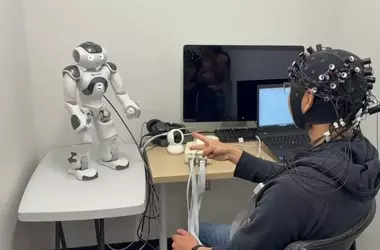
Professor Yuan Chang Leong's Pioneering Research into the Brain's Construction of Subjective Reality
Professor Yuan Chang Leong, a recipient of the 2026 APS Spence Award and assistant professor at the University of Chicago, leads the Computational Affective and Social Neuroscience Laboratory. His research delves into how individual goals, needs, and desires shape our perception of the world, bridging cognitive neuroscience and social psychology to understand the neural mechanisms behind subjective experience and emotional memory formation. This article highlights his innovative work on 'motivated seeing' and 'neural polarization,' and his commitment to interdisciplinary collaboration.

The Impact of Sleep Deprivation on Metabolism and Body Weight
Recent research highlights sleep's crucial role in regulating hormones, metabolism, and physical activity. Even minor sleep loss, around 80 minutes nightly, can lead to subtle weight gain and increased sedentary behavior, influencing metabolic health beyond mere alertness. This article explores the intricate connection between sleep quality and overall physiological well-being, emphasizing that sleep is a dynamic biological process integral to health, not just a passive state.

Social Media Likes: A Paradoxical Reinforcer for Depression
A new study reveals that individuals experiencing depression are more significantly influenced by social media 'likes,' contrasting with traditional lab findings on anhedonia. This suggests that while pleasure may be blunted, the motivational drive from social affirmation remains strong, shaping online behavior in complex ways.
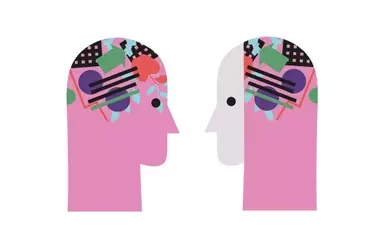
The Quest for Empathy in the Era of Artificial Intelligence
As artificial intelligence (AI) increasingly handles intimate human needs, the question of whether machines can truly provide empathy arises. While AI can generate responses that feel empathic, it lacks genuine emotional understanding. This article explores the evolving definition of empathy in the AI age, the perceived "AI advantage" in providing support, the concept of "wisdom of the crowd" explaining AI's performance, and the "AI penalty" when its source is revealed. It also addresses the risks of frictionless support and highlights how AI can potentially bolster, rather than replace, human relationships.

Exploring the Dynamics of Collective Memory: Beyond Shared Content
This article delves into the concept of collective memory, extending beyond simply what groups remember to how they organize and connect those memories. It highlights new research employing computational approaches, like representational similarity analysis and network analysis, to understand the shared organizational structures of memory. The research suggests that collaborative recall can reshape individual memories, and even global experiences can influence the collective organization of semantic knowledge, offering insights into fields beyond psychology.

Beyond Relaxation: How Travel Reshapes Your Brain and Identity
Travel does more than just offer a break from daily life; it actively reconfigures your brain and sense of self. By exposing you to novel stimuli, it awakens your brain's exploratory networks, fostering rapid learning and memory formation. Furthermore, unfamiliar environments dismantle your established routines and roles, prompting profound self-reflection and personal growth. This disruption in identity, while potentially disorienting, often leads to greater clarity and an expanded understanding of who you are, enhancing cognitive flexibility and creativity in the process.