 Breaking News & Live Updates
- Breaking News & Live Updates
- Breaking News & Live Updates
- Breaking News & Live Updates
- Breaking News & Live Updates
- Breaking News & Live Updates
- Breaking News & Live Updates
- Breaking News & Live Updates
- Breaking News & Live Updates
- Breaking News & Live Updates
Beyond Relaxation: How Travel Reshapes Your Brain and Identity
Journey Beyond the Familiar: Transform Your Mind, Redefine Your Self
Breaking Free from the Autopilot: Why Routine Makes Your Brain Complacent
Our daily lives are often characterized by routines, from our commutes to our interactions. While this efficiency allows our brains to conserve energy, it also leads to a state of 'autopilot,' where the brain's self-reflective networks become less active. This neurological complacency means we stop questioning our identity or engaging deeply with our surroundings, making us cognitively and psychologically narrower than we might realize.
The Brain's Awakening: How New Experiences Ignite Neural Activity
Stepping into an unfamiliar environment forces the brain to 'wake up.' New sights, sounds, languages, and tastes excite dopamine neurons, triggering a natural impulse for exploration and curiosity. This influx of novelty not only enhances mood but also stimulates rapid synaptic plasticity in the hippocampus, allowing for the formation of vivid, lasting memories after even a single new experience. Travel effectively engages multiple brain regions, turning a vacation into a comprehensive mental workout.
Shedding the Old Self: Travel's Role in Identity Transformation
Beyond stimulating the brain, travel inherently destabilizes our established sense of self. When our usual routines and roles are stripped away in an unfamiliar setting, the 'scaffolding' that supports our identity loosens. This temporary disruption can be unsettling but is crucial for self-discovery. Research on transformative travel shows that this 'self-discontinuity' is key to profound personal change, leading to increased clarity and a deeper understanding of oneself by removing the everyday 'noise' that often obscures self-reflection.
Cultivating Genius: The Link Between Unfamiliarity and Creativity
Creativity thrives on making connections between disparate ideas, a process heavily influenced by our cognitive frameworks. Prolonged familiarity can rigidify these mental structures, limiting our ability to envision alternatives. Exposure to diverse cultures and environments challenges this rigid thinking, expanding our mental repertoire. Studies confirm that deep engagement with unfamiliar cultures significantly boosts cognitive flexibility and problem-solving skills, leading to measurably higher creativity. This isn't about intelligence, but about fostering a more adaptable and supple mind.
The Proximity of Discovery: You Don't Need to Travel Far to Transform
While international adventures are often associated with profound change, the true catalyst isn't distance, but genuine immersion. The neurological benefits of novelty and mental engagement can be reaped locally. A weekend trip to an unexplored town, a new neighborhood in your own city, or even a deliberate shift in daily routine can activate the same brain mechanisms as a distant journey. What matters most is the willingness to be present, embrace the unfamiliar, and accept temporary disorientation, rather than merely using travel as an escape from stress.
The Enduring Impact: Returning Home a Changed Individual
Travel offers more than just a temporary respite; it provides an opportunity for fundamental personal evolution. By challenging the brain to operate differently, loosening the grip of established identity, and expanding creative horizons, new neural pathways and memories are forged. The individual who returns home is subtly but structurally changed: more flexible, open-minded, and equipped to perceive both the world and themselves from a fresh, expanded perspective, embodying the lasting power of meaningful experiences.
Other Articles

Optimizing ADHD Medication Dosage for Efficacy and Safety
A recent comprehensive review examined 113 ADHD medication trials to pinpoint optimal dosing ranges that maximize symptom control while minimizing adverse effects in both children and adults. The study highlights that exceeding a certain dosage threshold often leads to diminishing returns in effectiveness and an increased incidence of side effects. This research underscores the importance of personalized dose titration under medical supervision to achieve the best therapeutic outcomes.

Clinical Psychology's Interdisciplinary Evolution: A Special Issue Insight
A recent special issue of *Clinical Psychological Science* highlights the increasing interdisciplinary nature of clinical psychology. Guest editors Jennifer Tackett, Alexander Shackman, and Shirley Wang present a collection of articles and commentaries showcasing powerful collaborations across fields like neuroscience, immunology, environmental health, and computer science. This issue explores new approaches to measuring and understanding mental health, emphasizing the integration of diverse perspectives to advance the field.
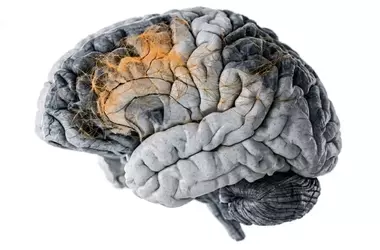
Schizophrenia's Synaptic Origins Uncovered by Advanced Brain Imaging
A groundbreaking study employing specialized PET imaging has revealed a significant, widespread reduction in synaptic density in the brains of individuals with schizophrenia. This research, one of the largest of its kind, pinpoints a distinct structural origin for the disease's progression, demonstrating that synaptic loss is not random but follows the brain's molecular architecture, particularly affecting the left frontal lobe.

The Prosocial Impulse: Why We Share What We Love
A recent study challenges conventional wisdom, revealing that our motivation to share things we love—be it a book, a song, or an idea—is predominantly prosocial rather than self-serving. We often underestimate the generous intent behind others' enthusiasm and misinterpret our own desire to recommend as a means of impressing. This research suggests that sharing what we are passionate about is a deeply human and generous act, fostering connection and inspiration, and that receiving such recommendations graciously is equally vital for reinforcing these bonds.
Scientists Unite to Combat Autism Misinformation
In response to misinformed statements by Robert F. Kennedy Jr. regarding autism's causes, over 350 autism scientists formed the Coalition of Autism Scientists. Led by Helen Tager-Flusberg, the organization aims to provide accurate, science-based information to the public and policymakers, countering false narratives about vaccines and other environmental factors, while advocating for the involvement of autistic individuals in research design.

Hunger Intensifies Sweet Perception and Alters Brain Responses to Sweeteners
A new study reveals that hunger significantly enhances the perceived reward of all sweet tastes, whether from sugar or artificial sweeteners. Furthermore, individuals who regularly consume artificial sweeteners exhibit distinct heightened brain activity in areas associated with self-control when tasting sweet beverages. These findings suggest that frequent use of zero-calorie alternatives may subtly reshape the brain's processing of sweet stimuli over time, potentially influencing dietary habits.