 Breaking News & Live Updates
- Breaking News & Live Updates
- Breaking News & Live Updates
- Breaking News & Live Updates
- Breaking News & Live Updates
- Breaking News & Live Updates
- Breaking News & Live Updates
- Breaking News & Live Updates
- Breaking News & Live Updates
- Breaking News & Live Updates
Clinical Psychology's Interdisciplinary Evolution: A Special Issue Insight
Bridging Disciplines: The Future of Mental Health Science Unveiled
A Collaborative Vision for Clinical Psychology
The latest edition of *Clinical Psychological Science* (Volume 14, Issue 4, July 2026) features a compelling compilation curated by guest editors Jennifer Tackett, Alexander Shackman, and Shirley Wang. This collection brings together seven insightful articles and four comprehensive commentaries, all dedicated to showcasing the formidable impact and persistent challenges encountered in multidisciplinary partnerships within the realm of psychological science.
Integrating Diverse Perspectives in Mental Health Research
The featured articles offer a varied perspective on how clinical psychology is increasingly embracing interdisciplinary approaches. Contributors draw significant insights from fields such as neuroscience, immunology, environmental health, computer science, cultural studies, legal frameworks, and complex-systems modeling. This integration aims to revolutionize the methodologies used to assess, comprehend, and ultimately enhance mental well-being.
Advancements in Psychological Measurement
Several authors in this issue scrutinize the methodologies of measurement in clinical science. Notably, Michael Hallquist and his team present a framework for leveraging automated language, image, and signal-based measurements to mitigate the heavy reliance on self-reported data. Jasmin Perez and her colleagues further enrich this discourse by examining the critical role of language in measurement, specifically through their research involving English-Spanish bilingual adults.
Rethinking Mental Health Systems
The issue also delves into the intricate systemic frameworks necessary for conducting mental health research. For instance, Donald Robinaugh and his collaborators, working with a diverse interdisciplinary team, have reimagined the biopsychosocial model. They propose a systems-science framework, integrating concepts like feedback loops and critical thresholds to better understand the progression of symptoms.
Acknowledging Human Elements and Structural Challenges
A crucial aspect highlighted in this special issue is the human element inherent in multidisciplinary endeavors. Deanna Barch contributes a commentary that addresses the systemic obstacles prevalent in cross-disciplinary science. These include differing epistemologies, authorship conventions, and promotion structures that often struggle to adequately recognize team-based contributions.
The Unparalleled Multidisciplinary Nature of Clinical Psychology
Deanna Barch, an APS Fellow and recipient of the William James Fellow Award, asserts that it is not an exaggeration to suggest that clinical psychological science stands as one of the most uniquely multidisciplinary fields across all scientific domains. This assertion is based on the vast array of collaborations and the exceptional integrative research being generated by clinical psychological scientists and their partners.
Other Articles
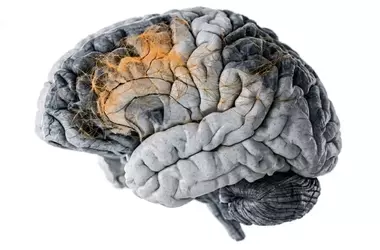
Schizophrenia's Synaptic Origins Uncovered by Advanced Brain Imaging
A groundbreaking study employing specialized PET imaging has revealed a significant, widespread reduction in synaptic density in the brains of individuals with schizophrenia. This research, one of the largest of its kind, pinpoints a distinct structural origin for the disease's progression, demonstrating that synaptic loss is not random but follows the brain's molecular architecture, particularly affecting the left frontal lobe.

The Prosocial Impulse: Why We Share What We Love
A recent study challenges conventional wisdom, revealing that our motivation to share things we love—be it a book, a song, or an idea—is predominantly prosocial rather than self-serving. We often underestimate the generous intent behind others' enthusiasm and misinterpret our own desire to recommend as a means of impressing. This research suggests that sharing what we are passionate about is a deeply human and generous act, fostering connection and inspiration, and that receiving such recommendations graciously is equally vital for reinforcing these bonds.
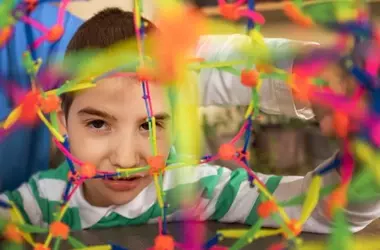
Scientists Unite to Combat Autism Misinformation
In response to misinformed statements by Robert F. Kennedy Jr. regarding autism's causes, over 350 autism scientists formed the Coalition of Autism Scientists. Led by Helen Tager-Flusberg, the organization aims to provide accurate, science-based information to the public and policymakers, countering false narratives about vaccines and other environmental factors, while advocating for the involvement of autistic individuals in research design.

Hunger Intensifies Sweet Perception and Alters Brain Responses to Sweeteners
A new study reveals that hunger significantly enhances the perceived reward of all sweet tastes, whether from sugar or artificial sweeteners. Furthermore, individuals who regularly consume artificial sweeteners exhibit distinct heightened brain activity in areas associated with self-control when tasting sweet beverages. These findings suggest that frequent use of zero-calorie alternatives may subtly reshape the brain's processing of sweet stimuli over time, potentially influencing dietary habits.

K-Factor as a Predictor of University Academic Success
A recent study indicates that a student's 'K-factor' significantly predicts university GPA, even when accounting for traditional measures like SAT scores and personality traits. This research introduces the K-factor, derived from life history theory, as an important non-cognitive element influencing academic achievement. The findings highlight the value of future-oriented thinking, social connections, and long-term planning in higher education.
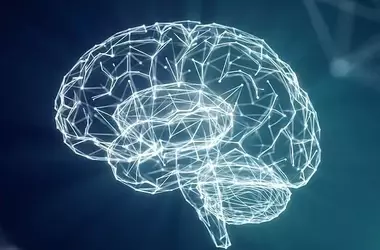
Brain Stimulation Enhances Memory Recall
A comprehensive meta-analysis published in eLife reveals that applying noninvasive magnetic stimulation to a specific brain network significantly boosts an individual's ability to recall past experiences. This research indicates that targeting the hippocampal network improves event-based memory without affecting other cognitive functions, offering a promising avenue for developing therapies for memory-related disorders. The study consolidates findings from 38 investigations, involving over a thousand participants across diverse demographic groups, highlighting the method's potential for precise memory enhancement.