 Breaking News & Live Updates
- Breaking News & Live Updates
- Breaking News & Live Updates
- Breaking News & Live Updates
- Breaking News & Live Updates
- Breaking News & Live Updates
- Breaking News & Live Updates
- Breaking News & Live Updates
- Breaking News & Live Updates
- Breaking News & Live Updates
Exploring the Dynamics of Collective Memory: Beyond Shared Content
This report explores the evolving understanding of collective memory, moving beyond a simple consensus on remembered events to a deeper appreciation of how groups structure and interlink their shared past. Recent advancements in psychological science, particularly through computational modeling, illuminate how collaborative memory processes can fundamentally alter individual recollections and integrate global experiences into collective semantic frameworks.
Delving into the Architecture of Shared Remembrance
In a compelling study published in Current Directions in Psychological Science, researchers Suparna Rajaram, Garrett Greeley, and Jingwen Jin (2026) advocate for a novel perspective on collective memory, emphasizing its internal organization rather than just its common content. They argue that the way individuals connect and sequence remembered details can also be collectively shared, influencing how groups construct their historical narratives.
Traditional research on collective memory often focuses on the overlap in specific details recalled by individuals within a group. However, Rajaram and her team introduced the concept of 'memory organization' as a distinct and often overlooked dimension. They draw an analogy to constructing a complex model: simply having all the correct pieces is not enough; the instructions—the way those pieces are assembled—are equally crucial. Similarly, collective memory is not just about having the same factual 'bricks' but also about the shared 'blueprint' that connects them.
To investigate this organizational aspect, psychological scientists have begun utilizing sophisticated computational techniques. One such method, representational similarity analysis, originally used in brain-imaging studies, helps quantify the 'distance' between recalled items based on their sequence. By having participants learn the same information and then analyzing their recall order, researchers can determine if different individuals' memories are organized similarly.
In an application of this technique, Jin et al. (2026) observed how individual memory organization shifts after collaborative recall. Their findings revealed that following group discussions, individuals' subsequent solo recalls tended to align more closely with the group's collective pattern. This indicates that collaborative engagement actively reorganizes the internal structure of individual memories, leading to a more unified group memory.
Further expanding on this, Greeley et al. (2025) applied network analysis to study collective semantic memories—the shared body of knowledge within societies. By asking participants to list U.S. cities and charting connections between consecutively recalled locations, they found that certain cities were frequently linked, often due to geographical proximity (e.g., Dallas, Houston, and Austin) or cultural significance (e.g., New York City and Los Angeles). This approach can also shed light on how major global events, such as the 2026 World Cup, might create new, shared connections between previously disparate entities in collective memory (e.g., Mexico City, Atlanta, and Vancouver).
The implications of these computational methodologies extend beyond psychology, offering valuable insights into fields like sociology, business, and political science. Rajaram et al. (2026) highlight that even groups with substantial shared memory content, such as sports fans or political parties, can narrate vastly different stories due to distinct organizational frameworks. This helps explain phenomena like the differing perceptions of countries' contributions to historical events, where the content might be similar, but its organization and emphasis vary significantly.
Reflections on the Interplay of Learning and Shared Cognition
The exploration of collective memory and its organizational dynamics provides a profound perspective on how knowledge is constructed and retained within groups. As educators and learners, recognizing that memory is not a static snapshot but a dynamic, interconnected structure encourages a more nuanced approach to teaching and collaborative learning. Understanding that group interactions can reshape not only what we remember but also how we remember it has significant implications for how we design educational experiences and foster collective understanding. This research underscores the importance of examining the processes of shared recall and how these processes contribute to the formation of a truly collective intellectual landscape, both within academic settings and broader societal contexts.
Other Articles

Beyond Relaxation: How Travel Reshapes Your Brain and Identity
Travel does more than just offer a break from daily life; it actively reconfigures your brain and sense of self. By exposing you to novel stimuli, it awakens your brain's exploratory networks, fostering rapid learning and memory formation. Furthermore, unfamiliar environments dismantle your established routines and roles, prompting profound self-reflection and personal growth. This disruption in identity, while potentially disorienting, often leads to greater clarity and an expanded understanding of who you are, enhancing cognitive flexibility and creativity in the process.

Optimizing ADHD Medication Dosage for Efficacy and Safety
A recent comprehensive review examined 113 ADHD medication trials to pinpoint optimal dosing ranges that maximize symptom control while minimizing adverse effects in both children and adults. The study highlights that exceeding a certain dosage threshold often leads to diminishing returns in effectiveness and an increased incidence of side effects. This research underscores the importance of personalized dose titration under medical supervision to achieve the best therapeutic outcomes.
Clinical Psychology's Interdisciplinary Evolution: A Special Issue Insight
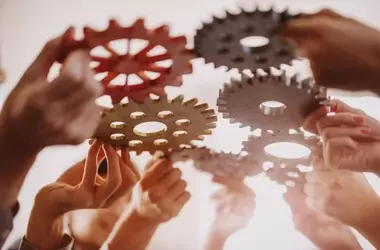
A recent special issue of *Clinical Psychological Science* highlights the increasing interdisciplinary nature of clinical psychology. Guest editors Jennifer Tackett, Alexander Shackman, and Shirley Wang present a collection of articles and commentaries showcasing powerful collaborations across fields like neuroscience, immunology, environmental health, and computer science. This issue explores new approaches to measuring and understanding mental health, emphasizing the integration of diverse perspectives to advance the field.
Schizophrenia's Synaptic Origins Uncovered by Advanced Brain Imaging
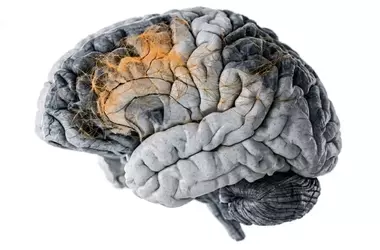
A groundbreaking study employing specialized PET imaging has revealed a significant, widespread reduction in synaptic density in the brains of individuals with schizophrenia. This research, one of the largest of its kind, pinpoints a distinct structural origin for the disease's progression, demonstrating that synaptic loss is not random but follows the brain's molecular architecture, particularly affecting the left frontal lobe.

The Prosocial Impulse: Why We Share What We Love
A recent study challenges conventional wisdom, revealing that our motivation to share things we love—be it a book, a song, or an idea—is predominantly prosocial rather than self-serving. We often underestimate the generous intent behind others' enthusiasm and misinterpret our own desire to recommend as a means of impressing. This research suggests that sharing what we are passionate about is a deeply human and generous act, fostering connection and inspiration, and that receiving such recommendations graciously is equally vital for reinforcing these bonds.
Scientists Unite to Combat Autism Misinformation
In response to misinformed statements by Robert F. Kennedy Jr. regarding autism's causes, over 350 autism scientists formed the Coalition of Autism Scientists. Led by Helen Tager-Flusberg, the organization aims to provide accurate, science-based information to the public and policymakers, countering false narratives about vaccines and other environmental factors, while advocating for the involvement of autistic individuals in research design.