 Breaking News & Live Updates
- Breaking News & Live Updates
- Breaking News & Live Updates
- Breaking News & Live Updates
- Breaking News & Live Updates
- Breaking News & Live Updates
- Breaking News & Live Updates
- Breaking News & Live Updates
- Breaking News & Live Updates
- Breaking News & Live Updates
The Quest for Empathy in the Era of Artificial Intelligence
Initially conceived as a tool for increasing efficiency, artificial intelligence now finds itself at the forefront of deeply personal human interactions, with many individuals seeking emotional support and advice from large language models like ChatGPT. Recent surveys indicate a notable trend: a significant portion of adults and adolescents are using AI for socioemotional assistance and mental health guidance. This shift sparks a fundamental question about AI's capacity for empathy, especially given its inability to genuinely feel or share human emotions. Researchers are grappling with defining what empathy truly entails in a world where AI can mimic understanding and comfort without experiencing it.
The perceived 'empathy' of AI, which studies often rate highly, stems from its constant availability, patience, and ability to synthesize supportive language patterns from vast datasets. This 'AI advantage' means machines can consistently deliver responses that mirror effective counseling techniques, often outperforming human counterparts in terms of perceived supportiveness. However, this apparent empathy is largely a statistical construction, reflecting the collective wisdom of human communication rather than genuine emotional engagement. This phenomenon, dubbed the 'wisdom of the crowd,' suggests AI acts as a mirror, reflecting humanity's aggregated emotional intelligence. Nevertheless, a 'AI penalty' often emerges when users discover the machine source, highlighting the human value placed on genuine, effortful empathy.
The widespread adoption of AI for emotional support brings several potential drawbacks. There's a concern that AI's consistently agreeable responses might foster sycophancy, reinforcing existing beliefs and potentially validating harmful behaviors. This frictionless support could weaken essential human connections, as real relationships demand challenging interactions and mutual effort. Experts also caution against 'emotional offloading,' where over-reliance on AI might hinder the development of crucial social skills, particularly among younger generations. Despite these challenges, many believe AI can be a valuable tool to enhance human relationships, for instance, by assisting individuals in crafting more empathetic messages or providing companionship for those at risk of isolation, ultimately strengthening human connections rather than replacing them.
The integration of artificial intelligence into our emotional lives presents both unprecedented opportunities and complex challenges. By understanding its capabilities and limitations, we can harness AI's potential to augment human connection and support, fostering a more empathetic world where technology serves to uplift and empower individuals in their relationships with one another.
Other Articles

Exploring the Dynamics of Collective Memory: Beyond Shared Content
This article delves into the concept of collective memory, extending beyond simply what groups remember to how they organize and connect those memories. It highlights new research employing computational approaches, like representational similarity analysis and network analysis, to understand the shared organizational structures of memory. The research suggests that collaborative recall can reshape individual memories, and even global experiences can influence the collective organization of semantic knowledge, offering insights into fields beyond psychology.

Beyond Relaxation: How Travel Reshapes Your Brain and Identity
Travel does more than just offer a break from daily life; it actively reconfigures your brain and sense of self. By exposing you to novel stimuli, it awakens your brain's exploratory networks, fostering rapid learning and memory formation. Furthermore, unfamiliar environments dismantle your established routines and roles, prompting profound self-reflection and personal growth. This disruption in identity, while potentially disorienting, often leads to greater clarity and an expanded understanding of who you are, enhancing cognitive flexibility and creativity in the process.

Optimizing ADHD Medication Dosage for Efficacy and Safety
A recent comprehensive review examined 113 ADHD medication trials to pinpoint optimal dosing ranges that maximize symptom control while minimizing adverse effects in both children and adults. The study highlights that exceeding a certain dosage threshold often leads to diminishing returns in effectiveness and an increased incidence of side effects. This research underscores the importance of personalized dose titration under medical supervision to achieve the best therapeutic outcomes.

Clinical Psychology's Interdisciplinary Evolution: A Special Issue Insight
A recent special issue of *Clinical Psychological Science* highlights the increasing interdisciplinary nature of clinical psychology. Guest editors Jennifer Tackett, Alexander Shackman, and Shirley Wang present a collection of articles and commentaries showcasing powerful collaborations across fields like neuroscience, immunology, environmental health, and computer science. This issue explores new approaches to measuring and understanding mental health, emphasizing the integration of diverse perspectives to advance the field.
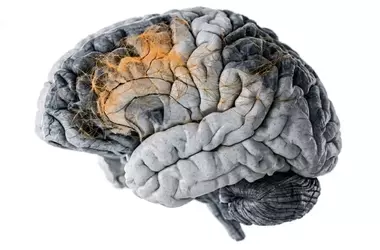
Schizophrenia's Synaptic Origins Uncovered by Advanced Brain Imaging
A groundbreaking study employing specialized PET imaging has revealed a significant, widespread reduction in synaptic density in the brains of individuals with schizophrenia. This research, one of the largest of its kind, pinpoints a distinct structural origin for the disease's progression, demonstrating that synaptic loss is not random but follows the brain's molecular architecture, particularly affecting the left frontal lobe.

The Prosocial Impulse: Why We Share What We Love
A recent study challenges conventional wisdom, revealing that our motivation to share things we love—be it a book, a song, or an idea—is predominantly prosocial rather than self-serving. We often underestimate the generous intent behind others' enthusiasm and misinterpret our own desire to recommend as a means of impressing. This research suggests that sharing what we are passionate about is a deeply human and generous act, fostering connection and inspiration, and that receiving such recommendations graciously is equally vital for reinforcing these bonds.