• Breaking News & Live Updates
  • Breaking News & Live Updates
  • Breaking News & Live Updates
  • Breaking News & Live Updates
  • Breaking News & Live Updates
  • Breaking News & Live Updates
  • Breaking News & Live Updates
  • Breaking News & Live Updates
  • Breaking News & Live Updates
  • Breaking News & Live Updates

The Monetary Trolley Problem: Ethical Choices with Real Stakes

Read time3 min

A recent study delves into a compelling ethical scenario, a real-world adaptation of the classic 'trolley problem', where participants confront a monetary dilemma. Individuals were presented with a choice: redistribute a dollar from one person to benefit five others, with their own dollar remaining secure. The findings reveal a significant inclination towards the 'greater good' option among a majority of participants.

The research, published in 'Judgment and Decision Making', involved 321 American adults and showed that approximately 69 percent chose to reallocate the dollar. This decision-making process was further analyzed against participants' cognitive abilities. It was discovered that those who performed better on reasoning tests 17 months prior were notably more likely to make the utilitarian choice. This suggests a long-term correlation between reflective thinking and making decisions that benefit a larger group, even in a delayed context. However, a widely recognized questionnaire designed to measure utilitarian attitudes did not effectively predict the participants' actual behavior, indicating a potential disconnect between stated moral values and practical actions.

Adding another layer of complexity, the study also explored the influence of religious belief on these ethical choices. Half of the participants identified as Christian believers, while the other half were atheists or agnostics. Among non-believers, higher levels of reflection strongly correlated with choosing the 'greater good'. In contrast, for believers, reflection had little to no impact on their decision. This outcome suggests that individuals' underlying frameworks for moral reasoning, whether based on evidence and consequences or divine command, shape how their cognitive reflection translates into action, highlighting that reflection can sometimes reinforce existing convictions rather than critically evaluate them.

This investigation into moral decision-making, while involving a single task with modest stakes in one country, offers valuable insights. It underscores that cognitive capabilities and an open-minded approach can predict moral choices over extended periods. It also highlights the limitations of self-reported moral values in foretelling actual behavior and emphasizes that the effectiveness of careful thought in guiding individuals towards the common good is contingent upon their fundamental beliefs about the purpose of such deliberation. Ultimately, true utilitarianism may lie not just in what one professes, but in what one genuinely enacts, and how one's reasoning is fundamentally structured.

Other Articles

Registration Opens for the First of Three Global Psychological Science Summits

Registration Opens for the First of Three Global Psychological Science Summits

The American Psychological Society (APS) is launching its third annual Global Psychological Science Summit with a new multi-event format for 2026-2027. To better accommodate global participants, three virtual summits are scheduled across different time zones: Asia/Pacific (Dec 8, 2026), Americas (Jan 21, 2027), and Europe, Middle East, & Africa (Feb 3, 2027). Each summit will address "Challenges in Creating a Global Psychological Science" through workshops, panels, and discussions, including a dedicated session on the future of AI in scientific publishing. APS members can attend for free.

Brain Scans Cannot Accurately Predict Individual Emotion Regulation

Brain Scans Cannot Accurately Predict Individual Emotion Regulation

A significant neuroimaging meta-analysis involving 2,175 participants has challenged the long-held belief that prefrontal cortex activation levels can predict an individual's success in emotion regulation. The study found that various metrics of emotion regulation—self-reported habits, subjective ratings during scans, and amygdala downregulation—do not correlate well, indicating diverse neural pathways are employed by different individuals to manage distress. This research highlights the limitations of using prefrontal activity as a biomarker for emotion regulation.

APS Mentorship Program: Fostering Global Connections and Professional Growth

APS Mentorship Program: Fostering Global Connections and Professional Growth

The APS Mentorship Program has launched its 2026 cohort, welcoming 147 participants from 25 countries. This initiative connects mentors and mentees based on professional interests and skill development goals, fostering a supportive community for career advancement in psychological science. Through structured meetings, webinars, and dedicated support, the program aims to enhance participants' professional and personal journeys, exemplified by the successful experiences of past participants like Cristina López Rojas and Nainika Hira.

Line Graphs vs. Bar Graphs: The Impact of Visualization Choices on Data Interpretation

Line Graphs vs. Bar Graphs: The Impact of Visualization Choices on Data Interpretation

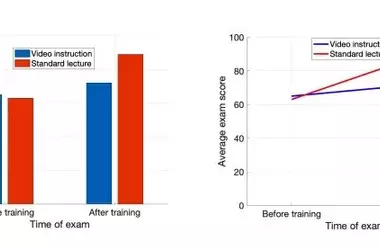
Researchers often make arbitrary decisions when visualizing data. New research suggests that line graphs are more readily understood than bar graphs, especially when interpreting variables on the x-axis. This highlights the importance of considering data comprehensibility in visualization choices to enhance scientific communication.

Maternal Depression Treatment and Infant Brain Development: A New Study's Insights

Maternal Depression Treatment and Infant Brain Development: A New Study's Insights

New research explores the impact of treating depression during pregnancy on infant brain development and emotional behavior. The study found that mothers who received interpersonal psychotherapy (IPT) showed greater reductions in depression symptoms and their infants had smaller right hippocampal volumes, which were associated with lower negative emotionality. These findings highlight the importance of early intervention for maternal mental health for both the mother's well-being and potential positive effects on infant development.

The Impact of "Face Diets" on Infant Perception and Learning

The Impact of "Face Diets" on Infant Perception and Learning

New research introduces the concept of "face diets," illustrating how the diversity of faces infants encounter daily shapes their visual perception, language acquisition, and social development. This article explores how environmental factors, such as urban vs. suburban living, influence the types of faces babies see and subsequently process. It highlights the critical role of facial cues in early learning and suggests that varied "face diets" can lead to differences in social and communication skills.