• Breaking News & Live Updates
  • Breaking News & Live Updates
  • Breaking News & Live Updates
  • Breaking News & Live Updates
  • Breaking News & Live Updates
  • Breaking News & Live Updates
  • Breaking News & Live Updates
  • Breaking News & Live Updates
  • Breaking News & Live Updates
  • Breaking News & Live Updates

Registration Opens for the First of Three Global Psychological Science Summits

Read time3 min

The American Psychological Society (APS) is introducing an innovative approach for its third annual Global Psychological Science Summit, transitioning from a single event to a series of three virtual gatherings spread across late 2026 and early 2027. This strategic shift aims to enhance accessibility for psychological scientists worldwide by accommodating various time zones. Each summit will delve into the complexities and "Challenges in Creating a Global Psychological Science," offering a rich program of workshops, panel discussions, and open forums. A key highlight will be dedicated sessions exploring the evolving role of artificial intelligence in scientific publishing, allowing attendees to contribute to shaping the field's stance on this transformative technology. APS members are granted complimentary access to these events, underscoring the organization's commitment to fostering a globally connected scientific community.

The inaugural event in this series, the Asia/Pacific Summit, is scheduled for December 8, 2026, from 9 a.m. to 4:45 p.m. SGT. Following this, the Americas Summit will take place on January 21, 2027, from 9 a.m. to 4:45 p.m. EST, and the Europe, Middle East, & Africa Summit on February 3, 2027, from 9 a.m. to 4:45 p.m. CET. Each summit is designed to kick off with unique plenary presentations. For instance, the Asia/Pacific Summit will feature a plenary titled “How to Understand Cultural Differences: Three Methodological Approaches,” with esteemed speakers including APS Fellow Thomas Talhelm, APS Board Member Yukiko Uchida, and Quentin Atkinson.

Prominent figures from the psychological science community are instrumental in organizing these global gatherings. APS Fellow Jamin Halberstadt, from the University of Otago, served as the program chair for the Asia/Pacific Summit, working in collaboration with members of APS's Global Engagement Committee. Similarly, Leher Singh of the University of Maryland, Baltimore County, and APS Rising Star Flavio Azevedo from Utrecht University, took on the roles of program chairs for the Americas Summit and the Europe, Middle East, & Africa Summit, respectively. Their leadership ensures a diverse and insightful program tailored to each region.

A recurring and significant segment across all three summits will be a comprehensive discussion focused on the future of AI in scientific publishing. These discussions will bring together journal editors, sociologists, and AI experts to critically examine proposed solutions, identify potential risks, and address unresolved questions confronting editors of scientific journals today. Participants will have an invaluable opportunity to voice their perspectives and experiences, directly influencing the development of best practices for integrating AI into the scientific publication landscape. The initial session for this critical discussion is set to occur during the Asia/Pacific Summit on December 8, featuring insights from APS Rising Star Zhicheng Lin, Kong Meng Liew, and Thomas Chiu.

Beyond scholarly discussions, each summit will incorporate an interactive "What Can APS Do for You?" listening session. This open forum, facilitated by APS members and leadership, provides a crucial platform for attendees to articulate their needs, highlight successful initiatives, and suggest areas where APS can enhance its support for psychological scientists globally. Individuals can submit their questions and thoughts during registration, and those who contribute questions will receive a certificate of participation, which can be presented to their respective institutions.

Registration for the Asia/Pacific Summit is currently accessible, with details of its program also available. Information regarding the programs and registration for the subsequent two summits will be released in due course. While APS members enjoy complimentary attendance, non-members are invited to participate at a rate of US$150 for students and US$332 for researchers per summit. All prospective attendees are required to create an account at instats.org to complete their registration. This series of events underscores APS's commitment to fostering global engagement and collaboration within the psychological science community.

Other Articles

Brain Scans Cannot Accurately Predict Individual Emotion Regulation

Brain Scans Cannot Accurately Predict Individual Emotion Regulation

A significant neuroimaging meta-analysis involving 2,175 participants has challenged the long-held belief that prefrontal cortex activation levels can predict an individual's success in emotion regulation. The study found that various metrics of emotion regulation—self-reported habits, subjective ratings during scans, and amygdala downregulation—do not correlate well, indicating diverse neural pathways are employed by different individuals to manage distress. This research highlights the limitations of using prefrontal activity as a biomarker for emotion regulation.

APS Mentorship Program: Fostering Global Connections and Professional Growth

APS Mentorship Program: Fostering Global Connections and Professional Growth

The APS Mentorship Program has launched its 2026 cohort, welcoming 147 participants from 25 countries. This initiative connects mentors and mentees based on professional interests and skill development goals, fostering a supportive community for career advancement in psychological science. Through structured meetings, webinars, and dedicated support, the program aims to enhance participants' professional and personal journeys, exemplified by the successful experiences of past participants like Cristina López Rojas and Nainika Hira.

Line Graphs vs. Bar Graphs: The Impact of Visualization Choices on Data Interpretation

Line Graphs vs. Bar Graphs: The Impact of Visualization Choices on Data Interpretation

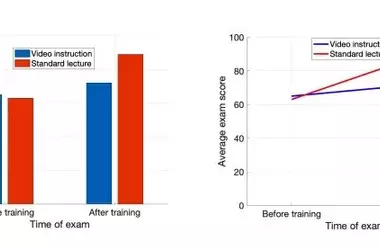
Researchers often make arbitrary decisions when visualizing data. New research suggests that line graphs are more readily understood than bar graphs, especially when interpreting variables on the x-axis. This highlights the importance of considering data comprehensibility in visualization choices to enhance scientific communication.

Maternal Depression Treatment and Infant Brain Development: A New Study's Insights

Maternal Depression Treatment and Infant Brain Development: A New Study's Insights

New research explores the impact of treating depression during pregnancy on infant brain development and emotional behavior. The study found that mothers who received interpersonal psychotherapy (IPT) showed greater reductions in depression symptoms and their infants had smaller right hippocampal volumes, which were associated with lower negative emotionality. These findings highlight the importance of early intervention for maternal mental health for both the mother's well-being and potential positive effects on infant development.

The Impact of "Face Diets" on Infant Perception and Learning

The Impact of "Face Diets" on Infant Perception and Learning

New research introduces the concept of "face diets," illustrating how the diversity of faces infants encounter daily shapes their visual perception, language acquisition, and social development. This article explores how environmental factors, such as urban vs. suburban living, influence the types of faces babies see and subsequently process. It highlights the critical role of facial cues in early learning and suggests that varied "face diets" can lead to differences in social and communication skills.

Physical Activity Mitigates Genetic Predisposition to Depression

Physical Activity Mitigates Genetic Predisposition to Depression

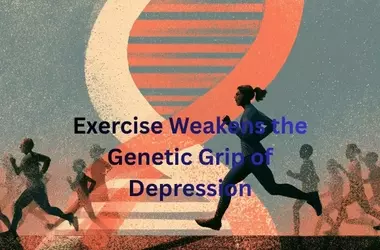
A significant study led by Kansas State University has revealed that consistent daily physical activity can substantially reduce the impact of a high genetic susceptibility to major depressive disorder. By analyzing data from the NIH's All of Us Research Program, which includes genetic profiles, health records, and Fitbit data, researchers found that higher daily step counts and moderate-to-vigorous activity directly weaken the link between genetic vulnerability and the severity of depressive symptoms in adults, highlighting a crucial role for lifestyle in managing mental health.