• Breaking News & Live Updates
  • Breaking News & Live Updates
  • Breaking News & Live Updates
  • Breaking News & Live Updates
  • Breaking News & Live Updates
  • Breaking News & Live Updates
  • Breaking News & Live Updates
  • Breaking News & Live Updates
  • Breaking News & Live Updates
  • Breaking News & Live Updates

The Impact of "Face Diets" on Infant Perception and Learning

Read time3 min

This article delves into the fascinating concept of "face diets" in infants, a term coined by researchers Pickron and Bayet, to describe the varying visual exposure babies have to different faces based on their environment and caregivers. It illuminates how these early visual experiences profoundly influence a baby's cognitive and social development, affecting everything from their ability to process visual cues to their language acquisition and social interaction patterns. The discussion also extends to how these insights can be integrated into educational settings, offering valuable lessons for students of psychology.

Insightful Discoveries in Early Childhood Development

In a recent study published in Current Directions in Psychological Science, researchers Pickron and Bayet introduced the compelling idea of "face diets," defining it as the unique set of facial exposures infants encounter daily. This groundbreaking research, from 2026, highlights that whether a baby grows up in the bustling environment of New York City, interacting with a multitude of diverse faces, or in a quieter suburban setting with a more homogenous group of caregivers, these experiences fundamentally sculpt their perceptual development.

Faces are not merely visual stimuli; they are critical tools through which infants learn about their world. As early as five months old, babies exhibit gaze-following behavior, a key mechanism for learning language and understanding intentions. For instance, when a caregiver points to an object while naming it, the baby connects the visual cue with the auditory information, fostering vocabulary growth. Furthermore, infants rely on facial expressions to gauge safety and understand emotions, which are vital for social bonding and emotional regulation. Pickron and Bayet's findings suggest that a diverse "face diet" can enhance a baby's ability to adapt to different social contexts and process a wider range of facial characteristics. Conversely, a less varied exposure might lead to specific biases in perception, as demonstrated by studies showing that infants are more likely to follow the gaze of adults who resemble their primary caregivers in terms of race or language.

The implications of this research are far-reaching, particularly for understanding developmental disorders. For example, infants later diagnosed with autism spectrum disorder often show reduced interest in faces, which could explain subsequent challenges in social and communication development. This underscores the profound impact of early facial interactions on long-term developmental trajectories.

Reflections on the Developmental Significance of Face Exposure

This exploration into "face diets" offers a profound insight into the intricate mechanisms of early human development. It compels us to consider the rich tapestry of sensory experiences that shape our earliest perceptions and, by extension, our future selves. As a observer, it is striking how seemingly mundane daily interactions, such as who cares for a child or where they are raised, can have such a monumental impact on their cognitive architecture. The research emphasizes the incredible plasticity of the infant brain and its capacity to adapt and learn from its immediate environment. This knowledge not only enriches our understanding of developmental psychology but also prompts a critical reflection on societal structures and their indirect influence on early childhood development. It highlights the importance of diverse environments and interactions, suggesting that fostering a varied "face diet" for infants could be crucial in promoting more inclusive and adaptable individuals. Ultimately, this research serves as a powerful reminder of the delicate and profound interplay between nature and nurture in shaping the human experience.

Other Articles

Physical Activity Mitigates Genetic Predisposition to Depression

Physical Activity Mitigates Genetic Predisposition to Depression

A significant study led by Kansas State University has revealed that consistent daily physical activity can substantially reduce the impact of a high genetic susceptibility to major depressive disorder. By analyzing data from the NIH's All of Us Research Program, which includes genetic profiles, health records, and Fitbit data, researchers found that higher daily step counts and moderate-to-vigorous activity directly weaken the link between genetic vulnerability and the severity of depressive symptoms in adults, highlighting a crucial role for lifestyle in managing mental health.

Psilocybin’s Impact on Neural Connections in Depression

Psilocybin’s Impact on Neural Connections in Depression

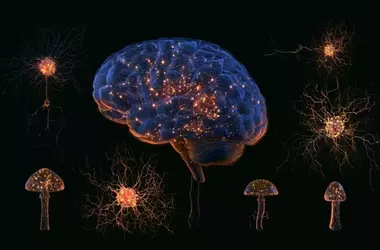
New research from the University of California, Santa Cruz, illuminates how psilocybin restructures brain connectivity. The study, published in Nature Neuroscience, demonstrates that psilocybin accelerates the growth and maturation of dendritic spines, altering cortical circuits in response to brain health or chronic stress. Notably, the findings indicate that psilocybin's structural neuroplasticity can occur independently of its hallucinogenic effects.

Innovative Neural Chip Enhances Adaptive Deep Brain Stimulation for Psychiatric Disorders

Innovative Neural Chip Enhances Adaptive Deep Brain Stimulation for Psychiatric Disorders

EPFL engineers have introduced LogSync, an ultra-low-power, implantable system-on-chip that revolutionizes deep brain stimulation (DBS) for severe psychiatric conditions such as treatment-resistant depression and PTSD. Unlike conventional devices, LogSync monitors oscillatory synchrony across neural networks and employs on-chip machine learning to activate stimulation only during pathological emotional or cognitive states, operating efficiently at under 200 microwatts.

The Intricate Dance of Grammar in Bilingual Minds

The Intricate Dance of Grammar in Bilingual Minds

This study delves into how bilingual individuals navigate the grammatical structures of their two languages. It highlights the differing approaches English speakers, who prioritize word order, and Spanish speakers, who focus on verb agreement, take when interpreting ambiguous sentences. The research, building on decades of psycholinguistic investigation, reveals that heritage bilinguals often adapt their interpretive strategies based on the language they are processing, with Spanish vocabulary proficiency significantly influencing this linguistic flexibility.

Boby Ho-Hong Ching: Blending Science with Compassion in Educational Psychology

Boby Ho-Hong Ching: Blending Science with Compassion in Educational Psychology

This article highlights Boby Ho-Hong Ching's journey as an educational psychologist, focusing on how real-world observations in Hong Kong and Macau sparked his research into contingent self-worth, social stigma, and resilience in young people. It details his scientific approach to understanding societal pressures on students and developing interventions that foster empathy and well-being, emphasizing the crucial role of communication and collaboration with educators and families.

The Emotional Toll of Ghosting: Impact on Both Parties

The Emotional Toll of Ghosting: Impact on Both Parties

Ghosting, the sudden cessation of communication without explanation, is often perceived as an easy escape for the 'ghoster.' However, recent studies suggest that individuals who ghost others frequently experience feelings of guilt, shame, remorse, and even depressive symptoms. Conversely, those who are ghosted tend to underestimate the emotional distress of the ghoster. This highlights the complex psychological effects of ghosting on both sides of the interaction.