• Breaking News & Live Updates
  • Breaking News & Live Updates
  • Breaking News & Live Updates
  • Breaking News & Live Updates
  • Breaking News & Live Updates
  • Breaking News & Live Updates
  • Breaking News & Live Updates
  • Breaking News & Live Updates
  • Breaking News & Live Updates
  • Breaking News & Live Updates

APS Mentorship Program: Fostering Global Connections and Professional Growth

Read time3 min
The APS Mentorship Program embarks on another impactful year with its 2026 cohort, continuing its mission to cultivate meaningful connections and professional development within the global psychological science community. This initiative brings together aspiring and experienced professionals from diverse backgrounds, fostering a collaborative environment for learning and growth.

Unlocking Potential: Bridging Minds, Building Futures in Psychological Science

The Inauguration of the 2026 Cohort: A Milestone for Global Collaboration

The APS Mentorship Program proudly announces the commencement of its 2026 cohort, bringing together 147 dedicated individuals. This year's program unites 60 mentors and 96 mentees from an impressive 25 different countries, spanning regions including Morocco, Poland, Kyrgyzstan, Sri Lanka, and Taiwan. This diverse representation underscores the program's commitment to fostering a truly international community within psychological science.

Tailored Connections: Matching Expertise with Aspirations

While some pairings consider major fields of study, the core philosophy of the Mentorship Program is to prioritize the unique needs and specific criteria of each participant. This personalized approach ensures that matches are based on shared professional interests, desires to cultivate particular skills, objectives related to securing funding, and other individual career aspirations. Ultimately, the program's design aims to construct a robust community dedicated to supporting the career progression of every participant.

A Structured Path to Success: Guided Mentorship and Continuous Support

Upon successful matching, participants engage in regular meetings over a six-month period. These interactions are guided by a mentorship agreement, collaboratively developed at the outset of the year, which outlines specific goals for both mentors and mentees. To enrich this experience, APS provides a wealth of resources, including insightful webinars, comprehensive discussion materials, and ongoing support, all designed to maximize the benefits of the mentorship journey.

Inspiring Journeys: Testimonials from Past Participants

Cristina López Rojas, a distinguished researcher at the University of Granada's Mind, Brain, and Behavior Research Center, shared her profound appreciation for the program. As a mentor in the 2025 cohort, she found the experience invaluable for both her professional and personal advancement. Rojas highlighted the program's capacity to offer leadership opportunities, foster independence, and enhance visibility for early-career researchers, emphasizing the inspiring collaboration with her mentee.

Empowering Mentees: A Foundation for Professional Belonging

Nainika Hira, a doctoral student from India at Pennsylvania State University, reflected on her transformative experience as a mentee. She credited the APS Mentorship Program with providing essential structure and accountability, alongside instilling a profound sense of hope and belief in her capabilities. Hira underscored how the constructive feedback, access to new opportunities, and the genuine warmth received made the mentorship a deeply meaningful and pivotal chapter in her professional trajectory.

Global Dialogue: Sharing Insights at the APS Annual Convention

Both Hira and Rojas contributed their valuable perspectives as panelists at the 2026 APS Annual Convention in Barcelona, Spain. During a session titled "Global Perspectives on Mentorship: Fostering International Growth in Psychological Science," they discussed their experiences within the cohort, the dynamics of mentorship across various career stages, strategies for supporting international students, and the critical importance of cultivating cross-cultural collaboration in the field of psychological science.

Other Articles

Line Graphs vs. Bar Graphs: The Impact of Visualization Choices on Data Interpretation

Line Graphs vs. Bar Graphs: The Impact of Visualization Choices on Data Interpretation

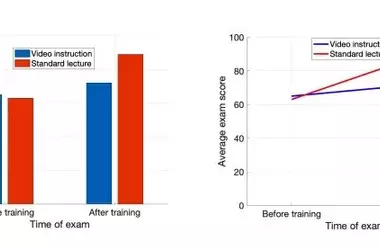
Researchers often make arbitrary decisions when visualizing data. New research suggests that line graphs are more readily understood than bar graphs, especially when interpreting variables on the x-axis. This highlights the importance of considering data comprehensibility in visualization choices to enhance scientific communication.

Maternal Depression Treatment and Infant Brain Development: A New Study's Insights

Maternal Depression Treatment and Infant Brain Development: A New Study's Insights

New research explores the impact of treating depression during pregnancy on infant brain development and emotional behavior. The study found that mothers who received interpersonal psychotherapy (IPT) showed greater reductions in depression symptoms and their infants had smaller right hippocampal volumes, which were associated with lower negative emotionality. These findings highlight the importance of early intervention for maternal mental health for both the mother's well-being and potential positive effects on infant development.

The Impact of "Face Diets" on Infant Perception and Learning

The Impact of "Face Diets" on Infant Perception and Learning

New research introduces the concept of "face diets," illustrating how the diversity of faces infants encounter daily shapes their visual perception, language acquisition, and social development. This article explores how environmental factors, such as urban vs. suburban living, influence the types of faces babies see and subsequently process. It highlights the critical role of facial cues in early learning and suggests that varied "face diets" can lead to differences in social and communication skills.

Physical Activity Mitigates Genetic Predisposition to Depression

Physical Activity Mitigates Genetic Predisposition to Depression

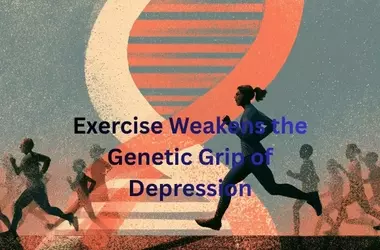
A significant study led by Kansas State University has revealed that consistent daily physical activity can substantially reduce the impact of a high genetic susceptibility to major depressive disorder. By analyzing data from the NIH's All of Us Research Program, which includes genetic profiles, health records, and Fitbit data, researchers found that higher daily step counts and moderate-to-vigorous activity directly weaken the link between genetic vulnerability and the severity of depressive symptoms in adults, highlighting a crucial role for lifestyle in managing mental health.

Psilocybin’s Impact on Neural Connections in Depression

Psilocybin’s Impact on Neural Connections in Depression

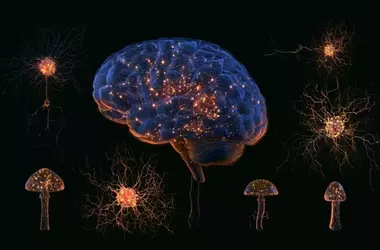
New research from the University of California, Santa Cruz, illuminates how psilocybin restructures brain connectivity. The study, published in Nature Neuroscience, demonstrates that psilocybin accelerates the growth and maturation of dendritic spines, altering cortical circuits in response to brain health or chronic stress. Notably, the findings indicate that psilocybin's structural neuroplasticity can occur independently of its hallucinogenic effects.

Innovative Neural Chip Enhances Adaptive Deep Brain Stimulation for Psychiatric Disorders

Innovative Neural Chip Enhances Adaptive Deep Brain Stimulation for Psychiatric Disorders

EPFL engineers have introduced LogSync, an ultra-low-power, implantable system-on-chip that revolutionizes deep brain stimulation (DBS) for severe psychiatric conditions such as treatment-resistant depression and PTSD. Unlike conventional devices, LogSync monitors oscillatory synchrony across neural networks and employs on-chip machine learning to activate stimulation only during pathological emotional or cognitive states, operating efficiently at under 200 microwatts.