• Breaking News & Live Updates
  • Breaking News & Live Updates
  • Breaking News & Live Updates
  • Breaking News & Live Updates
  • Breaking News & Live Updates
  • Breaking News & Live Updates
  • Breaking News & Live Updates
  • Breaking News & Live Updates
  • Breaking News & Live Updates
  • Breaking News & Live Updates

The Dynamics of Individual Agency and Systemic Influence on Behavior

Read time3 min

When discussing individual choices, it's crucial to acknowledge the multifaceted factors that influence them. While people are frequently encouraged to modify their habits for improved well-being, financial stability, community health, or environmental protection, such as opting for public transport, reducing meat consumption, conserving energy, or increasing savings, the extent of an individual's actual power to effect change is often constrained by broader systemic influences. For example, a tenant may lack permission to upgrade inefficient windows, nutritious food might be financially inaccessible for many families, and meager wages can impede retirement savings. Psychologists Gulnaz Anjum and Mudassar Aziz, in their work published in Perspectives on Psychological Science, contend that behavioral science frequently overlooks these limitations, maintaining a "power-blind" perspective toward the policies, institutions, and structures that shape human choices. This narrow focus can lead to individuals being held accountable for societal issues, even when their capacity to address the underlying causes is minimal. They emphasize that agency operates on a spectrum, with the degree of individual autonomy varying based on personal circumstances, traits, and the restrictions imposed by overarching systems. Thus, understanding the power dynamics at play is essential before solely pressuring individuals to change.

Furthermore, human beings are not merely passive recipients of external influences; they possess inherent values, beliefs, and identities that actively mediate their responses to attempts at behavioral modification. Jack W. Klein and William B. Swann Jr., in their paper for Perspectives on Psychological Science, criticize the "empty-self" metaphor prevalent in some social psychology, which assumes individuals are easily molded by their surroundings. They highlight that deeply held self-perceptions persist despite changing circumstances, challenging the efficacy of interventions that solely target superficial behavioral changes without considering internal dispositions. This perspective suggests that while nudges—subtle alterations in choice presentation designed to encourage specific behaviors—can be effective when choices are made automatically, their impact diminishes when individuals engage in deeper reflection. Tailored nudges, which align with personal priorities and information preferences, tend to yield better results, yet even these may offer too weak a signal to consistently alter entrenched behaviors. Similarly, programs aimed at personality change, such as fostering conscientiousness or extraversion, must also contend with external pressures. Haehner, Bleidorn, and their collaborators caution that goals for personal transformation can be influenced by societal expectations and that access to such programs often favors those with existing resources, mirroring Anjum and Aziz’s argument about the systemic conditions that limit individual capacity for change.

Ultimately, fostering meaningful change requires a collective recognition that responsibility and power are intertwined. It is a shared endeavor, necessitating a move beyond solely individual accountability to also address the systemic factors that impede progress. This broader perspective entails scrutinizing who benefits from the status quo, who bears the costs, and whether those affected have a voice in shaping solutions. While individual choices are real, their impact is often limited without corresponding collective action. When communities are empowered with genuine authority over their own conditions, they develop enduring norms of stewardship that far surpass the effects of any single nudge campaign. Therefore, the future direction of behavioral science should pivot towards examining what prevents people from making desired changes and identifying those with the power to dismantle these barriers, whether they be employers, corporations, governments, or institutions. This approach promotes a more equitable and effective path toward positive societal transformation, emphasizing that societal structures, once created, can always be reimagined and rebuilt for the common good.

Other Articles

The Monetary Trolley Problem: Ethical Choices with Real Stakes

The Monetary Trolley Problem: Ethical Choices with Real Stakes

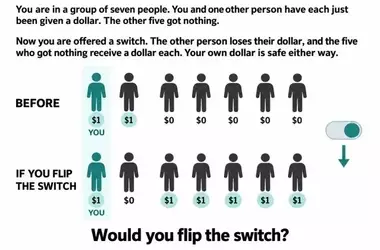
This article explores a real-money version of the classic 'trolley problem' ethical dilemma. Participants faced a choice to reallocate a dollar from one person to five others. The study found that individuals with stronger reasoning abilities were more inclined to make the 'greater good' choice, even 17 months after initial cognitive tests. Interestingly, standard utilitarian questionnaires did not predict actual behavior, and religious beliefs influenced the impact of reflection on moral decisions.

Registration Opens for the First of Three Global Psychological Science Summits

Registration Opens for the First of Three Global Psychological Science Summits

The American Psychological Society (APS) is launching its third annual Global Psychological Science Summit with a new multi-event format for 2026-2027. To better accommodate global participants, three virtual summits are scheduled across different time zones: Asia/Pacific (Dec 8, 2026), Americas (Jan 21, 2027), and Europe, Middle East, & Africa (Feb 3, 2027). Each summit will address "Challenges in Creating a Global Psychological Science" through workshops, panels, and discussions, including a dedicated session on the future of AI in scientific publishing. APS members can attend for free.

Brain Scans Cannot Accurately Predict Individual Emotion Regulation

Brain Scans Cannot Accurately Predict Individual Emotion Regulation

A significant neuroimaging meta-analysis involving 2,175 participants has challenged the long-held belief that prefrontal cortex activation levels can predict an individual's success in emotion regulation. The study found that various metrics of emotion regulation—self-reported habits, subjective ratings during scans, and amygdala downregulation—do not correlate well, indicating diverse neural pathways are employed by different individuals to manage distress. This research highlights the limitations of using prefrontal activity as a biomarker for emotion regulation.

APS Mentorship Program: Fostering Global Connections and Professional Growth

APS Mentorship Program: Fostering Global Connections and Professional Growth

The APS Mentorship Program has launched its 2026 cohort, welcoming 147 participants from 25 countries. This initiative connects mentors and mentees based on professional interests and skill development goals, fostering a supportive community for career advancement in psychological science. Through structured meetings, webinars, and dedicated support, the program aims to enhance participants' professional and personal journeys, exemplified by the successful experiences of past participants like Cristina López Rojas and Nainika Hira.

Line Graphs vs. Bar Graphs: The Impact of Visualization Choices on Data Interpretation

Line Graphs vs. Bar Graphs: The Impact of Visualization Choices on Data Interpretation

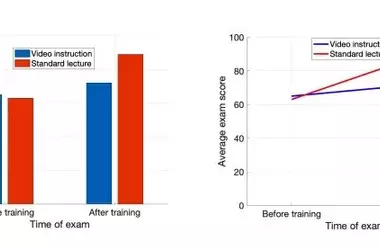
Researchers often make arbitrary decisions when visualizing data. New research suggests that line graphs are more readily understood than bar graphs, especially when interpreting variables on the x-axis. This highlights the importance of considering data comprehensibility in visualization choices to enhance scientific communication.

Maternal Depression Treatment and Infant Brain Development: A New Study's Insights

Maternal Depression Treatment and Infant Brain Development: A New Study's Insights

New research explores the impact of treating depression during pregnancy on infant brain development and emotional behavior. The study found that mothers who received interpersonal psychotherapy (IPT) showed greater reductions in depression symptoms and their infants had smaller right hippocampal volumes, which were associated with lower negative emotionality. These findings highlight the importance of early intervention for maternal mental health for both the mother's well-being and potential positive effects on infant development.