 Breaking News & Live Updates
- Breaking News & Live Updates
- Breaking News & Live Updates
- Breaking News & Live Updates
- Breaking News & Live Updates
- Breaking News & Live Updates
- Breaking News & Live Updates
- Breaking News & Live Updates
- Breaking News & Live Updates
- Breaking News & Live Updates
The Dual Nature of Workaholism: Productivity vs. Teamwork
This article delves into the intricate nature of workaholism, questioning the common assumption that relentless dedication always translates into optimal organizational performance. While often seen as invaluable assets, individuals with workaholic tendencies may inadvertently hinder team dynamics and broader organizational effectiveness. Research suggests that their intense focus on personal tasks can detract from collaborative efforts and engagement in behaviors that benefit the wider workplace community. Understanding this dual impact is crucial for organizations aiming to foster both individual achievement and cohesive team environments.
A study conducted by Alessandri et al. (2020), titled “The Costs of Working Too Hard,” examined the phenomenon of workaholism. The researchers observed that while a strong work ethic is generally associated with positive outcomes, workaholics often prioritize sheer volume of output over strategic, efficient work. They defined workaholism as a compelling, internally driven commitment to work responsibilities that often extends beyond reasonable expectations, characterized by an obsessive focus on professional duties. This raises a critical question for employers: how does this intense dedication influence overall workplace productivity and the prevailing organizational culture?
The study specifically investigated the relationship between workaholism and prosocial organizational citizenship behavior (P-OCB). P-OCB encompasses voluntary actions by employees that are not formally recognized or rewarded but significantly contribute to the organization's efficiency and effectiveness. These behaviors include demonstrating genuine interest in colleagues' well-being and actively assisting others, thereby fostering a supportive and productive work environment through improved resource allocation and performance stability.
Over a three-month period, Alessandri et al. monitored 85 police officers, revealing a negative correlation between workaholic tendencies and P-OCB. The findings indicated that workaholics' self-imposed high job demands led them to perceive job requirements in a way that reduced their engagement in prosocial behaviors. This suggests that the internal drive to continuously take on more work inadvertently limits their capacity or willingness to contribute to team-oriented activities and offer support to colleagues.
The research challenges the conventional wisdom that working harder invariably leads to superior performance. While increased effort may result in higher output, this can be offset by a decline in contextual job performance, which includes supportive and collaborative actions. Subsequent studies have further demonstrated that workaholism can have varied effects on different aspects of job performance, underscoring the complexity of its impact. For organizations, the suitability of a workaholic depends heavily on the specific role. Such individuals may thrive in highly specialized and complex positions that demand significant individual expertise and autonomy, where interdependence with others is minimal. Conversely, roles requiring extensive collaboration and cooperation are less suitable, as workaholics' focus on personal workload often prevents them from investing time and effort in assisting peers. Their intense drive means they often overlook the benefits of P-OCB, such as increased resources, emotional support, and a stronger sense of belonging within the team.
For individuals who identify as workaholics, recognizing the underlying motivations driving their relentless pursuit of work can be a pivotal step. A deeper understanding of these internal forces may enable them to appreciate a wider spectrum of benefits, encompassing not only enhanced professional productivity but also the cultivation of more fulfilling personal and professional relationships.
Other Articles

Overcoming Moral Injury and Reclaiming Identity
Moral injury, a profound psychological distress stemming from actions violating one's deeply held moral beliefs, can be particularly challenging to overcome due to the added layer of self-blame. While some may experience a loss of identity, research indicates that for others, such traumatic events can paradoxically reinforce their sense of self, fostering resilience. Understanding the nuances of moral injury and offering targeted support is crucial for recovery and identity reintegration.
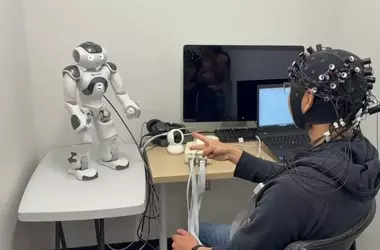
Professor Yuan Chang Leong's Pioneering Research into the Brain's Construction of Subjective Reality
Professor Yuan Chang Leong, a recipient of the 2026 APS Spence Award and assistant professor at the University of Chicago, leads the Computational Affective and Social Neuroscience Laboratory. His research delves into how individual goals, needs, and desires shape our perception of the world, bridging cognitive neuroscience and social psychology to understand the neural mechanisms behind subjective experience and emotional memory formation. This article highlights his innovative work on 'motivated seeing' and 'neural polarization,' and his commitment to interdisciplinary collaboration.

The Impact of Sleep Deprivation on Metabolism and Body Weight
Recent research highlights sleep's crucial role in regulating hormones, metabolism, and physical activity. Even minor sleep loss, around 80 minutes nightly, can lead to subtle weight gain and increased sedentary behavior, influencing metabolic health beyond mere alertness. This article explores the intricate connection between sleep quality and overall physiological well-being, emphasizing that sleep is a dynamic biological process integral to health, not just a passive state.

Social Media Likes: A Paradoxical Reinforcer for Depression
A new study reveals that individuals experiencing depression are more significantly influenced by social media 'likes,' contrasting with traditional lab findings on anhedonia. This suggests that while pleasure may be blunted, the motivational drive from social affirmation remains strong, shaping online behavior in complex ways.
The Quest for Empathy in the Era of Artificial Intelligence
As artificial intelligence (AI) increasingly handles intimate human needs, the question of whether machines can truly provide empathy arises. While AI can generate responses that feel empathic, it lacks genuine emotional understanding. This article explores the evolving definition of empathy in the AI age, the perceived "AI advantage" in providing support, the concept of "wisdom of the crowd" explaining AI's performance, and the "AI penalty" when its source is revealed. It also addresses the risks of frictionless support and highlights how AI can potentially bolster, rather than replace, human relationships.

Exploring the Dynamics of Collective Memory: Beyond Shared Content
This article delves into the concept of collective memory, extending beyond simply what groups remember to how they organize and connect those memories. It highlights new research employing computational approaches, like representational similarity analysis and network analysis, to understand the shared organizational structures of memory. The research suggests that collaborative recall can reshape individual memories, and even global experiences can influence the collective organization of semantic knowledge, offering insights into fields beyond psychology.