 Breaking News & Live Updates
- Breaking News & Live Updates
- Breaking News & Live Updates
- Breaking News & Live Updates
- Breaking News & Live Updates
- Breaking News & Live Updates
- Breaking News & Live Updates
- Breaking News & Live Updates
- Breaking News & Live Updates
- Breaking News & Live Updates
Social Support Fuels Courage: How Dopamine Rewires the Brain for Risk-Taking
Unlocking Inner Bravery: The Social Catalyst for Daring Decisions
The Companion's Influence on Risk Perception
The presence of another individual often transforms intimidating circumstances into less daunting ones for many species. Groundbreaking investigations using mice have unveiled the intricate neurological mechanisms that empower this socially induced surge in boldness. Researchers discovered that social engagement modifies the firing patterns of dopamine-producing neurons, thereby decreasing an individual's sensitivity to risk and stimulating exploratory behaviors. These significant findings have been documented in the journal Neuron.
The Primal Urge for Exploration
Exploration is an inherent biological drive, crucial for animals to secure sustenance, locate shelter, and find mates. This fundamental activity, however, is fraught with dangers, compelling animals to continuously weigh the potential advantages of a resource against threats from predators or physical harm.
Social Bonds and Bravery: A Cognitive Link
Psychological investigations have consistently demonstrated that social interaction can foster exploratory actions. Animals frequently engage in group explorations, effectively distributing the burden of vigilance among their peers. Nevertheless, the precise neural circuits that connect social companionship to the decision-making processes in these precarious situations have largely remained a mystery to neuroscientists.
Dopamine: Beyond Simple Reward
While dopamine is commonly known as a fundamental reward chemical, its functions within the brain are far more extensive, encompassing motor control, risk assessment, and the promotion of motivated behaviors. The ventral tegmental area, a deep-seated region in the central brain, acts as a primary center for dopamine production.
Tracing Dopamine's Role in Courage
Chaowen Zheng, a lead researcher at Xi'an Jiaotong University in China, spearheaded an inquiry to map the biological links between this dopamine-rich region and courageous behavior. Working with a large team, including co-author Changhe Wang, Zheng hypothesized that dopamine might serve as the neurological bridge connecting socialization and the evaluation of risk.
Behavioral Insights into Risk Navigation
The researchers devised a series of behavioral tests to observe how mice navigated environmental dangers. Initially, mice were trained to associate a particular chamber with mild foot shocks. When subsequently placed alone in the testing apparatus, these conditioned mice largely avoided the hazardous chamber, preferring to stay in the safe areas of their enclosure.
The Empowering Effect of a Friend
Subsequently, a familiar cage mate was introduced into the enclosure alongside the conditioned mouse. With a partner present, the conditioned mice ventured into the risky chamber significantly more often. This boost in bravery was also observed when confronting innate fears, such as a toy snake or the chemical scent of fox urine, both known to elicit strong fear responses in rodents.
Physiological Shift in Motivation
In every experimental scenario, the presence of a social partner led to an increase in the time mice spent exploring dangerous zones. Even brief companionship immediately before solo exploration in risky environments boosted their courage, indicating a physiological shift in motivation rather than mere mimicry of an active partner.
Unveiling Brain Activity with Fiber Photometry
To investigate the internal brain processes, the team employed fiber photometry, a technique that uses emitted light to monitor calcium signals within specific neurons. Since calcium rushes into cells when they fire, this method provides a continuous measure of neural activity.
Dopamine's Dynamic Firing Patterns
Monitoring dopamine neurons in the ventral tegmental area across multiple trials revealed a distinct pattern: lone mice approaching risky areas exhibited rapid bursts of dopamine neuron firing, known as phasic firing. This intense electrical activity correlated directly with the extent of exploration, suggesting its role in encoding risk assessment. However, the presence of a companion dramatically altered this electrical behavior; dopamine neurons ceased their massive spikes and instead maintained a higher, consistent baseline of activity, referred to as tonic firing.
Controlling Courage Through Neural Manipulation
Using advanced laboratory techniques such as optogenetics and chemogenetics, which involve light-sensitive proteins and synthetic molecules to control brain cells, the researchers could artificially manipulate these firing patterns. When tonic rhythms were stimulated, solitary mice bravely explored risky zones, as if accompanied. Conversely, forcing rapid phasic bursts made socialized mice lose their nerve and avoid dangerous locations.
Mapping Dopamine Pathways to Emotion Centers
The scientists meticulously traced the journey of these dopamine signals, identifying two distinct pathways originating from the dopamine hub. Both routes ultimately converged on the basolateral amygdala, an almond-shaped brain structure vital for processing emotions and assessing threats.
Dual Pathways for Decision-Making
The first pathway directly targeted the amygdala, while the second paused at the medial prefrontal cortex, a region recognized for its role in complex decision-making and emotional regulation. These direct and indirect pathways operate in a competitive manner to finalize behavioral choices, utilizing different cellular components to interpret incoming dopamine signals.
Dopamine Receptors: Gatekeepers of Response
The direct pathway activates specialized D1 receptors, which demand a substantial influx of dopamine to respond, primarily reacting to large phasic firing bursts and triggering avoidance. In contrast, the indirect pathway targets D2 receptors in the prefrontal cortex, which are highly sensitive to dopamine and respond effectively to the low, continuous flow of tonic firing, thereby promoting motivated exploration and suppressing fear.
Social Interaction: Shifting the Balance
Social interaction effectively tips the balance between these two pathways. By inducing a state of tonic dopamine release, companionship activates the indirect pathway, which encourages exploration. Simultaneously, the absence of massive dopamine bursts keeps the avoidance-promoting direct pathway relatively subdued.
Amygdala: The Integrative Hub
The researchers observed that both pathways converge on the same set of neurons within the amygdala. This structural convergence allows the amygdala to synthesize conflicting information, seamlessly integrating the biological motivation spurred by social presence with the innate vigilance necessary for survival.
Study Limitations and Future Directions
The authors acknowledge certain limitations in their investigation, primarily that the experiments were conducted exclusively on mice. While rodent brains share fundamental circuits with human brains, they cannot fully replicate the intricate social complexities of human interaction. Additionally, the exact biological sequence of events that precede the dopamine shift remains unclear, and the specific sensory networks that perceive a friend and subsequently instruct the ventral tegmental area to alter its electrical firing patterns are yet to be identified. Future research will need to map these upstream connections to complete the anatomical understanding.
Pioneering Research Team
The study, titled 'Converging dopamine pathways onto basolateral amygdala neurons encode exploration decisions,' was authored by a comprehensive team including Chaowen Zheng, Xiaoying Liu, Anqi Wei, Bing Liu, Qianyun Zhang, Junjie Jiang, Xiaofeng Gao, Hong Fan, Anran Zhao, Xueting Duan, Xu Cheng, Haiyao Liu, Niki Gooya, Fenghan Mao, Aomei An, Shuaijie Zhong, Jie Jian, Wenxin Shen, Xingyao Dong, Kaikai Yang, Bianbian Wang, Ziyang Li, Jingxiao Huo, Jingyu Yao, Weiwei Li, Yu Lu, Junxi Kang, Kai Huang, Nan Dong, Yang Chen, Qian Song, Zigang Huang, Rong Huang, Zhenli Xie, Yan Li, Shuqin Zhan, Han Xu, Yong Jiang, Chunxiang Zhang, Dan Xu, Haowen Liu, Jinghong Ma, Yuqing Zhang, Huadong Xu, Xinjiang Kang, and Changhe Wang.
Other Articles

Brain Connectivity Illuminates Shame and Guilt in Autistic Traits
A recent study employing brain scans reveals a connection between distinct brain region communication patterns and the propensity for shame and guilt in individuals exhibiting elevated autistic characteristics. Specifically, the research points to the right frontal pole's interaction with cortical midline structures, particularly the precuneus, as a key neural mechanism influencing these emotional responses.

Neural Synchrony Between Mothers and Daughters Linked to Better Mental Health
A study published in Neuroscience reveals that when young girls observe their parents discussing their relationship, their brain activity aligns with their mothers'. This shared neural response is associated with fewer emotional difficulties in children. The research highlights how family environments shape early mental health, with maternal marital satisfaction enhancing this brain synchronization and promoting positive emotional development in daughters. This suggests a passive learning mechanism where children absorb emotional cues from their parents' interactions.
Undigested Fructose Linked to Anxiety and Brain Inflammation
Recent studies in both humans and animal models suggest a strong connection between unabsorbed dietary fructose, altered gut bacteria, and increased levels of anxiety and inflammation in the brain. This research indicates that consuming more fructose than the body can properly digest may disrupt the gut microbiome, triggering an immune response that negatively impacts mental well-being. This highlights a potential overlooked aspect of modern diets on psychological health.
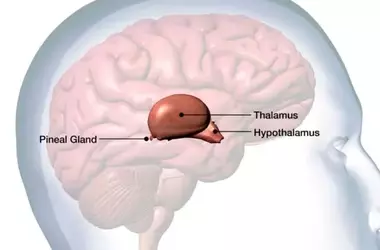
The Evolutionary Journey of Vertebrate Vision: From a Single 'Third Eye' to Complex Paired Organs
A groundbreaking study published in Current Biology proposes a revolutionary theory for the evolution of vertebrate eyes. It suggests that our complex paired eyes originated from a singular, central "third eye" in an ancient, worm-like ancestor. This research challenges conventional understanding by positing that light-sensing cells predated the eyes themselves, with remnants of this primordial visual system still influencing human brain functions like sleep regulation. The findings shed light on the unique cellular composition of vertebrate eyes, which distinctively blend two types of photoreceptors not seen elsewhere in the animal kingdom, hinting at a fascinating detour in our evolutionary visual pathway.
Shift Work Linked to Brain Volume Reduction and Cognitive Decline
New research analyzing UK Biobank data reveals a correlation between shift work and gradual shrinkage in the left amygdala and right thalamus brain regions. The study, published in NeuroImage, also indicates that ceasing shift work can halt this volume loss within approximately 2.4 years. Furthermore, shift workers showed lower scores in memory, fluid intelligence, and mental processing speed tests. These findings highlight potential neurological impacts of non-standard work schedules.
Brain Development Patterns Predict ADHD Symptom Trajectories
A study published in Nature Mental Health reveals that varying patterns of brain development during adolescence are linked to different outcomes for childhood ADHD symptoms. Researchers found that changes in cortical thinning and hippocampal growth could predict whether symptoms would persist, fade, or emerge in teenagers. This research highlights the potential for using brain imaging to forecast symptom changes and underscores the necessity for continuous monitoring in ADHD management.