 Breaking News & Live Updates
- Breaking News & Live Updates
- Breaking News & Live Updates
- Breaking News & Live Updates
- Breaking News & Live Updates
- Breaking News & Live Updates
- Breaking News & Live Updates
- Breaking News & Live Updates
- Breaking News & Live Updates
- Breaking News & Live Updates
Brain Connectivity Illuminates Shame and Guilt in Autistic Traits
New research indicates that variations in the communication pathways within specific brain regions might clarify why individuals with more pronounced autistic tendencies frequently experience increased feelings of shame and diminished guilt. This groundbreaking study, published in "Personality Neuroscience," delves into the neurological underpinnings of these distinct emotional responses.
Shame and guilt, while both stemming from perceived misdeeds, manifest differently. Shame is characterized by a global negative self-evaluation, often leading to social withdrawal. Conversely, guilt focuses on specific actions, prompting individuals to accept accountability and seek resolution. Prior studies have established that people with autism or elevated autistic traits often report higher levels of shame and lower levels of guilt. This emotional disparity is thought to be linked to differences in social cognition, particularly challenges in empathizing with others' perspectives. However, the neural mechanisms driving these emotional patterns had not been previously explored through advanced neuroimaging techniques.
Dr. Savio W.H. Wong and his research team at the Chinese University of Hong Kong embarked on a study to bridge this knowledge gap. Their investigation involved 45 neurotypical young adults from Hong Kong, comprising 20 females, with an average age of 22 years. Each participant underwent functional magnetic resonance imaging (fMRI) brain scans while in a resting state. Additionally, they completed a series of questionnaires designed to assess their autistic traits, using tools such as the Autism Spectrum Quotient and the Broad Autism Phenotype Questionnaire. Their tendencies to experience shame and guilt were evaluated using the Test of Self-Conscious Affect 3.
The researchers utilized a data-driven methodology to pinpoint specific brain regions exhibiting connectivity patterns that correlated with both autistic traits and the predisposition to shame and guilt. They then examined whether these identified connectivity patterns could statistically account for the relationship between autistic traits and these emotions. The findings revealed that the right frontal pole, located at the brain's anterior, displayed connectivity patterns significantly associated with both autistic characteristics and emotional susceptibility. More precisely, the strength of the connection between this region and the cortical midline structures—a group of brain areas crucial for self-reflection and understanding others' mental states—partially elucidated why individuals with higher autistic traits were more prone to shame and less to guilt. The precuneus, a specific area within the cortical midline structures, played a mediating role in these observed relationships.
The study's authors concluded that these results underscore the critical role of cortical midline structures as a neural foundation influencing varying experiences of negative self-conscious emotions among individuals with pronounced autistic traits. It's important to acknowledge certain limitations, such as the cross-sectional nature of the study and its reliance on resting-state scans, which prevent definitive conclusions about causation. Furthermore, the study exclusively involved neurotypical individuals, leaving open the question of whether similar brain patterns would be observed in those formally diagnosed with autism. This research, titled "Autistic traits and proneness to shame and guilt: The mediating role of functional connectivity of cortical midline structures," was co-authored by Isaac N. Ip, Hey Tou Chiu, Fiona N.Y. Ching, Chun-Kit Law, Esther H.L. Tang, Clayton S.F. Ng, and Savio W.H. Wong.
This research highlights how specific brain network interactions are linked to divergent emotional experiences in individuals with heightened autistic traits. The observed differences in how the right frontal pole communicates with cortical midline structures, particularly the precuneus, offer a neurobiological explanation for why these individuals may feel more shame and less guilt. These findings advance our understanding of the complex interplay between brain function and emotional processing in the context of autistic characteristics, paving the way for further investigation into diagnostic populations and potential interventions.
Other Articles

Neural Synchrony Between Mothers and Daughters Linked to Better Mental Health
A study published in Neuroscience reveals that when young girls observe their parents discussing their relationship, their brain activity aligns with their mothers'. This shared neural response is associated with fewer emotional difficulties in children. The research highlights how family environments shape early mental health, with maternal marital satisfaction enhancing this brain synchronization and promoting positive emotional development in daughters. This suggests a passive learning mechanism where children absorb emotional cues from their parents' interactions.
Undigested Fructose Linked to Anxiety and Brain Inflammation
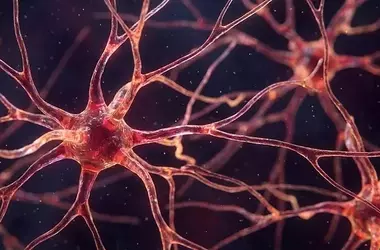
Recent studies in both humans and animal models suggest a strong connection between unabsorbed dietary fructose, altered gut bacteria, and increased levels of anxiety and inflammation in the brain. This research indicates that consuming more fructose than the body can properly digest may disrupt the gut microbiome, triggering an immune response that negatively impacts mental well-being. This highlights a potential overlooked aspect of modern diets on psychological health.
The Evolutionary Journey of Vertebrate Vision: From a Single 'Third Eye' to Complex Paired Organs
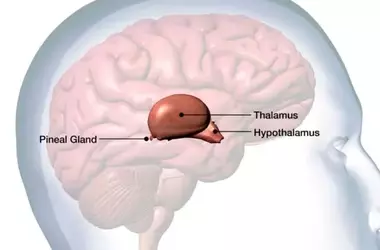
A groundbreaking study published in Current Biology proposes a revolutionary theory for the evolution of vertebrate eyes. It suggests that our complex paired eyes originated from a singular, central "third eye" in an ancient, worm-like ancestor. This research challenges conventional understanding by positing that light-sensing cells predated the eyes themselves, with remnants of this primordial visual system still influencing human brain functions like sleep regulation. The findings shed light on the unique cellular composition of vertebrate eyes, which distinctively blend two types of photoreceptors not seen elsewhere in the animal kingdom, hinting at a fascinating detour in our evolutionary visual pathway.
Shift Work Linked to Brain Volume Reduction and Cognitive Decline
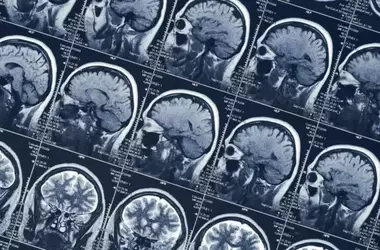
New research analyzing UK Biobank data reveals a correlation between shift work and gradual shrinkage in the left amygdala and right thalamus brain regions. The study, published in NeuroImage, also indicates that ceasing shift work can halt this volume loss within approximately 2.4 years. Furthermore, shift workers showed lower scores in memory, fluid intelligence, and mental processing speed tests. These findings highlight potential neurological impacts of non-standard work schedules.

Brain Development Patterns Predict ADHD Symptom Trajectories
A study published in Nature Mental Health reveals that varying patterns of brain development during adolescence are linked to different outcomes for childhood ADHD symptoms. Researchers found that changes in cortical thinning and hippocampal growth could predict whether symptoms would persist, fade, or emerge in teenagers. This research highlights the potential for using brain imaging to forecast symptom changes and underscores the necessity for continuous monitoring in ADHD management.
Youth BMI Linked to Altered Brain Connectivity
A recent study published in Clinical Neurophysiology reveals that children and adolescents with a higher body mass index (BMI) exhibit distinct differences in brain activity and connectivity. These neurological patterns suggest a reduction in the brain's natural inhibitory systems, potentially making it harder to break ingrained habits. The research involved 32 participants aged eight to 19, divided into groups based on BMI. Using magnetoencephalography, scientists observed elevated gamma brain waves and weakened low-frequency connections in those with higher BMIs, indicating potential inefficiencies in brain communication.